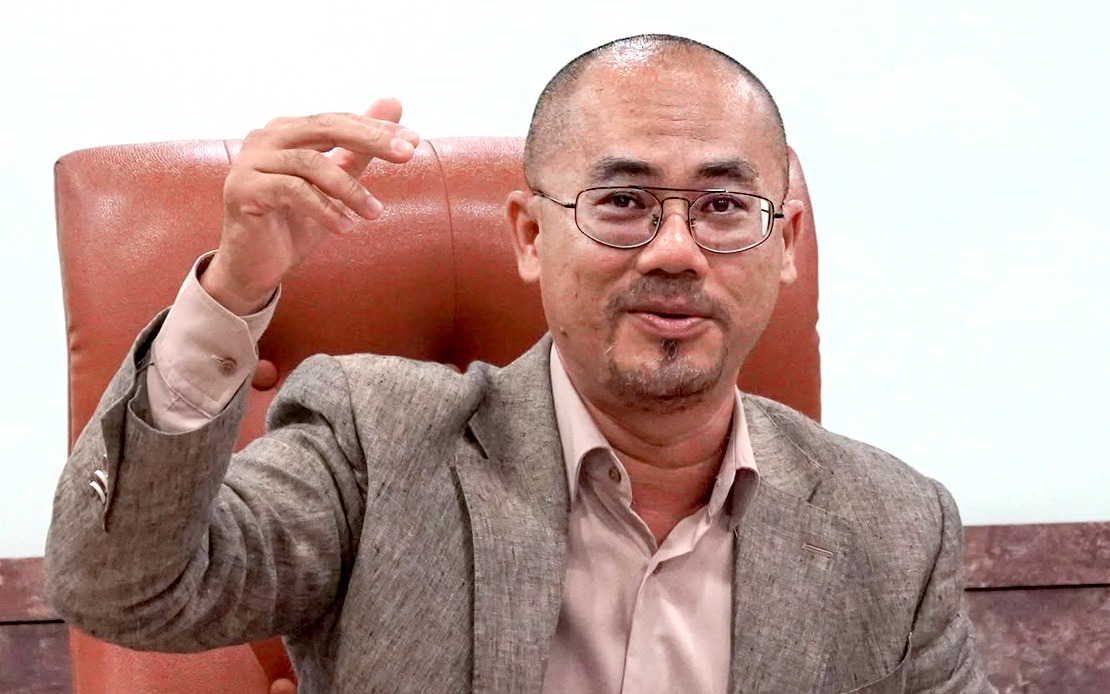
The Perak Islamic Religious and Malay Customs Council (MAIPk) moved swiftly to counter mounting public concern this week by clarifying that a water supply disruption affecting traders in Ipoh did not constitute an eviction order, as had been claimed across social media platforms. The council's chief executive, Syamsul Hazeman Md Salleh, issued the statement after a Threads user alleged that MAIPk had unilaterally severed water access to business premises along Jalan Panglima Bukit Gantang Wahab without advance notification requiring traders to cease operations. The denial came during proceedings at the 2026 Perak State Mosque Committee Convention, underscoring the seriousness with which the council regarded the reputational risk posed by the viral claim.
At the heart of the dispute lies a infrastructure problem inherited rather than created by MAIPk. When the council assumed legal ownership of the site in 2024, it discovered an accumulation of complications centered on the property's water distribution network. A major pipeline serving the premises had developed a persistent leak, and this defect had generated unpaid utility charges totalling approximately RM100,000. These arrears represented years of accrual, suggesting the problem had festered well before MAIPk's custodianship. The council's position is that traders themselves bore no financial responsibility for this mounting debt, as each business settlement its own water consumption independently through normal billing channels.
Syamsul Hazeman emphasized that the core issue stemmed from systemic failure in the main water infrastructure rather than from traders' consumption patterns. The leak itself created the conditions for elevated billing and service disruptions that affected all occupants simultaneously. He characterised the problem as one that transcended MAIPk's institutional capacity to resolve unilaterally, particularly given the financial constraints of managing religious endowments and charitable collections. Neither zakat funds nor waqf revenues could legitimately be deployed to settle what amounted to a public utility arrears dispute, he argued, since such monies possess strict legal designations and cannot be reallocated to cover infrastructure deficits.
The council attempted to establish a transparent communication record by referencing an engagement session convened with affected traders on July 14. During that meeting, MAIPk representatives explained the necessity of a temporary water disconnection to enable repairs to the faulty pipeline and to create conditions for negotiating a resolution to the accumulated charges. According to the council's account, this briefing conveyed the temporary nature of the supply interruption and the specific technical reasons underlying it. The notice subsequently issued was framed not as an eviction directive but as a clarification of MAIPk's formal position and its institutional boundaries, designed to protect the council from liability claims arising from the pre-existing infrastructure crisis.
The water board situation presents a complex institutional challenge that reaches beyond simple commercial negotiation. MAIPk is currently engaged in discussions with the Perak Water Board to craft a settlement mechanism for the outstanding charges. Syamsul Hazeman acknowledged that resolution would require patience and collaborative problem-solving, as the debt had accumulated over an extended period and involved technical factors beyond any single party's control. The state government has been approached for assistance and guidance, suggesting that resolution may ultimately require policy-level intervention or administrative accommodation from the broader Perak state apparatus.
Once financial resolution materialises, MAIPk has committed to undertaking the necessary repair works to restore the main water pipeline to functional condition. Following completion of these technical interventions, the council intends to establish new contractual rental arrangements with the traders through fresh agreements rather than simply resuming operations under previous terms. This signals an intention to regularise the business relationship and establish clearer contractual frameworks governing usage rights and responsibilities. The sequence outlined—settlement, repairs, new contracts—suggests MAIPk's desire to convert crisis into an opportunity for administrative renewal.
Complicating the near-term situation is a proposed development project that remains in the planning phase. The Perak Islamic Religious Department Complex has been designated for construction at the site, though no timeline has been formally announced. Syamsul Hazeman noted that implementation of this capital project would necessitate trader relocation, as the redevelopment would consume the existing commercial space. However, since the project falls under state government purview rather than MAIPk's direct authority, uncertainty persists regarding commencement. This unresolved development question adds another layer of complexity to the current operational situation and may influence how traders perceive the council's long-term intentions.
The incident underscores the practical complications that arise when religious institutions acquire property portfolios without inheriting complete information about underlying liabilities and infrastructure defects. MAIPk's predicament reflects a broader pattern in Malaysia whereby ownership transitions can reveal hidden financial and technical obligations that previous custodians either managed informally or allowed to accumulate. The council's determination to engage with traders, seek state assistance, and work through the Perak Water Board demonstrates institutional commitment to collaborative problem-solving, though the extended timeline required for resolution may continue to strain relationships with affected businesses.
For Malaysian business operators occupying institutional properties, the situation illustrates the importance of thorough due diligence regarding infrastructure condition and utility arrangements before occupancy begins. For religious institutions managing endowment properties and commercial tenancies, the case demonstrates the necessity of comprehensive property audits and transparent communication with occupants when inherited problems emerge. The broader policy implication suggests that mechanisms for addressing accumulated utility arrears on institutional properties warrant clearer guidelines, particularly when religious organisations lack the financial instruments to absorb such debts without compromising their designated charitable functions.

