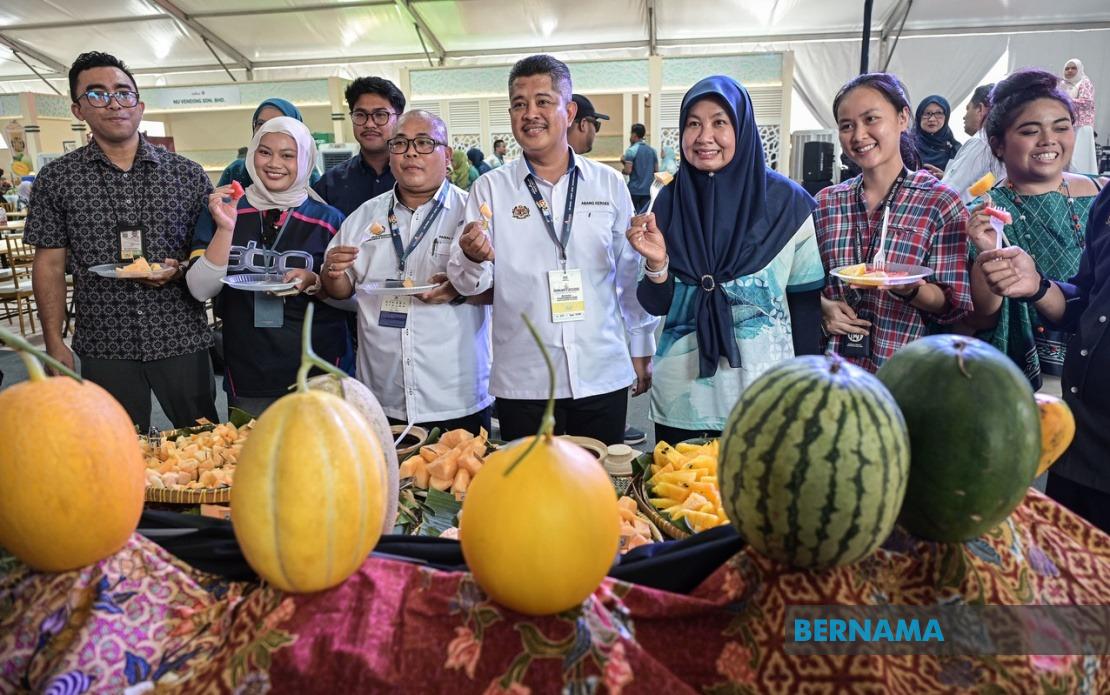
Malaysia's horticultural landscape is poised to advance tomorrow when the Federal Agricultural Marketing Authority (FAMA) formally introduces a locally-developed melon variety at the opening of the Malaysia Agriculture, Horticulture and Agrotourism Exhibition (MAHA) 2026 in Serdang. The new fruit has been designated as the official symbol of this year's festival, representing the culmination of intensive collaboration between FAMA and domestic growers spanning three years of research and development.
The significance of this launch extends beyond novelty. The initiative reflects a deliberate pivot within Malaysia's agricultural strategy toward understanding and responding to evolving consumer preferences. Rather than importing varieties or relying on established cultivars, FAMA's approach demonstrates the growing capacity of domestic research efforts to identify market gaps and develop solutions tailored specifically to Malaysian households. This shift carries implications for the broader Southeast Asian region, where similar pressures around food security and agricultural innovation are reshaping how governments support their farming sectors.
FAMA chairman Abang Ahmad Kerdee Abang Masagus emphasised during a media tasting session that the new melon variety possesses several characteristics designed for contemporary household consumption patterns. The fruit achieves a sweetness concentration profile measured at Brix level 18—a metric that indicates higher sugar content than most melons currently available domestically. Complementing this is a crunchier flesh texture that differentiates the variety from competitors, addressing a specific sensory preference among Malaysian consumers that market research had identified.
The physical specifications reveal equally deliberate design decisions. Weighing approximately 1.3 kilogrammes with a distinctive netting pattern across its skin, the melon positions itself within a premium-yet-accessible price segment at around RM15 per unit. This size represents a substantial departure from conventional melons, targeting the expanding cohort of urban households and smaller family units seeking single-serve or dual-serve fruits that eliminate waste and storage complications. The product essentially acknowledges the demographic reality of modern Malaysian living—compact apartments, smaller dining arrangements, and a growing preference for portion-controlled fresh produce.
FAMA director-general Faisal Sulaiman reinforced this market-centric rationale, noting that the mini-sized classification directly mirrors demand patterns evident in consumer behaviour across Malaysia. The three-year research window enabled FAMA's teams and partnering entrepreneurs to move beyond speculation, instead grounding their work in validated consumption trends. This methodical approach contrasts with agricultural initiatives that rely primarily on production capacity or technological capability rather than actual consumer need, a distinction that underscores changing priorities within the sector.
Beyond the singular fruit launch, the exhibition itself projects considerable scale. Throughout MAHA 2026, FAMA intends to supply more than 150,000 melon units encompassing nearly 100 local and international varieties for exhibition and direct sale to visitors. This logistics undertaking simultaneously serves as a marketing infrastructure, creating pathways for farmers and entrepreneurs to connect with retail customers and institutional buyers in controlled, promotional settings. The approach transforms a traditional agricultural exhibition into a functional supply-chain intervention, collapsing distances between producers and consumers while generating immediate sales.
Minister of Agriculture and Food Security Datuk Seri Mohamad Sabu will officiate the launch and announce the melon's official name tomorrow night, lending governmental weight to what might otherwise appear as a routine product introduction. This ceremonial framing signals that Malaysian policymakers view agricultural innovation as a matter of national importance worthy of ministerial attention. Within Southeast Asia's broader development context, where agriculture remains economically significant despite decades of economic diversification, such endorsements carry symbolic value in encouraging domestic investment in horticultural R&D over passive reliance on imports.
The development process itself carries implications for Malaysia's emerging innovation ecosystem. FAMA's collaboration with local entrepreneurs rather than international seed corporations or research institutions represents a deliberate choice to retain intellectual property and economic benefits within Malaysia. While three years may seem lengthy compared to agribusiness timelines in developed nations, it reflects realistic constraints—funding limitations, climatic testing requirements across monsoon seasons, and the iterative refinement necessary to achieve commercial viability. This timeline offers useful perspective for policymakers across the region evaluating agricultural modernisation strategies.
Consumer preferences toward ready-to-eat, conveniently-portioned products are not uniquely Malaysian phenomena. Urban middle-class populations throughout Southeast Asia share similar patterns—rising incomes, dual-income households, shrinking family sizes, and convenience-conscious purchasing decisions. Malaysia's early development of a domestically-appropriate melon variety positions local growers to potentially expand sales into regional markets, particularly Singapore and Brunei, where premium positioning and demonstrated local provenance command customer loyalty and price premiums. This export potential amplifies the economic significance beyond domestic consumption trends.
The melon variety also exemplifies how agricultural sector evolution need not require wholesale abandonment of traditional crops or farming communities. Instead, the FAMA model creates space for incremental innovation—preserving melon cultivation expertise while modernising product characteristics to match contemporary demand. For farmers accustomed to conventional varieties, this represents an opportunity to enhance productivity and value per unit with manageable risk, provided supply-chain infrastructure and marketing support remain reliable.
MAHA 2026 extends through August 10, utilising facilities at the Malaysia Agricultural Expo Park in Serdang. Beyond the melon launch, the exhibition incorporates agrotech displays, state-specific pavilions, and direct farm sales—a comprehensive ecosystem designed to showcase Malaysian agricultural capability across production, technology, and commerce dimensions. For Malaysian policymakers and stakeholders, the event provides tangible demonstration that domestic research capacity can generate commercially-viable innovations. For regional observers, it illustrates one pathway through which agricultural sectors can evolve toward sustainability and competitiveness without pursuing wholesale industrial transformation.
The selection of a melon as the festival's symbolic fruit, rather than more traditionally prominent crops like palm oil or rubber, reflects shifting emphasis toward horticultural diversity and consumer-facing agriculture. This reframing acknowledges that Malaysia's agricultural future increasingly encompasses fresh produce markets, specialty crops, and value-added processing rather than commodity-scale primary production. The mini melon represents this transition tangibly—a product born from research investment, consumer insight, entrepreneurial partnership, and governmental support, epitomising the sophisticated, innovation-dependent agriculture that Southeast Asian economies are cultivating for coming decades.

