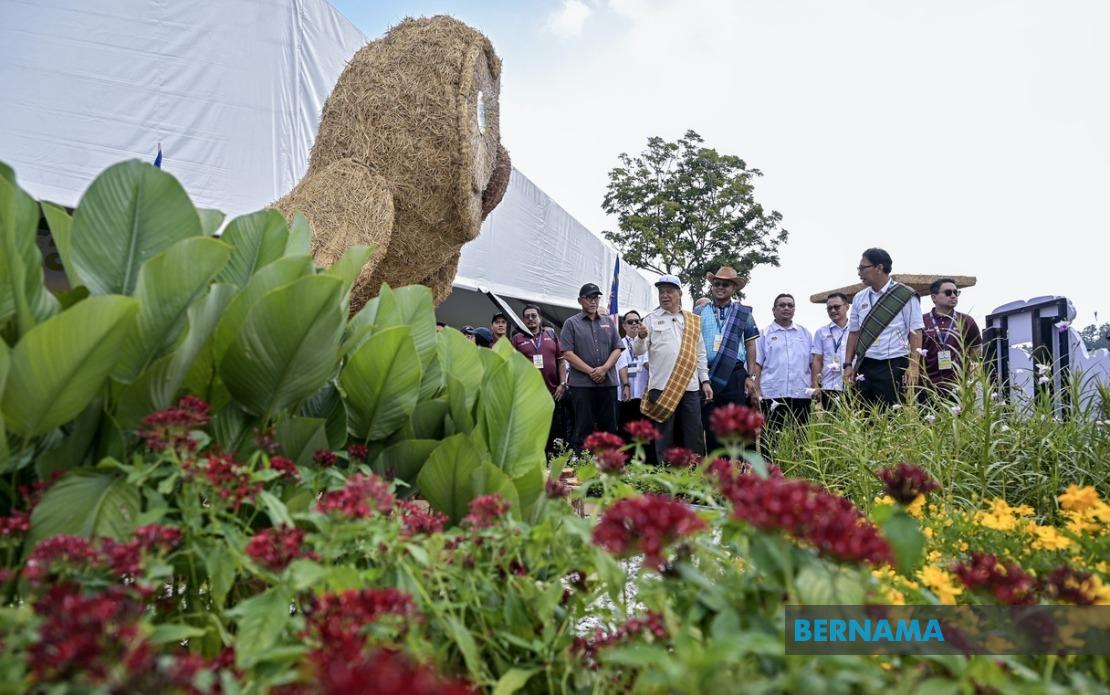
The Malaysia Agriculture, Horticulture and Agrotourism Exhibition (MAHA) 2026 has emerged as a resounding commercial success, drawing 1.8 million visitors and generating nearly RM6 million in sales within its opening three days, according to Agriculture and Food Security Minister Datuk Seri Mohamad Sabu. The figures underscore the remarkable appetite among Malaysian consumers and agribusiness practitioners to engage with the nation's agricultural sector, suggesting that despite economic headwinds, demand for farm produce, seeds, and related products remains robust. The exhibition, which commenced on August 28 at the Malaysia Agro Exposition Park Serdang (MAEPS), has already validated organisers' confidence in the event's capacity to catalyse significant commercial activity and knowledge exchange within the farming community.
The sheer volume of foot traffic has translated into logistical challenges, with 184,000 vehicles recorded entering and exiting the exhibition grounds during the same period. This vehicular throughput, while testament to the event's drawing power, has created considerable congestion around MAEPS and surrounding areas, prompting immediate intervention from management. Minister Mohamad acknowledged the transport pressures, noting that the influx has strained both road capacity and internal crowd management systems. The revelation that visitors encountered lengthy queues at state pavilions—an issue further exacerbated by the region's oppressive heat—indicates that preliminary planning, whilst adequate, has been tested by the exhibition's popularity. Such scenes are common at major consumer-facing agricultural events, yet they highlight the gap between projected and actual attendance figures.
In response to transportation difficulties, organisers have implemented several mitigation strategies, most notably an expansion of shuttle services connecting parking areas to exhibition pavilions. Minister Mohamad indicated that these enhancements would be iterative, with the management committee convening daily to evaluate feedback and implement corrective measures. This proactive stance reflects the ministry's commitment to ensuring that visitor experience remains positive despite infrastructure strain. By adopting a nimble, problem-responsive approach rather than maintaining a static operational framework, MAHA 2026 demonstrates adaptability that earlier editions may have lacked. Such flexibility is particularly important for an event spanning ten days, as lessons learned in the first seventy-two hours can be rapidly embedded into remaining operations.
The ministerial tour of state pavilions provided valuable on-ground intelligence regarding crowd distribution and queue management inefficiencies. Observations of extended queues prompted immediate directives to management concerning visitor transit optimisation, particularly given meteorological conditions that render prolonged outdoor waiting uncomfortable. This hands-on oversight, whilst time-consuming, ensures that political leadership remains connected to operational realities and visitor satisfaction metrics. For Malaysian agricultural stakeholders, such engagement signals that the government takes the sector's commercial platforms seriously and is willing to invest political capital in their success.
Programming has played a material role in driving attendance, with MAHA Merdeka—a special night event coinciding with National Day—featuring fireworks and drone displays that attracted considerable crowds. This integration of patriotic celebration with agricultural promotion represents a sophisticated blending of public holidays with commercial objectives, effectively converting a national commemoration into a marketing opportunity for the agricultural sector. The drone shows and pyrotechnics appealed to broader demographics beyond typical agribusiness audiences, bringing families and younger visitors who might otherwise overlook an agricultural exhibition. Such crossover appeal amplifies reach and creates secondary commercial opportunities as visitors who came for entertainment may purchase produce or agri-products.
The exhibition's financial targets reflect ambitious but grounded expectations within the agricultural sector. MAHA 2026 aims to generate at least RM58 million in total sales, a figure that extrapolates from the early three-day performance of RM6 million. If maintained proportionally across the full ten-day run, such trajectory would substantially exceed the minimum target, though organisers understand that mid-week attendance typically tapers compared to opening weekend peaks. Revenue composition encompasses diverse product categories, with crop seeds anticipated as a significant contributor—a logical emphasis given Malaysia's ongoing agricultural diversification initiatives and the sector's need to adopt improved, higher-yielding crop varieties.
The presence of approximately 2,000 exhibitors, representing suppliers, equipment manufacturers, agro-input providers, and value-added agricultural businesses, creates a comprehensive ecosystem that allows visitors to source solutions across the entire agricultural value chain. This breadth differentiates MAHA from narrower industry conventions and appeals to farmers seeking one-stop procurement opportunities. For small and medium-sized agribusinesses, such concentrated marketplaces offer rare opportunities to showcase products to thousands of potential bulk buyers in a single venue, justifying participation costs and logistical effort.
The exhibition's overall target of exceeding four million visitors across its ten-day duration aligns with MAHA's historical performance and reflects confidence that opening-weekend momentum will sustain through the campaign. Achieving such numbers would position MAHA 2026 as among Malaysia's largest annual trade and consumer events, rivalling major exhibitions in tourism, automotive, and consumer goods sectors. For the agricultural ministry, such metrics translate into political capital—demonstrating tangible support for the farming sector and showcasing government ability to organise large-scale commerce-enabling events.
For Malaysian readers, MAHA 2026's early success carries broader implications regarding agricultural sector health and consumer spending patterns. The willingness of 1.8 million people to visit an agricultural exhibition within three days suggests that food security and agricultural productivity remain prominent in public consciousness, even amid competing entertainment and shopping options. This engagement is particularly significant in an increasingly urbanised Malaysia, where consumer awareness of agricultural production has historically been limited. The exhibition thus serves an educational function beyond commerce, reconnecting urban populations with farming realities and sustainable food production.
The logistical challenges encountered and rapidly addressed during MAHA 2026's opening phase offer valuable lessons for future large-scale public events in Malaysia. Transport bottlenecks, crowd management, and weather-related discomfort can be mitigated through predictive planning, flexible operations, and responsive infrastructure scaling. As Malaysia hosts increasingly ambitious exhibitions and festivals, institutions like MAEPS and the agriculture ministry gain experience in executing complex events that balance commercial objectives, public accessibility, and operational feasibility.
Looking forward, the trajectory of MAHA 2026 will be closely monitored by agricultural sector stakeholders and government agencies planning future promotional initiatives. If the exhibition maintains near-current visitor and sales rates through September 6, it will establish a new benchmark for agricultural commerce in Malaysia and potentially influence how government priorities and budgets supporting agricultural marketing and trade platforms are justified and allocated. The early success also validates the decision to integrate MAHA with national celebrations and broader agrotourism narratives, positioning agriculture not as a legacy sector but as a dynamic, forward-looking component of Malaysia's economic portfolio.

