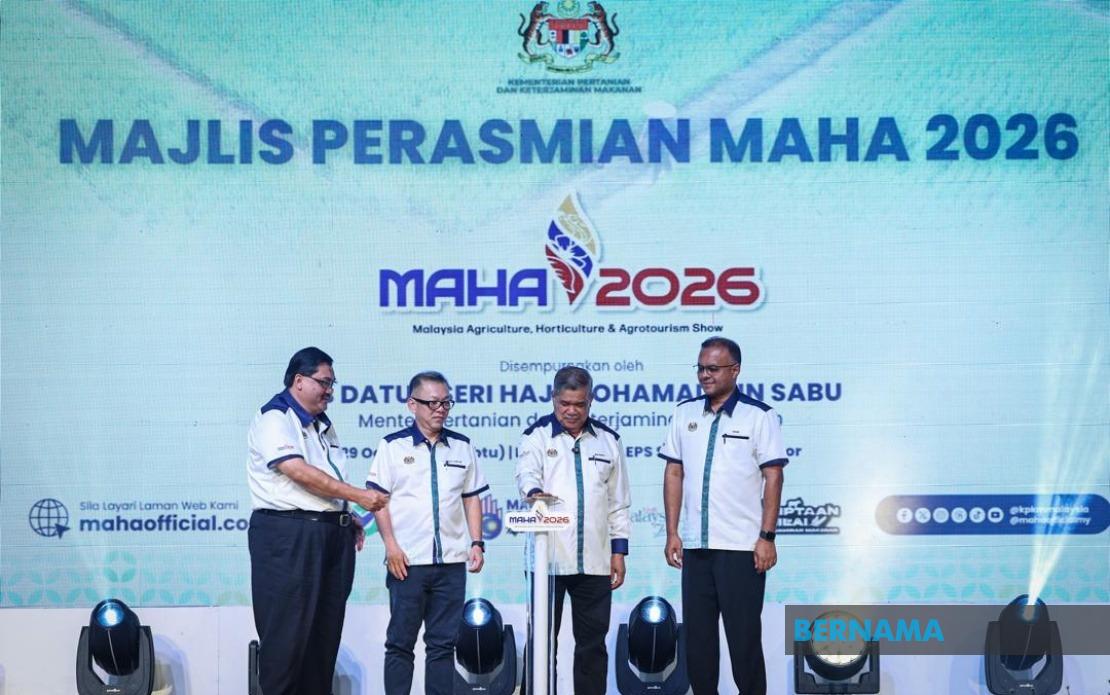
Agriculture and Food Security Minister Datuk Seri Mohamad Sabu has positioned the Malaysia Agriculture, Horticulture and Agrotourism Show 2026 as a pivotal moment for repositioning the nation's farming sector around environmental sustainability and climate resilience. Speaking at the opening of MAHA 2026 on August 28 at the Malaysia Agro Exposition Park Serdang (MAEPS), Mohamad framed the nine-day exhibition as more than a commercial showcase, positioning it instead as the launch of a systemic shift toward practices that reduce carbon emissions while strengthening Malaysia's economic food security.
The minister's emphasis on sustainability reflects growing recognition among policymakers that traditional agricultural models face mounting pressures from climate volatility, rising input costs, and supply chain vulnerabilities—challenges particularly acute for a nation that imports roughly 40 per cent of its food needs. By anchoring MAHA 2026 to environmental stewardship rather than production volume alone, Mohamad signalled an attempt to align Malaysia's agricultural trajectory with regional and global climate commitments. This messaging carries significance for Malaysian farmers, who have historically operated within a productivist paradigm with limited incentives for conservation practices or ecosystem management.
The exhibition itself demonstrates the breadth of sustainable initiatives now gaining traction. Showcased practices span energy efficiency in farm operations, structured waste management systems, reduction of single-use plastics in agricultural supply chains, regenerative farming techniques that restore soil health, and institutional recycling programs. For Malaysian agribusiness operators attending MAHA 2026, these categories represent both compliance requirements and emerging market opportunities. International buyers increasingly demand certified sustainable sourcing, particularly in the palm oil, cocoa, and spice sectors where Malaysia holds significant export shares. The integration of these practices into farm-level operations thus carries direct commercial implications beyond environmental rhetoric.
Crucially, Mohamad invoked the Green Book Policy of 1974, the agricultural framework developed under Prime Minister Tun Abdul Razak that prioritised domestic production over imports to contain living costs and strengthen national resilience. The resurrection of this concept after nearly five decades signals a recalibration of policy priorities in response to contemporary pressures: geopolitical supply chain disruptions, inflation in global food prices, and the fiscal burden of food subsidies. For Malaysian households, many of whom spend 30-40 per cent of household income on food, reviving emphasis on local production addresses both economic pain points and systemic vulnerabilities revealed by recent global disruptions.
The government's commitment to modernising fisheries and livestock infrastructure underscores how sustainability ambitions intersect with technological upgrading. Plans to enhance fishing vessel fleets, upgrade farm facilities, develop aquaculture sectors with high-value species, and integrate animal feed production with digital monitoring systems reflect recognition that environmental compliance and productivity gains are increasingly intertwined. These investments also create entry points for agritech entrepreneurs and venture capital participation in the agricultural sector—a domain historically dominated by smallholders and state-linked enterprises.
MAHA 2026 brings together approximately 2,000 exhibitors with projections of over four million visitors during the August 28 to September 6 run, positioning it as a significant commercial and diplomatic event. The participation of delegations from 14 nations elevates MAHA beyond a domestic agricultural fair into a platform for bilateral and multilateral agricultural cooperation. For Southeast Asian traders and farmers, the exhibition provides forums for technology transfer, seed exchanges, and market intelligence on sustainable commodity chains gaining prominence in the region.
However, Mohamad's cautionary statement about ensuring that international cooperation agreements translate into tangible outcomes rather than ceremonial memoranda carries particular weight. Southeast Asia has accumulated numerous agricultural memoranda of understanding over the past decade, many of which produced limited downstream commercial activity. By explicitly urging that MAHA 2026 generate binding commercial partnerships, capital inflows to agritech ventures, and genuine export channel expansion, the minister acknowledged previous implementation gaps while setting clearer accountability benchmarks. This messaging appeals directly to Malaysian start-ups and medium enterprises seeking international investment and market access beyond Malaysia's borders.
The timing of MAHA 2026 also reflects domestic political currents within Malaysia's agricultural portfolio. Competing pressures among smallholder farmers resistant to production cost increases, agribusiness investors demanding regulatory clarity, environmental constituencies pressing for conservation, and urban consumers seeking food affordability create a complex policy landscape. By framing MAHA 2026 as a bridging initiative that serves these constituencies simultaneously—promoting sustainability while expanding export opportunities and strengthening domestic supplies—Mohamad attempted to construct a coalition supporting the government's agricultural modernisation agenda.
For Southeast Asian observers, Malaysia's agricultural pivot carries regional significance. As climate impacts intensify across the tropics and global food systems face increasing strain, larger economies like Thailand and Indonesia watch how Malaysia navigates the tension between production intensity and environmental stewardship. If MAHA 2026 catalyses measurable adoption of sustainable practices and generates successful bilateral technology partnerships, it could establish templates for agricultural modernisation applicable across the broader region. Conversely, if the event remains primarily promotional without driving operational changes, it would reinforce scepticism about Southeast Asian governments' capacity to transition agricultural sectors toward genuine sustainability beyond policy announcements.
The participation of Deputy Minister Datuk Chan Foong Hin and Ministry Secretary-General Datuk Seri Isham Ishak alongside Minister Mohamad Sabu indicated institutional commitment beyond rhetorical posturing. Yet translating this leadership attention into sustained policy support and budgetary allocation remains uncertain, particularly given competing fiscal priorities and agricultural sector lobbying from conventional production advocates. Malaysian observers of agricultural policy will scrutinise whether MAHA 2026's sustainability messaging produces concrete regulatory changes, extension service reorientation, or subsidy restructuring in the months following the exhibition's conclusion.

