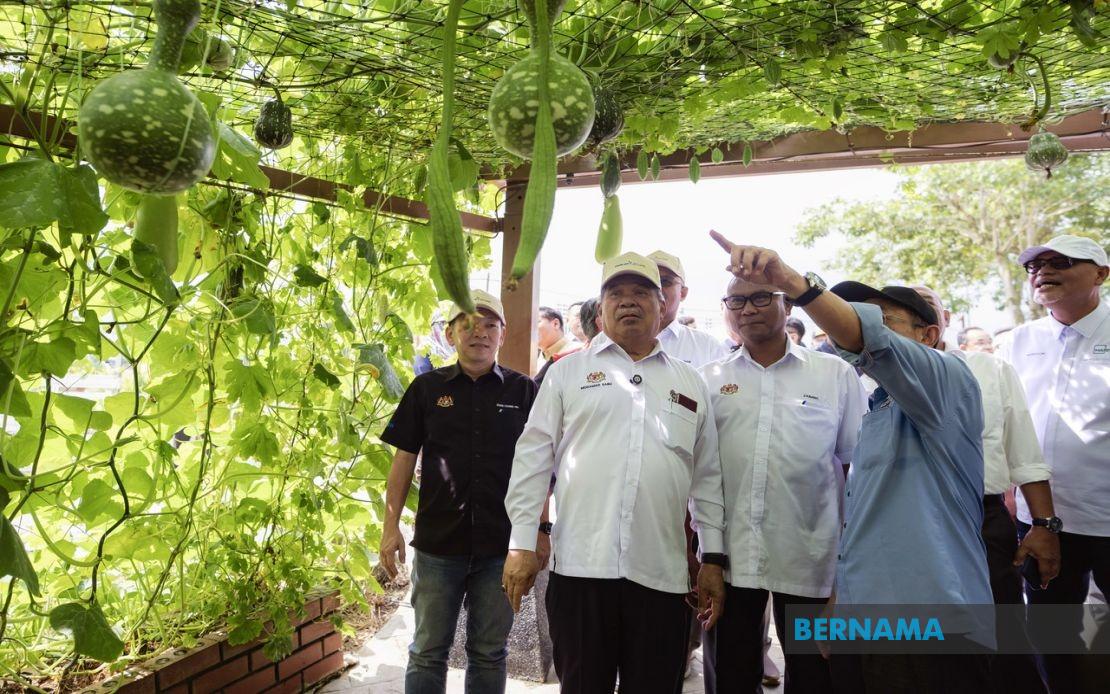
The Malaysia Agriculture, Horticulture and Agrotourism Exhibition (MAHA) 2026 is on track to welcome its first visitors on Aug 28, with preparations now 80 per cent complete and the final countdown well underway at the Malaysia Agro Exposition Park Serdang (MAEPS). Agriculture and Food Security Minister Datuk Seri Mohamad Sabu confirmed during an inspection of the venue that all major structural work has been finished, with remaining efforts focused on fine-tuning exhibition spaces and installing display elements across the sprawling grounds. The minister pledged that everything would be fully operational by Aug 27, giving organisers a single day to address any last-minute issues before the exhibition's grand opening.
This year's iteration of Malaysia's flagship agricultural showcase carries particular significance as it coincides with a broader push to modernise the farming sector across the nation. Running from Aug 28 through Sept 6 under the theme 'Penciptaan Nilai Demi Keterjaminan Makanan'—roughly translating to 'Value Creation for Food Security'—the exhibition will position agricultural advancement as central to the country's economic resilience. Minister Mohamad will officiate the opening ceremony, while Prime Minister Datuk Seri Anwar Ibrahim is scheduled to preside over the closing event on Sept 6, underscoring the government's commitment to showcasing the sector's potential to both domestic and international audiences.
At the heart of MAHA 2026's messaging lies a deliberate focus on how technology is reshaping farming practices across Malaysia. The exhibition will feature an array of mechanised equipment and automated vehicles designed to enhance productivity, alongside an expanding demonstration of drone technology in cultivation of major crops including rice, pineapple and melon. By drawing parallels to agricultural practices in highly developed nations such as China and the Netherlands, organisers hope to inspire Malaysian farmers to embrace similar innovations. This comparative framing addresses a persistent challenge in the sector: convincing traditional smallholders that technological investment can deliver tangible returns and align Malaysian agriculture with global best practices.
Beyond hardware and machinery, the exhibition emphasises a conceptual shift in how Malaysia approaches agricultural value creation. Rather than limiting farmers and livestock producers to the role of raw material suppliers, MAHA 2026 advocates for deeper involvement in downstream processing and value-added manufacturing. The minister highlighted how products such as milk, pineapple and cassava can be transformed into dozens of derivative products, creating layers of economic opportunity along the agricultural value chain. This strategy, if effectively communicated and adopted, could help local entrepreneurs escape the thin profit margins that characterise commodity production, instead capturing higher returns through processing and branding.
Cultural heritage and community experiences form an equally integral component of the exhibition's appeal. The showcase will feature Perkampungan Abang Mat, a dedicated village space celebrating traditional food preparation through 'rewang'—the communal cooking practice embedded in Malaysian rural culture—alongside exhibitions of culinary heritage and indigenous games. Daily programming will rotate to maintain visitor interest, ensuring that families returning multiple times encounter fresh activities. This blend of educational content with entertainment and nostalgia reflects a broader recognition that agricultural exhibitions must appeal to urban populations increasingly disconnected from farming realities, while simultaneously honouring the cultural foundations of the sector.
Family-oriented attractions and incentive schemes are being leveraged to drive visitor numbers and dwell time. Traditional games such as congkak will be available throughout the 10-day run, offering older visitors particularly an avenue for leisure and reflection amid the exhibition's technological focus. The organisers have instituted an ambitious daily prize draw scheme, including two motorcycles per day for a total of 20 across the event's duration, alongside electrical appliances as secondary prizes. Such giveaways serve a dual purpose: they encourage repeat visits and social media amplification while creating memorable experiences that extend the exhibition's cultural reach beyond those primarily interested in agricultural innovation.
International participation adds another strategic dimension to MAHA 2026. Organisers expect to host approximately 2,000 exhibitors, with around 14 countries represented among external participants, including Kenya which will establish a pavilion for the first time. This international dimension offers Malaysian exhibitors and officials a window for exploring bilateral agricultural cooperation and technology transfer arrangements. For visiting delegations, MAHA provides a concentrated platform to assess Malaysia's regulatory environment, market opportunities and technological readiness across the agri-food spectrum. Such exchanges have historically catalysed joint ventures and supply chain partnerships, making international participation economically consequential rather than merely ceremonial.
The anticipated visitor profile extends well beyond casual agricultural enthusiasts. The organisers are actively targeting youth engagement, with projections suggesting some 800,000 young people will attend through dedicated programming on automation, technology and sectoral modernisation. To amplify this reach, Minister Mohamad's ministry is pursuing formal coordination with Malaysia's Education Ministry to integrate MAHA activities into school-based co-curricular programmes. This institutional approach recognises that agricultural modernisation requires generational buy-in; young Malaysians must see farming not as an occupation of last resort but as a technology-enabled career path offering innovation, entrepreneurship and competitive compensation. Early exposure through structured school visits could meaningfully influence tertiary education choices and eventual sector recruitment.
Projected attendance figures underscore the exhibition's significance within Malaysia's event calendar. Organisers forecast more than four million visitors across the 10-day period, a volume that would cement MAHA 2026 as among the nation's largest public gatherings. Such scale generates substantial economic activity through accommodation, transport, food services and retail spending in the Serdang region and surrounding areas. For exhibitors and agricultural businesses, the concentrated access to millions of consumers and trade partners justifies significant investment in booth design and product demonstrations. The exhibition thus functions as both a cultural celebration of Malaysian agriculture and a critical commercial marketplace where emerging technologies, techniques and partnerships are unveiled and negotiated.
The ambitious scope of MAHA 2026 reflects government confidence in the sector's trajectory despite persistent challenges including labour shortages, climate variability and fluctuating commodity prices. By showcasing technological solutions and value-chain opportunities, the exhibition signals that Malaysian agriculture is neither stagnant nor reliant on subsidies alone, but rather capable of competing in increasingly sophisticated global markets. For the region, MAHA's emphasis on modernisation and knowledge exchange resonates as Southeast Asian governments grapple with similar imperatives to boost agricultural productivity in response to population growth and climate pressures. The exhibition's success—in attendance, media coverage and subsequent adoption of showcased innovations—will offer valuable indicators of receptiveness to agricultural transformation across Malaysia and serve as a potential template for other nations pursuing sectoral modernisation.

