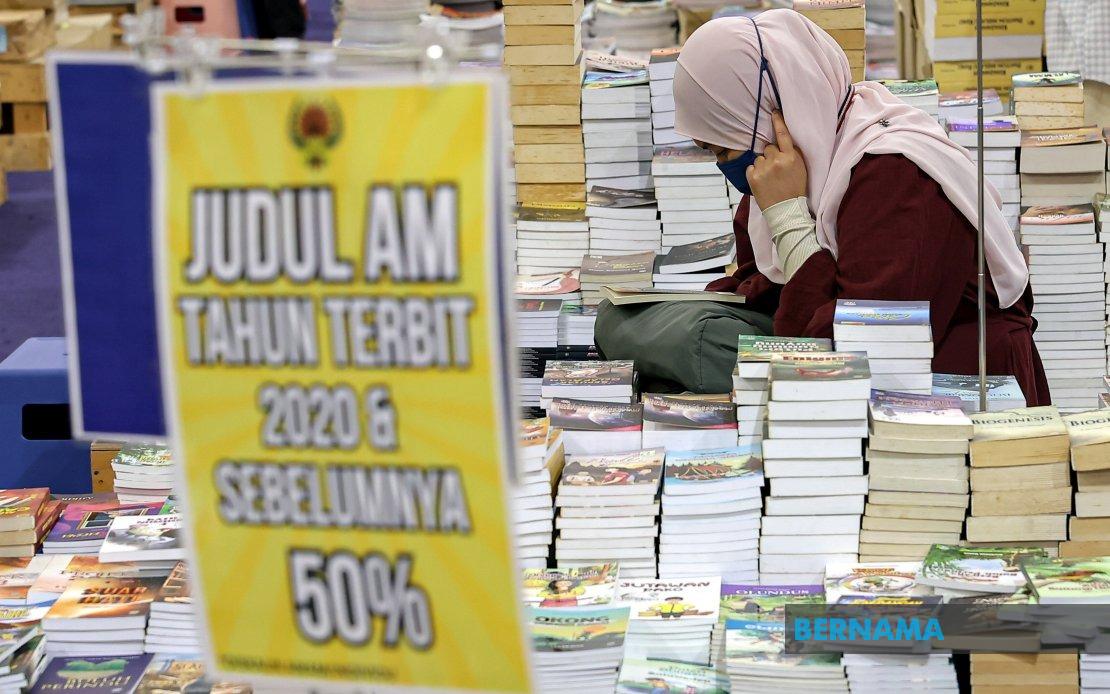
Malaysia's MADANI Book Voucher Programme is set to benefit more than 2.2 million students across the education system, from secondary school through to teacher training institutions, through a RM221.6 million allocation announced in Parliament today. Beginning tomorrow, eligible learners can start redeeming their RM100 e-vouchers through the BookCapital online platform, with the redemption window extending until October 31. The initiative represents a significant investment in student access to reading materials and demonstrates the government's commitment to ensuring educational opportunities are distributed equitably across the nation.
According to Deputy Education Minister Wong Kah Woh, the beneficiary cohort encompasses 2,217,579 recipients drawn from Remove Class through Form Six, alongside students enrolled in vocational colleges, matriculation programmes, and the Malaysian Institute of Teacher Education (IPGM). This broad reach reflects the programme's inclusive approach to supporting learners at various educational stages, recognizing that access to quality reading materials remains crucial regardless of institutional affiliation. The digital redemption system launching at 11 am tomorrow represents a streamlined approach to programme administration, eliminating the administrative burden of physical voucher distribution whilst maintaining transparency throughout the process.
The BookCapital platform, which currently hosts 1,238 registered booksellers, serves as the exclusive gateway for all transactions. This digital infrastructure enables students throughout Malaysia to access participating retailers without geographical limitations, a particularly significant advantage for learners in remote or rural areas who might otherwise face constraints in obtaining diverse titles. The platform's integration with a substantial network of booksellers ensures that the voucher programme translates directly into actual purchases rather than serving merely as administrative paperwork.
A notable feature distinguishing the 2026 iteration involves the MADANI Special Title Focus initiative, which curates a collection of literary classics and contemporary works alongside non-fiction spanning history, philosophy, economics, and geopolitics. This curated approach represents more than arbitrary selection; it deliberately steers students toward intellectual engagement with disciplinary foundations and contemporary global challenges. Each participating student must purchase at least one title from this designated category, ensuring exposure to the curated collection whilst maintaining individual choice across the broader catalogue.
Future-oriented subjects receive particular emphasis within the framework, reflecting Malaysia's positioning within the global knowledge economy. Priority categories encompass artificial intelligence, information technology, STEM disciplines, and digitalisation—fields increasingly central to workforce development and economic competitiveness. By incentivizing engagement with these domains during formative educational years, the programme contributes to building human capital aligned with projected sectoral demands.
Evidence supporting the programme's efficacy emerged from an impact study conducted by the Darul Ehsan Institute, which surveyed recipients following the initiative's introduction in 2024. The study findings prove compelling: 97.5 per cent of respondents affirmed that the MADANI Book Voucher significantly assisted their educational pursuits, with measurable benefits particularly pronounced among students from lower-income backgrounds. Additionally, 92.2 per cent reported that access to these reading materials strengthened their examination preparation, suggesting concrete academic outcomes beyond general cultural benefit.
The 2024 implementation cycle established a benchmark of particular significance—100 per cent redemption rate. This statistic indicates not merely programme uptake but genuine utilization, suggesting that the digital infrastructure successfully removes barriers to participation. Unlike traditional voucher schemes sometimes plagued by underutilization or waste, the BookCapital system appears to have achieved seamless integration into student purchasing behaviour. The Deputy Minister emphasized this achievement as indicative of the system's technical soundness and the target population's receptiveness to digital platforms.
Transparency and prevention of financial leakage represent core operational achievements. Wong's assertion of "100 per cent transparency and zero leakages" suggests rigorous digital audit trails preventing misappropriation—a concern historically associated with cash-based educational disbursements. The fully online architecture creates inherent accountability mechanisms through transaction logging and platform monitoring, distinguishing this approach from earlier voucher iterations prone to administrative irregularities.
Geographical equity emerges as perhaps the programme's most significant contribution to Malaysian education policy. By enabling students in remote areas to access identical book selections with equal ease as their urban counterparts, the MADANI vouchers address persistent spatial dimensions of educational inequality. Roads, shipping times, and bookseller concentration no longer constrain reading material acquisition; digital infrastructure collapses these geographical barriers. This outcome aligns with government rhetoric around ensuring "the same books, the same opportunities and the same future for all Malaysian children," moving beyond aspirational language toward concrete implementation.
The RM221.6 million allocation warrants contextualization within broader educational spending patterns. Per-student allocation of approximately RM100 represents a modest but meaningful contribution to personal educational enrichment, particularly for families with constrained purchasing power. Rather than attempting comprehensive curriculum support, the programme functions as a targeted supplement recognizing that voluntary reading constitutes a distinct educational domain from classroom instruction.
Parliamentary oversight and the questions raised by opposition and government-aligned members alike suggest sustained political investment in the initiative's continuation and refinement. Syahredzan Johan's inquiry regarding improvements and Salamiah Mohd Nor's focus on post-implementation assessment indicate that the programme commands cross-factional attention, potentially insulating it from partisan disruption that might affect other initiatives. This bipartisan interest bodes well for the scheme's institutional persistence.
The timing of the 2026 redemption cycle, commencing in July and extending through October, aligns with academic calendars when students require examination preparation materials. The extended four-month window accommodates varied redemption patterns without creating artificial urgency. This temporal design reflects policy sophistication in matching implementation logistics to educational rhythms rather than imposing arbitrary administrative deadlines.
Moving forward, the programme's evolution will likely depend on sustained evidence collection regarding reading patterns, subject preferences among beneficiaries, and long-term educational outcomes. The Darul Ehsan Institute's initial evaluations provide methodological foundation for deeper investigation into whether voluntary reading through the voucher scheme correlates with improved academic performance, enhanced critical thinking capabilities, or changed career aspirations aligned with priority STEM and technology domains. Malaysia's educational policymakers, facing intensifying global competitiveness pressures, have positioned the MADANI vouchers as both equity tool and strategic human capital development mechanism.

