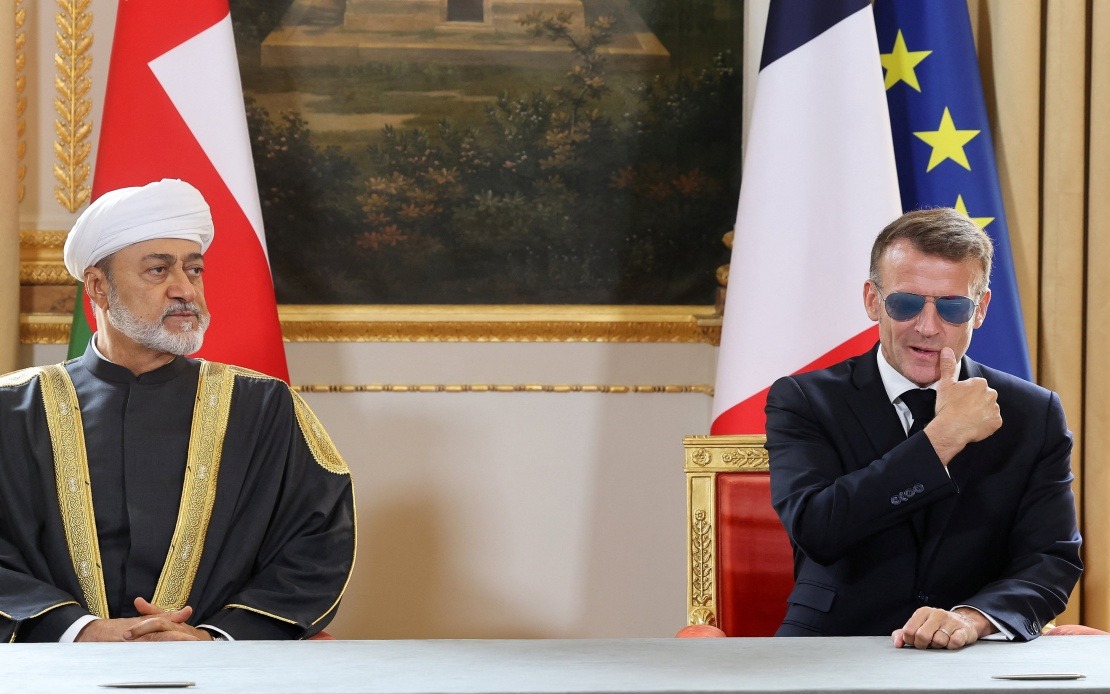
French President Emmanuel Macron wore his now-famous aviator sunglasses while meeting with the Sultan of Oman, Sultan Haitham bin Tariq, on Monday at the Élysée Palace, with officials attributing the choice to a medical condition affecting his vision. The eyewear has become something of a talking point in international diplomatic circles, particularly after drawing considerable attention during Macron's appearance at the World Economic Forum in Davos earlier this year.
According to French media outlets citing sources close to the president, Macron required the sunglasses due to an eye problem that has required ongoing medical management. In January, presidential officials disclosed that Macron had been treated for a minor eye inflammation, a condition that necessitated wearing protective eyewear for approximately two weeks. The persistence of this issue into late June suggests the president continues to experience sensitivity that warrants shielding his eyes from bright light during official engagements.
The greeting with Sultan Haitham bin Tariq outside the palace and the subsequent bilateral discussions both proceeded with Macron maintaining the aviator-style eyewear throughout. For observers of diplomatic protocol, the decision to keep the glasses on during formal talks underscores the medical rather than stylistic reasoning behind their use, though the visual impact remains unavoidable during high-profile state visits and international summits.
The sunglasses first captured widespread international attention when Macron wore them at the World Economic Forum gathering in Davos, where the eyewear became the subject of considerable commentary and speculation. US President Donald Trump weighed in with mockery regarding the accessory, drawing attention from the American side of the Atlantic. Meanwhile, in France itself, the sunglasses sparked lighthearted comparisons to Hollywood actor Tom Cruise's iconic look from the film Top Gun, with French commentators and social media users joining in the amusement at what some perceived as an unexpectedly cool aesthetic for a European leader.
The fashion implications of Macron's eyewear choice extended beyond mere diplomatic gossip when Henry Jullien, a prestigious French luxury eyewear manufacturer, reported a notable surge in consumer inquiries about the specific aviator model worn by the president. The company has capitalized on the unexpected publicity by continuing to feature Macron in promotional materials for the glasses, leveraging the president's global visibility to market their product. This commercial dimension demonstrates how even a medical necessity can inadvertently generate significant brand awareness and consumer interest in the luxury goods sector.
For Southeast Asian observers and policymakers, Macron's ongoing health management during international engagements raises interesting questions about the physical demands of modern statecraft. Leaders across the region regularly undertake similarly demanding schedules of bilateral meetings, state dinners, and ceremonial appearances, often in tropical climates where eye strain and light sensitivity present genuine challenges. The French president's transparent approach to addressing a medical issue while maintaining his official duties offers a pragmatic precedent for how contemporary leaders can balance health concerns with diplomatic responsibilities.
The incident also underscores the intense scrutiny applied to world leaders' appearances and personal choices in an age of constant media coverage and social media commentary. What might have been a purely medical matter in previous decades becomes international news fodder and sparks broader cultural discussion about fashion, identity, and political presentation. In Malaysia and across Southeast Asia, where leaders navigate complex relationships with international media and public image management, the Macron sunglasses saga illustrates both the challenges and opportunities of operating in the modern political spotlight.
French diplomatic circles have largely treated the matter matter-of-factly, with official statements consistently emphasizing the medical justification for the eyewear rather than engaging with the humor or speculation surrounding it. This disciplined messaging reflects the French government's preference for steering conversation away from personal health matters and back toward substantive policy discussions. The approach contrasts with the more sensational coverage in certain other international media outlets, where the story was framed primarily through a lens of curiosity or amusement.
The Oman meeting itself represents an important engagement for France within the Gulf region, where diplomatic relationships carry significant geopolitical weight. Sultan Haitham bin Tariq has modernized Oman's foreign policy approach in recent years, and discussions between Paris and Muscat touching on security, economic cooperation, and regional stability are consequential for both sides. That these substantive bilateral matters proceed despite the inevitable attention paid to Macron's eyewear demonstrates that professional diplomacy continues regardless of such peripheral distractions.

