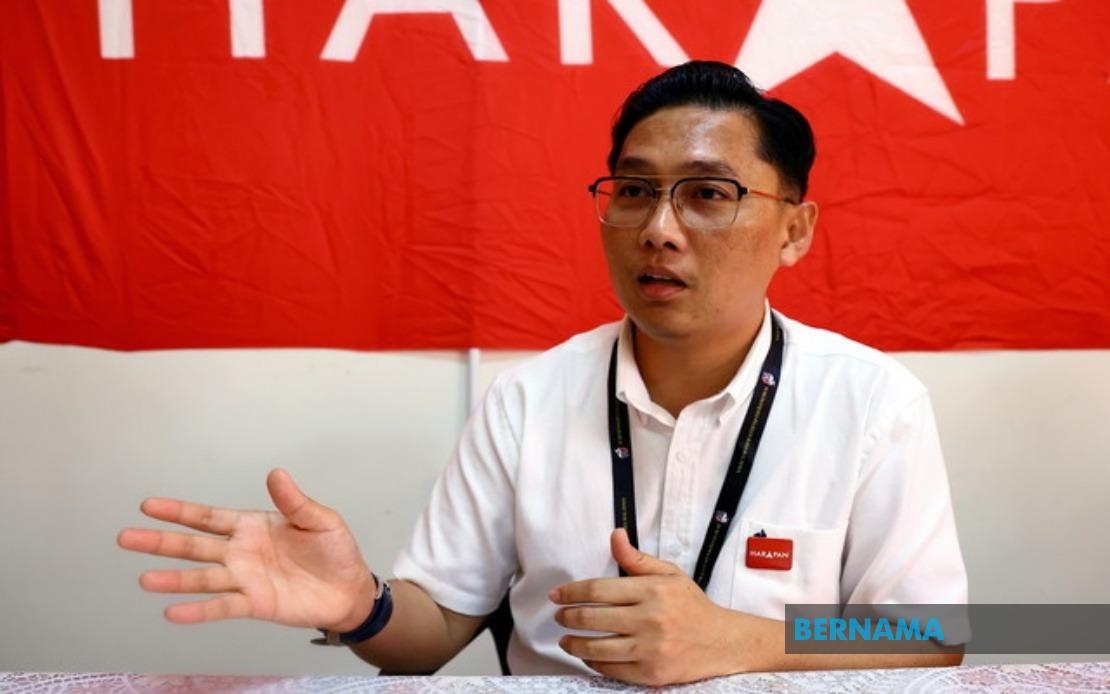
Nur Hafiz Roslan, the Pakatan Harapan candidate contesting the Machap state seat, has declared his determination to mount a serious challenge against the incumbent Johor Menteri Besar Datuk Onn Hafiz Ghazi in the upcoming state election scheduled for July 11. Despite the constituency's historical reputation as a Barisan Nasional stronghold, where Onn Hafiz secured a commanding majority of 6,543 votes in 2022, the 18-year veteran of the legal profession says he remains undeterred and committed to delivering substantive representation to local voters.
Nur Hafiz's decision to contest in Machap represents a strategic attempt by the opposition coalition to dislodge one of Johor's most powerful political figures from his current seat. The Machap contest will be a direct two-way battle between the PH candidate and the BN incumbent, with early voting scheduled for July 7. Speaking during an interview at the PH Main Operations Room for N26 Machap constituency in Simpang Renggam, Nur Hafiz articulated a vision of governance that prioritises pragmatic solutions over electoral theatrics and sectarian appeals.
Drawing on his extensive background in legal practice, Nur Hafiz contends that political outcomes are neither predetermined nor inevitable, regardless of a seat's past voting patterns. He invoked historical precedent to bolster his position, noting that prominent former Johor Menteri Besars including Tan Sri Abdul Ghani Othman and Datuk Seri Khaled Nordin both experienced electoral defeat despite their stature and experience. This historical perspective suggests that even entrenched political positions can be overturned by sufficiently motivated campaigns and shifting voter preferences.
The PH candidate's optimism extends to the operational readiness of his party machinery. He characterised the Pakatan Harapan election apparatus as well-organised, stable, and notably free from the internal friction that has plagued opposition coalitions in previous electoral contests. This assessment is significant given that electoral success often hinges not merely on candidate quality or messaging but on the ability of ground operations to mobilise supporters effectively. The absence of reported internal disputes since the nomination stage suggests the coalition has managed to maintain sufficient unity heading into the July 11 polling date.
Central to Nur Hafiz's campaign platform is an explicit rejection of what he terms outdated and divisive political methodologies. He identified the exploitation of 3R sentiments—race, religion, and royalty—as particularly problematic approaches that he argues no longer resonate with contemporary voters seeking substantive governance. This rhetorical positioning reflects a broader strategic calculation within the opposition that Malaysian electorate, particularly in urbanised and semi-urbanised constituencies like portions of Machap, increasingly demand policy substance over identity-based mobilisation tactics.
The candidate furthermore critiqued a political culture predicated on cultivating fear among different ethnic communities, suggesting that Malay, Chinese, and Indian voters share common ground on practical governance matters. This framing attempts to transcend traditional communal voting blocs by appealing to a shared interest in addressing everyday hardship, economic opportunity, and quality of public services. For Machap constituents specifically, this might encompass concerns ranging from infrastructure development to employment prospects and local livelihood issues.
Nur Hafiz articulated a vision of himself functioning as an effective intermediary between state and federal governments, ensuring that Machap's interests receive equitable representation and attention regardless of constituent background. This positioning is strategically significant as it acknowledges potential voter concerns about the constituency's representation under a federal government potentially controlled by different political coalitions than the state administration. The PH candidate's emphasis on cross-level governance coordination suggests an understanding that modern constituencies have multifaceted needs requiring coordination across administrative hierarchies.
The broader political context surrounding this Machap contest reflects intensifying competition within Johor state politics. The appointment of Onn Hafiz as Menteri Besar represents continued UMNO dominance in the state's governance structures, while the PH campaign in Machap forms part of the broader opposition strategy to chip away at BN's traditional bastion status. The state election itself occurs within a complex national political landscape where coalition configurations and electoral mathematics have become increasingly fluid and unpredictable.
For Malaysian political observers and Johor voters, the Machap contest symbolises broader questions about electoral sustainability, the viability of opposition messaging in traditionally dominant party strongholds, and the extent to which constituencies previously considered safe for the ruling coalition might be open to contestation. Nur Hafiz's confidence, whether ultimately vindicated by voters or not, reflects the contemporary reality that no electoral outcome should be taken as predetermined, and that determined challengers armed with credible credentials and compelling platforms can mount serious campaigns even in unlikely circumstances.
The divergent approaches represented by the incumbent and challenger also illuminate different visions for Johor's political future. Where Onn Hafiz's UMNO-led governance represents continuity with traditional BN approaches, Nur Hafiz's PH platform gestures toward alternative frameworks emphasising meritocratic appointment, policy-driven governance, and the subordination of communal grievance narratives to shared problem-solving. Whether sufficient numbers of Machap voters embrace this alternative vision on July 11 remains to be determined.

