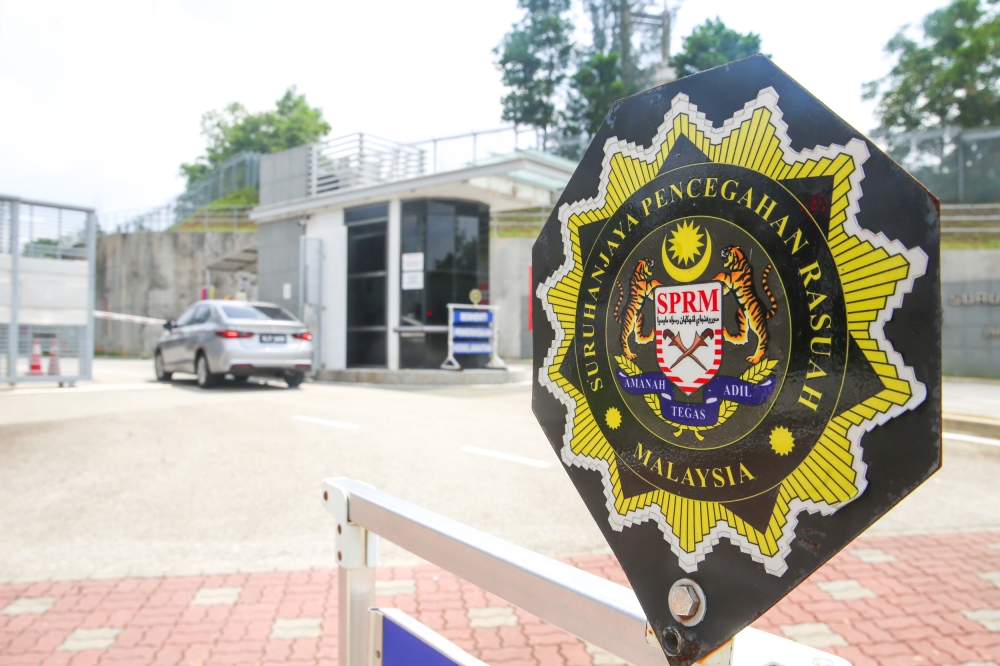
The Malaysian Anti-Corruption Commission has escalated its investigation into suspected misconduct involving government penalty payments by securing court-ordered detention of three additional suspects. A Putrajaya magistrate on August 5 granted the anti-graft agency a five-day remand period to facilitate questioning of the three individuals allegedly involved in the irregular handling of RM450,000 in collected penalty funds.
This latest development signals the broadening scope of MACC's inquiry into what officials describe as a systematic diversion of penalty revenue. The detention of multiple suspects suggests investigators are tracking potential involvement across different organisational levels, indicating the alleged misconduct may not have been isolated to individual wrongdoing but could implicate institutional processes or oversight failures. The staggered nature of remand orders, with additional suspects being picked up after initial detentions, is typical of complex fraud investigations where authorities seek to establish the full chain of responsibility and identify potential coordination among accused parties.
Penalty payment systems represent a significant revenue stream for government agencies, with collected funds typically earmarked for specific purposes or general state accounts. The alleged misuse of RM450,000 raises immediate concerns about the adequacy of internal controls within relevant departments and the mechanisms available to prevent unauthorised fund diversion. For Malaysian taxpayers and public sector accountability advocates, such cases underscore the vulnerability of government revenue collection systems to insider manipulation, particularly where segregation of duties or audit trails prove inadequate.
MACC's ability to obtain successive remand orders reflects judicial confidence in the investigative foundation the commission has established. Malaysian courts generally require investigators to demonstrate sufficient grounds for detention, including concrete evidence linking suspects to alleged offences and reasonable belief that further questioning could yield material information. The willingness of magistrates to authorise extended detention suggests MACC has presented a credible narrative of alleged misconduct involving the three suspects rather than relying on speculative charges.
For observers monitoring institutional integrity in Malaysia, this investigation exemplifies the ongoing challenge of managing large volumes of cash collections across dispersed government departments. Penalty payments—whether for regulatory violations, contractual breaches, or licensing non-compliance—flow through multiple checkpoints before reaching final destinations. Without robust real-time reconciliation systems, digital audit trails, and segregated approval authorities, such funds remain vulnerable to misappropriation. The scale of the alleged RM450,000 diversion, while not necessarily massive in absolute terms, indicates that systematic internal controls may have been circumvented rather than merely lapses occurring in isolation.
The investigation's trajectory will likely reveal whether the suspects acted independently or as part of coordinated schemes. MACC's sequential remand applications typically follow a pattern where initial detainees provide statements implicating additional individuals, leading to secondary arrests. This cascading approach allows investigators to compare accounts across suspects and identify inconsistencies that may corroborate allegations. The five-day remand period provides sufficient time for detailed questioning, bank record analysis, and reconciliation of departmental accounts to establish the flow of diverted funds.
Such investigations frequently uncover broader weaknesses in government financial administration. Previous MACC cases involving penalty revenue misuse have exposed situations where collection officers maintained inadequate documentation, commingled different funds, or processed irregular transfers without proper authorisation chains. The findings often lead to recommendations for system overhauls, enhanced training, and disciplinary action against supervisors who failed to detect anomalies despite their responsibility for oversight.
From a Southeast Asian perspective, Malaysia's MACC remains among the region's more proactive anti-corruption bodies, though its effectiveness depends substantially on sustained political support and resource allocation. Cases involving government employee misconduct are particularly sensitive, as they require balancing the public interest in accountability against institutional preservation instincts within affected departments. The willingness to pursue multiple suspects suggests current leadership is prioritising investigation momentum over administrative convenience.
The detained suspects face potential charges under the Malaysian Anti-Corruption Commission Act 2009, which criminalises soliciting or receiving gratification corruptly, as well as possible charges under the Penal Code relating to criminal breach of trust or fraud if they misappropriated government funds. Conviction thresholds require proof beyond reasonable doubt that accused individuals acted with dishonest intent and knowledge of wrongdoing, standards that can be complex to establish when organisational systems themselves are deficient.
Preliminary investigation outcomes will likely prompt governmental reviews of penalty collection procedures across relevant agencies. Such reviews typically examine whether department heads can trace every penalty payment from receipt through final allocation, whether multiple officers must authorise significant transfers, and whether monthly reconciliations occur between collected amounts and official records. Implementation of such safeguards addresses the reality that determined individuals within government can exploit procedural gaps, a challenge that transcends Malaysia and affects developing and developed administration systems alike.
As the investigation continues, broader policy implications are already apparent. The MACC case demonstrates that penalty revenue, often treated as secondary revenue streams with less rigorous oversight than primary taxes, requires equally stringent financial controls. Government agencies across Malaysia should anticipate potential internal audits of their own penalty collection processes, with particular focus on fund custody, authorisation procedures, and reconciliation practices. The investigation thus serves a deterrent function beyond the three individuals under remand, signalling that institutional tolerance for revenue irregularities has narrowed considerably.

