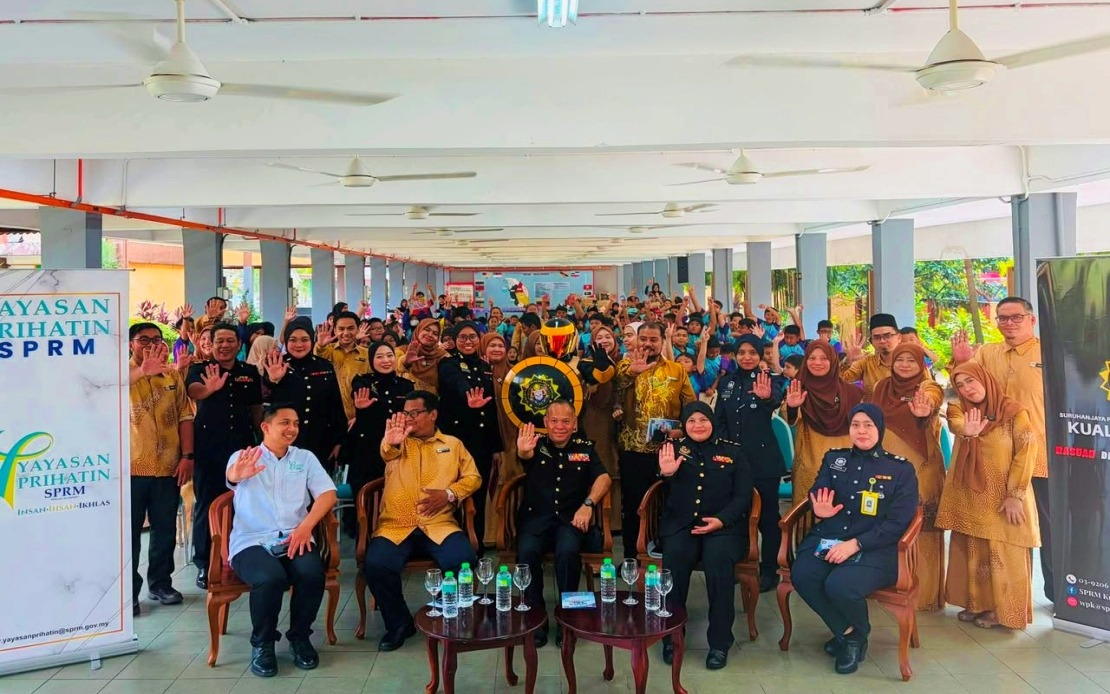
The Malaysian Anti-Corruption Commission's Kuala Lumpur office is intensifying its campaign against corruption by targeting young Malaysians through educational initiatives, marking a strategic shift toward preventative rather than purely investigative approaches. The Wira Antirasuah programme, launched at Sekolah Kebangsaan Jalan Pasar 1, reflects growing recognition within Malaysia's anti-corruption establishment that values formation at the primary school level represents a critical investment in the nation's institutional integrity over the coming decades.
Moderately Zakkuan Talib, director of the Kuala Lumpur MACC office, articulated the philosophical underpinning of this approach: true heroism does not require exceptional abilities but rather the moral fortitude to choose righteousness when facing temptation or pressure. This framing proves particularly significant in the Malaysian context, where systemic corruption has repeatedly been attributed not to a handful of individual wrongdoers but rather to normalised practices and eroded ethical guardrails across sectors. By positioning integrity as achievable through everyday choices rather than extraordinary sacrifice, the MACC seeks to make ethical conduct feel attainable and even ordinary to young Malaysians.
The conceptual foundation distinguishes between visible, headline-grabbing acts of misconduct and the accumulation of minor ethical compromises that gradually corrode institutional standards. Mohamad Zakkuan emphasised that integrity manifests in mundane decisions: refraining from dishonesty in examinations, respecting others' property, maintaining confidentiality, and honouring commitments. This granular understanding addresses a gap in conventional anti-corruption messaging, which often focuses on criminal behaviour rather than the normalisation of petty dishonesty that creates permissive environments for larger violations. When children learn that copying another's work or breaking a promise represents a breach of integrity equivalent in principle to more severe transgressions, the foundation for lifelong ethical consistency strengthens.
The programmatic design incorporated multiple pedagogical approaches to sustain engagement beyond a single visit. The Community Education Branch delivered structured briefings to communicate corruption's societal costs and individual responsibility. The participation of Kapten MACC, the commission's cartoon mascot, deployed familiar and accessible imagery to younger pupils while maintaining the seriousness of the underlying message. Such multi-sensory and multi-age approaches acknowledge that primary school populations span developmental stages requiring varied communication strategies. The mascot particularly serves Malaysian schools well, given widespread use of character-based learning in the national curriculum.
The establishment of an Anti-Corruption Corner at the school created a permanent physical space dedicated to integrity messaging, transforming the initiative from a one-time event into an embedded component of the school environment. Such infrastructure persists after official visits conclude, continuously reminding pupils and staff of ethical expectations. The corner functions as both educational resource and symbolic commitment, signalling institutional prioritisation of integrity. For school administrations navigating budget constraints, such modest infrastructure provides tangible anti-corruption presence without substantial capital outlay.
Beyond the explicitly educational programming, the initiative encompassed welfare provisions reflecting understanding that sustainable integrity cultivation requires addressing basic material needs. The donation of smart television technology to the school and educational assistance targeting 29 pupils from asnaf (disadvantaged) families acknowledged an uncomfortable reality: children experiencing food insecurity or financial desperation may face practical obstacles to ethical conduct. By pairing integrity messaging with material support, the MACC recognised that preaching honesty to hungry or desperate youth without addressing underlying deprivation lacks credibility and sustainability. This welfare dimension distinguishes the programme from morality-focused approaches divorced from socioeconomic context.
The programme's coordination with national observances including National Month celebrations and the Keep Malaysia Clean campaign demonstrated strategic alignment with broader government messaging on patriotism and national pride. Involving special education pupils in hibiscus planting linked environmental stewardship with broader themes of national responsibility and collective wellbeing. This integration suggests the MACC conceptualises anti-corruption work not as isolated compliance messaging but as part of holistic nation-building involving multiple virtues and governmental priorities. For Malaysian audiences accustomed to interconnected national campaigns, such thematic integration enhances message coherence.
The selection of a government primary school as the launch venue carried particular significance. Government schools serve Malaysia's economic and social cross-section more comprehensively than private institutions, meaning integrity messaging reaches pupils across socioeconomic backgrounds and geographic distribution. Early exposure to anti-corruption values within government institutions themselves sends powerful signals about institutional commitment to transformation from within. Furthermore, government school pupils represent future civil servants, elected representatives, and business leaders disproportionately, making this population a strategic focus for long-term institutional change.
The Wira Antirasuah programme sits within Malaysia's evolving anti-corruption strategy, which has increasingly emphasised prevention and cultural transformation alongside prosecution. Previous public sector corruption scandals involving officials across ranks suggested that enforcement alone, without corresponding value shifts, produces limited systemic impact. Youth-focused initiatives offer theoretical potential to disrupt cycles where corruption becomes normalised through socialisation and institutional culture. However, programme sustainability depends on consistent funding, integration with teacher training curricula, and reinforcement through secondary and tertiary education.
For Southeast Asian regional context, Malaysia's approach reflects trends across the ASEAN bloc toward corruption prevention through education, comparable to similar initiatives in Indonesia, Thailand, and the Philippines. The emphasis on early intervention aligns with international best practices endorsed by organisations like Transparency International and the United Nations Convention Against Corruption. However, the effectiveness of such programmes ultimately depends on broader institutional reforms, political will, and whether anti-corruption messaging reflects genuine governmental practice or represents rhetorical positioning disconnected from actual enforcement patterns.
The programme's long-term impact remains contingent on multiple variables extending beyond the MACC's direct control. Educational initiatives alone cannot overcome systemic incentive structures that reward corrupt behaviour, nor can they counteract messaging from powerful figures seemingly escaping accountability for misconduct. The success of grassroots integrity campaigns fundamentally depends on whether young Malaysians observe their societal leaders and institutions practising the values being advocated. If pupils internalise anti-corruption principles but subsequently witness widespread impunity for violations, cognitive dissonance may breed cynicism rather than sustained ethical commitment.
Nevertheless, the Kuala Lumpur MACC's investment in such programmes represents necessary foundational work in the lengthy process of cultural transformation. Building integrity consciousness among young Malaysians today potentially yields exponential returns as these individuals progress into positions of influence across sectors. The combination of educational content, symbolic infrastructure, welfare provision, and integration with national campaigns suggests thoughtful programme design reflecting lessons from comparable initiatives elsewhere. For Malaysia's anti-corruption trajectory, sustained commitment to such grassroots work complementing higher-profile enforcement activities offers the most realistic pathway toward institutional integrity improvement.

