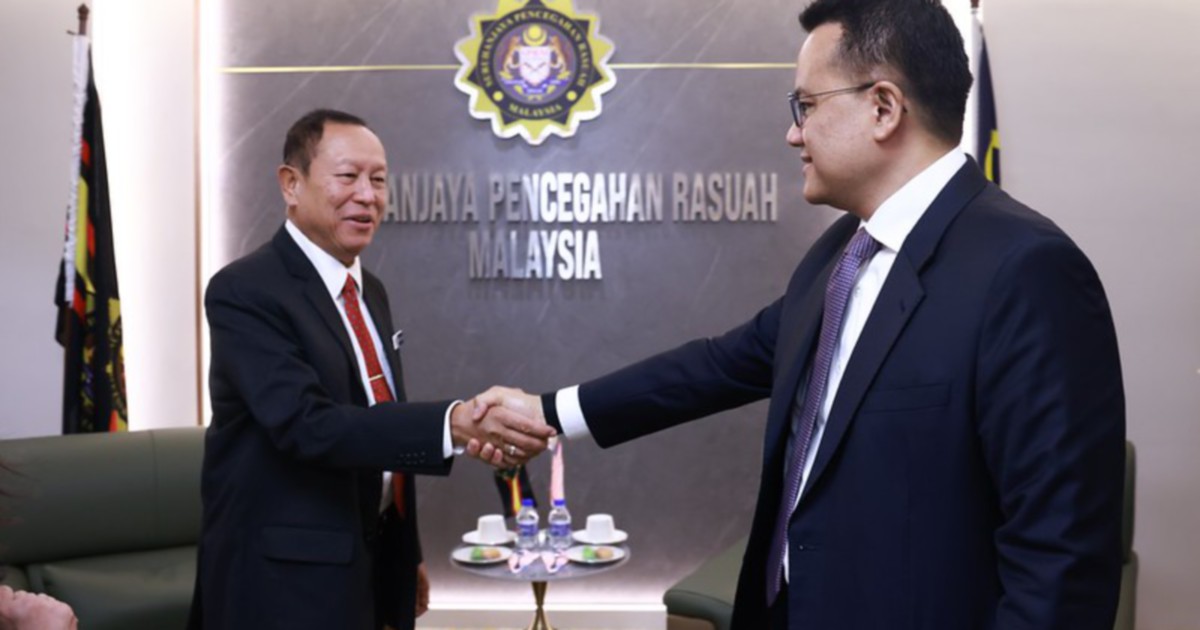
The Malaysian Anti-Corruption Commission and Permodalan Nasional Berhad have reinforced their working relationship with the explicit goal of elevating governance standards, improving transparency mechanisms, and fostering stronger ethical practices within Malaysia's investment administration framework. This expanded collaboration represents an important institutional response to emerging concerns about oversight effectiveness in the management of the nation's substantial capital reserves.
PNB, as the custodian of Bumiputera-linked investments and various state-backed funds, exercises stewardship over financial assets that directly influence economic opportunity for millions of Malaysians. The scale and significance of these portfolios make institutional governance practices within the investment manager critically important to public confidence in the financial system. By drawing closer to MACC's expertise in combating corrupt practices, PNB positions itself to strengthen the internal control architecture that underpins operational decision-making across investment allocation, fund deployment, and asset management activities.
This strategic alignment addresses a structural reality within Malaysia's investment ecosystem: governance frameworks must continually evolve alongside increasingly complex investment vehicles, global market pressures, and the sophistication of potential integrity violations. Traditional oversight mechanisms, while foundational, sometimes struggle to keep pace with evolving methods through which corruption can manifest within institutional settings. The partnership allows MACC to furnish PNB with contemporary intelligence on emerging risks and vulnerability patterns observed across the broader financial services sector.
The collaboration encompasses multiple operational dimensions. Enhanced information-sharing protocols enable MACC to remain informed of PNB's internal governance assessments and emerging compliance challenges, while simultaneously allowing PNB to access MACC's analytical capabilities regarding sectoral integrity trends. Training initiatives can now be coordinated to ensure PNB personnel across different hierarchical levels understand the commission's investigative methodologies and the institutional contexts in which corruption typically emerges within investment management environments.
For Malaysian investors—particularly ordinary Malaysians holding units in PNB funds—this deepened institutional partnership carries tangible significance. Stronger integrity mechanisms translate into reduced risks of misallocation or misappropriation of funds, more rigorous vetting of investment decisions, and clearer accountability pathways when governance lapses occur. Public confidence in investment managers depends substantially on demonstrated commitment to transparent operations and swift institutional response to misconduct.
Within the Southeast Asian context, Malaysia's approach reflects broader regional movements toward strengthening institutional safeguards around state-owned or state-influenced investment vehicles. Countries across the region have increasingly recognized that governance credibility directly influences capital flows and international investor perceptions. Demonstrable commitment to integrity frameworks can enhance Malaysia's positioning within increasingly competitive regional capital markets and contribute to broader economic resilience during periods of market volatility.
The partnership also acknowledges that corruption within investment management often differs meaningfully from corruption in other sectors. Investment decisions unfold across extended timeframes, involve substantial discretionary judgment, and frequently occur outside immediate public scrutiny. Conflicts of interest can develop subtly through relationships between decision-makers and beneficiaries. MACC's deepened engagement with PNB allows the commission to develop sector-specific investigative expertise and to identify red flags that might elude generalist oversight approaches.
From a governance architecture perspective, this collaboration exemplifies the "networked accountability" model increasingly adopted by advanced institutional systems globally. Rather than concentrating oversight authority within a single entity, complementary institutions—each bringing distinct expertise and mandate—coordinate activities to create more comprehensive monitoring ecosystems. MACC contributes investigative prowess and systemic corruption analysis, while PNB contributes operational intimacy and institutional legitimacy within investment management communities.
The timing of this partnership strengthening reflects Malaysia's broader recovery trajectory and institutional renewal efforts following recent years of heightened scrutiny regarding governance practices across major state institutions. Visible demonstration of coordinated action between MACC and major state investment vehicles signals institutional determination to restore public confidence in national governance standards. Such signaling carries both domestic and international resonance, particularly as Malaysia seeks to maintain investor confidence during periods of regional economic adjustment.
Looking forward, the effectiveness of this partnership will be measurable through concrete outcomes: the pace at which governance improvements materialize within PNB operations, the consistency with which investigation capacity addresses emerging integrity concerns, and ultimately the degree to which Malaysian investment management institutions maintain reputation for responsible stewardship. The collaboration framework itself represents an important institutional acknowledgment that safeguarding national investment integrity requires coordinated, sustained commitment from multiple actors within Malaysia's governance architecture.

