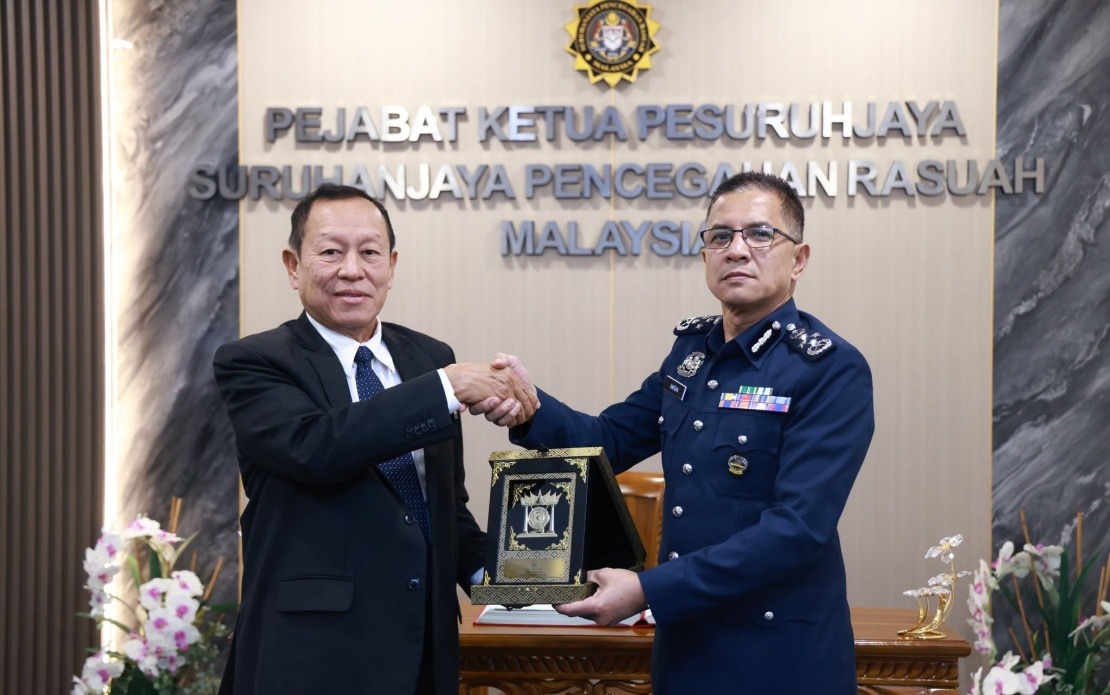
The Malaysian Anti-Corruption Commission and the Royal Malaysian Customs Department are moving ahead with plans to establish a dedicated task force aimed at strengthening oversight of enforcement operations and tax collection mechanisms at the country's major trading hubs. The initiative emerged from a strategic meeting held in Putrajaya on July 15, where senior officials from both agencies discussed the institutional architecture needed to combat corruption and revenue loss within the customs apparatus.
MACC chief commissioner Datuk Seri Abd Halim Aman indicated that the proposal represents a significant step toward closer inter-agency cooperation on matters that have long plagued Malaysia's ports and maritime borders. The one-hour meeting between Abd Halim and Royal Malaysian Customs Department director-general Datuk Amran Ahmad centred on identifying operational vulnerabilities and designing coordinated responses to systemic challenges that complicate customs oversight. Both leaders acknowledged that effective tax collection and smuggling prevention require not merely enforcement intensity but also institutional integrity and procedural clarity.
The agenda reflected growing concern within government circles about the sophistication of smuggling networks and the increasingly complex methodologies used to circumvent Malaysia's tariff and excise regimes. During discussions, customs officials detailed how organised syndicates have adapted their approaches to evade detection and taxation obligations. These criminal tactics now encompass not only contraband movement but also document falsification, misdeclaration of goods, and manipulation of valuation records—methods that require investigation capabilities beyond traditional customs inspection.
Among the specific vulnerabilities highlighted was a particular modus operandi involving the misrepresentation of currency movements. Officials noted instances where individuals declare substantially lower cash amounts upon entry than actually possessed, effectively converting legitimate currency import into an undisclosed financial transfer. This tactic, which sits at the intersection of customs violation and potential money laundering, demonstrates how revenue evasion has become entangled with broader financial crime concerns.
The container management sector emerged as another focal point for remedial action. Customs authorities flagged leakage within container handling systems at ports nationwide, suggesting that existing oversight mechanisms have gaps that enable goods to move through the supply chain without proper documentation or duty payment. A joint MACC-Customs task force would theoretically position both agencies to monitor personnel conduct, verify container movement logs, and cross-reference shipping documentation against actual cargo flows.
For Malaysian observers, this development carries implications that extend beyond bureaucratic coordination. The region's importance as a maritime trading corridor and transshipment hub means that ports serve not only domestic commercial interests but also facilitate regional trade networks. Enhanced customs enforcement directly affects cost competitiveness for legitimate importers and exporters, as tax leakage translates into artificial pricing advantages for smuggled goods that undermine law-abiding traders.
Amran affirmed that the Customs Department welcomed MACC's involvement in reinforcing integrity standards among frontline personnel. This statement hints at a recognition that corruption within the customs system itself—whether through bribery, selective enforcement, or collusion with smugglers—represents a core problem. MACC's mandate to investigate and pursue public sector corruption makes it a natural partner for rooting out internal vulnerabilities that criminal networks routinely exploit.
The proposed task force framework also suggests movement toward more granular intelligence sharing between agencies. Rather than operating in isolation, MACC investigators and customs enforcement teams would presumably combine their evidence and investigative findings, allowing pattern analysis across cases that might separately seem routine. This integrated approach could reveal networks and supply chains that individual agencies might not detect in their standalone operations.
Regional context underscores the timing of this initiative. Southeast Asian ports have increasingly become focal points for transnational smuggling operations targeting everything from contraband cigarettes and alcohol to electronic goods and luxury items. Neighbouring countries including Singapore, Thailand, and Indonesia have invested significantly in customs modernisation and intelligence capabilities. Malaysia's move toward enhanced inter-agency coordination reflects awareness that remaining competitive and secure requires comparable investment in institutional effectiveness.
The involvement of MACC Investigation Division senior director Datuk Mohd Hafaz Nazar and customs integrity officials in the meeting signals that the initiative commands commitment at operational levels. Implementation will likely test how effectively two large government agencies can align procedures, share intelligence within legal frameworks, and sustain collaborative momentum against entrenched interests that profit from enforcement gaps.
For businesses dependent on supply chain predictability and level playing fields, clearer customs procedures and consistent enforcement offer tangible benefits. Current ambiguity around container management and valuation standards creates uncertainty that legitimate traders factor into pricing and risk calculations. A more transparent, uniformly enforced regulatory environment would reduce compliance friction for honest operators while making smuggling riskier and costlier for criminal networks.
Moving forward, the task force's success will hinge on genuine operational integration rather than symbolic cooperation. Both agencies must establish shared key performance indicators, ensure adequate resourcing, and create mechanisms that allow frontline officers to escalate cases for joint investigation. Without such foundations, the task force risks becoming another administrative layer that duplicates oversight without meaningfully changing port security outcomes.

