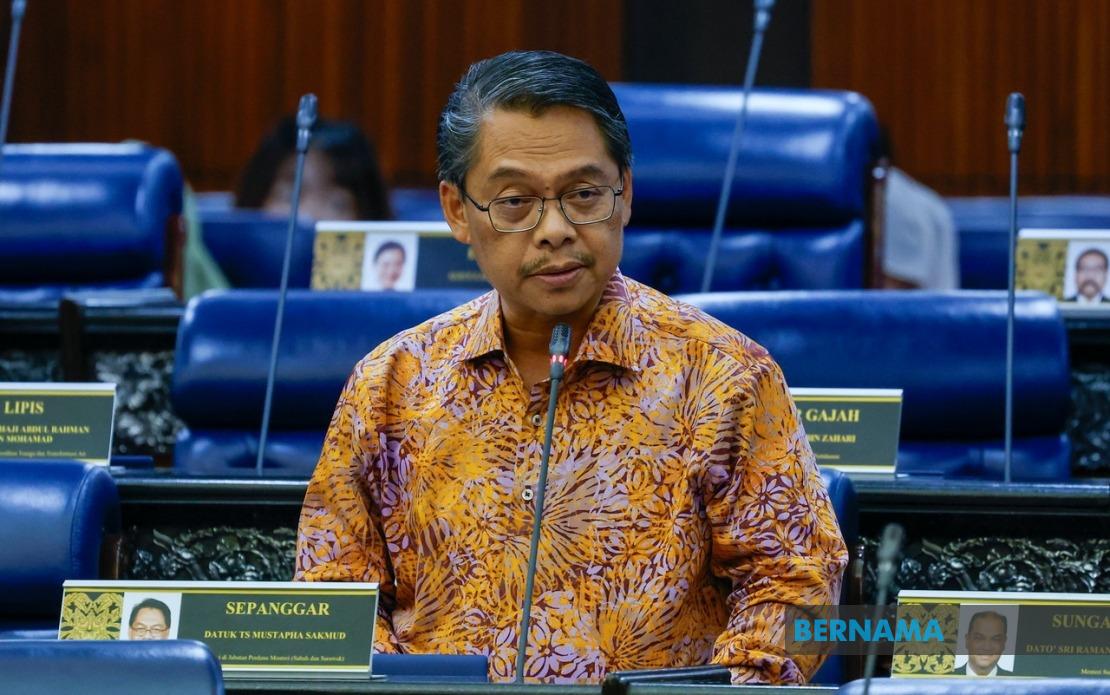
The decade-long effort to modernise Malaysia's foundational compact with Sabah and Sarawak has achieved tangible momentum, with government officials confirming substantial movement on a longstanding constitutional review. According to Datuk Mustapha Sakmud, the Minister in the Prime Minister's Department handling Sabah and Sarawak Affairs, negotiations under the Malaysia Agreement 1963 framework have culminated in the complete settlement of 13 distinct matters out of 29 originally tabled for discussion, marking a significant milestone in a process that has frequently stalled amid political disagreement and competing regional interests.
The minister's statement came during parliamentary proceedings on June 25, when he detailed the trajectory of formal negotiations conducted through the MA63 Technical Committee. Beyond the thirteen fully concluded items, five additional issues have reached what officials characterise as partial or interim resolution—a classification that signals progress toward final settlement but reflects ongoing complexity around implementation. These interim matters encompass expansion of state-level public service employment under Article 112 of the Federal Constitution, alongside substantive concerns regarding healthcare delivery, educational policy, and the broader "Borneonisation" initiative, which seeks to increase the proportion of Sabah and Sarawak-born personnel within federal administrative structures stationed in the two states.
The Sabah and Sarawak Affairs Division, functioning as the formal secretariat for these negotiations, maintains active monitoring of the eleven matters that remain unresolved. This oversight structure demonstrates the federal government's institutional commitment to the process, though the persistence of eleven outstanding items underscores the intricacy of restructuring a constitutional arrangement forged more than six decades ago. The breadth of issues under negotiation—spanning employment, devolved service delivery, and resource management—reflects how fundamentally the agreement touches upon governance across Sabah and Sarawak, affecting millions of citizens in both states.
The most contentious unresolved matter concerns parliamentary representation, an issue that carries profound implications for the political weight and legislative voice of East Malaysian states. Representatives from Sabah and Sarawak, particularly those aligned with regional parties like Warisan, have persistently demanded an expansion of parliamentary constituencies to grant the two states combined representation equivalent to 35 per cent of total Dewan Rakyat seats. This threshold would substantially amplify East Malaysian influence over federal policy and budget allocation, fundamentally reshaping the balance of power between Peninsular and East Malaysian interests within Parliament.
Mustapha's explanation of why this matter remains stalled reveals the procedural and constitutional barriers that prevent swift resolution. Electoral redelineation—the process of redrawing constituency boundaries or creating new seats—falls exclusively under the statutory purview of the Election Commission and can only proceed once an eight-year cycle has elapsed since the previous redistricting exercise. This technical requirement, enshrined in the 13th Schedule and Article 113 of the Federal Constitution, operates independently of parliamentary will and represents an institutional check that prevents governments from arbitrarily altering electoral geography for partisan advantage.
Beyond procedural timing, however, lies a deeper constitutional obstacle. Any fundamental change to the composition of the Dewan Rakyat itself—including the total number of seats allocated to Sabah and Sarawak—requires amendment to Article 46 of the Federal Constitution. Such amendments demand a supermajority endorsement from Parliament: specifically, a two-thirds majority vote. This requirement creates an enormously high legislative threshold, one deliberately designed by Malaysia's constitutional architects to prevent ordinary partisan majorities from unilaterally restructuring core institutional arrangements. Achieving such consensus has proven elusive, reflecting the differing constitutional visions held by federal authorities and East Malaysian stakeholders.
The MA63 review process itself emerged from historical grievance and political necessity. Sabah and Sarawak entered the Malaysian federation in 1963 with specific constitutional safeguards and autonomous powers over education, healthcare, and state employment—protections formalized in the agreement itself. Over subsequent decades, these provisions eroded through federal encroachment, administrative reinterpretation, and simple institutional drift. By the early 2020s, growing political awareness among East Malaysian populations of these historical concessions, coupled with the emergence of regionally-focused political parties, generated sustained pressure for comprehensive renegotiation and restoration of original constitutional terms.
The resolution of thirteen matters, though substantial, likely reflects issues where federal and state interests aligned sufficiently to permit compromise. These may encompass technical clarifications regarding administrative authority, resource-sharing formulas where both parties perceived mutual benefit, or the formalisation of practices that had evolved informally. The five interim resolutions probably represent areas where negotiators achieved consensus on underlying principles but require further work on implementation mechanisms, timelines, or institutional arrangements. The eleven remaining matters presumably encompass the most politically charged questions—those where genuine divergence exists between federal preferences and East Malaysian demands.
For Malaysian federalism more broadly, the MA63 review illustrates both the possibilities and limitations of constitutional negotiation. The progress achieved demonstrates that even foundational arrangements can be revisited through institutional channels and sustained dialogue. Yet the parliamentary seats impasse reveals how structural constitutional impediments—requiring supermajorities, vesting authority in independent commissions, and imposing waiting periods—can obstruct change even when substantial political constituencies demand it. These mechanisms, originally designed to protect constitutional stability, can equally frustrate legitimate aspirations for renewed federal equilibrium.
Regional implications extend throughout Southeast Asia, where federal arrangements in Indonesia, Malaysia, and elsewhere face similar pressures between centre and periphery. Malaysia's experience with MA63 renegotiation offers instructive lessons about managing historical grievances, balancing autonomy with national integration, and navigating constitutional reform amid competing political actors with asymmetric bargaining power. The issue of parliamentary representation, in particular, touches upon questions of fairness and democracy that extend beyond technical constitutional questions into fundamental principles of representative legitimacy.
Looking forward, the eleven outstanding matters will determine whether this review process delivers substantive constitutional restoration or primarily produces symbolic acknowledgment of historical wrongs. Parliamentary seat allocation, remaining stalled, exemplifies the most fundamental unresolved question: whether Malaysia's constitutional structure can be rebalanced to reflect East Malaysian interests more adequately, or whether structural barriers will perpetuate existing distributions of power and resources. The coming years will test whether the momentum achieved on thirteen matters can extend to the most politically sensitive remaining items.

