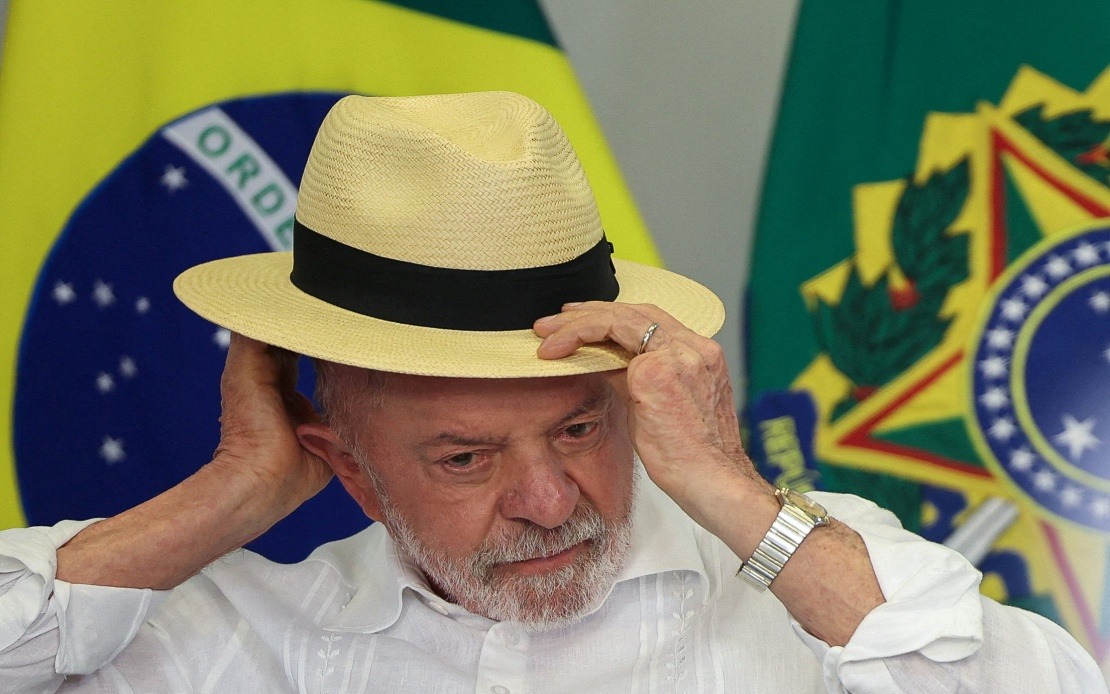
Brazil's presidential contest is tightening as the October election approaches, with incumbent President Luiz Inacio Lula da Silva maintaining only a marginal advantage over Senator Flavio Bolsonaro, according to fresh polling data. The Quaest poll, commissioned by major Brazilian broadcaster Globo and conducted between August 10 and 13 among 2,004 respondents, revealed Lula commanding 43 per cent support in a hypothetical runoff scenario against Bolsonaro's 40 per cent. This three-percentage-point margin sits uncomfortably close to the survey's two-point margin of error, suggesting a contest that remains far from settled with roughly two months until voting day.
The polling trajectory indicates the race is consolidating around these two frontrunners. Just eight days earlier, an identical Quaest survey had shown Lula with a slightly larger cushion of five percentage points, leading 44 per cent to 39 per cent. This modest contraction in the president's advantage underscores the volatile nature of Brazilian electoral politics and the challenge facing Lula as he campaigns for a second non-consecutive term. In a first-round scenario with multiple candidates on the ballot, Lula's position appears more commanding at 38 per cent, substantially outpacing Bolsonaro's 31 per cent. Other candidates including Renan Santos, Ronaldo Caiado, and Romeu Zema collectively account for only ten per cent combined support, making a runoff virtually inevitable unless Lula secures an outright majority.
Flavio Bolsonaro's emergence as the right-wing standard-bearer reflects the fractured state of Brazil's conservative political movement following his father's dramatic fall from power. The elder Bolsonaro, former President Jair Bolsonaro, was declared ineligible by Brazil's supreme electoral court on grounds of abusing political power and was subsequently convicted in connection with an alleged conspiracy to reverse his 2022 election defeat. With the patriarch barred from seeking office, his eldest son has inherited the mantle of leadership for the country's right-wing base, mobilizing support that remains substantial but insufficient to overtake the incumbent.
Lula's re-election campaign, officially launched on August 2 at the Workers' Party convention in São Paulo, has strategically positioned the contest around issues of national sovereignty and protection of Brazil's natural resources. The president has explicitly framed his candidacy as a defence of Brazilian interests against external pressure, particularly targeting the Trump administration's geopolitical posturing. This messaging directly challenges the international dimension of Bolsonarism, which has historically aligned closely with American conservative politics and the Republican party.
The president's sovereignty rhetoric carries substantial weight in the Brazilian political context, resonating with nationalist sentiment across the political spectrum. Lula has repeatedly warned that critical minerals and rare earths essential to global technology and renewable energy sectors must remain under Brazilian control. His August campaign speech included pointed warnings to China, the United States, and France against presuming they could access Brazil's mineral wealth without respecting the nation's sovereignty and democratic will. This positioning transforms the election into a proxy battle over Brazil's international alignment and economic independence at a time of significant geopolitical realignment.
Donald Trump's well-documented personal relationships with the Bolsonaro family add another layer to Lula's sovereignty messaging. The American president's historical closeness to Jair Bolsonaro and his family members creates an implicit association between a potential Bolsonaro electoral victory and American influence over Brazilian policy. Lula has already cautioned Trump directly, delivering a diplomatic but unmistakable warning in June against interfering in Brazil's electoral processes. The president's message was clear and unambiguous: Brazil's internal political contests are purely Brazilian affairs, just as American elections remain the exclusive domain of American voters.
This nationalist positioning offers Lula tactical advantages in a country with historical sensitivities about foreign intervention and great power competition over its resources. For Malaysian and Southeast Asian observers, Brazil's election dynamics illuminate broader patterns of middle-power nations seeking to assert autonomy amid competition between established powers and rising economic challengers. The emphasis on protecting natural resources from external control resonates across the region, where similar anxieties exist regarding sovereignty over strategic minerals, agricultural production, and technological development.
The polling data suggests that while Lula retains a structural advantage heading into the final campaign phase, complacency would be dangerous. The statistical tightness of the runoff scenario indicates substantial opportunity for Bolsonaro to make gains if his campaign effectively mobilizes his base and persuades undecided voters. With roughly eight weeks remaining, campaign events, media exposure, and unforeseen political developments could significantly alter voter preferences. The margin separating victory from defeat remains perilously slim for an incumbent president seeking re-election.
Brazil's electoral system, which mandates a runoff between the two leading candidates if no contender wins more than fifty per cent in the first round, virtually ensures a second-round showdown between these two frontrunners. This structure gives campaigns ample time to consolidate support and frame the choice in stark terms. For Lula, the challenge involves maintaining his nationalist coalition while defending his economic record. For Bolsonaro, success requires expanding beyond his current base of hardened supporters to appeal to centrist and economically conservative voters dissatisfied with the incumbent administration.
The international dimensions of Brazil's election carry implications well beyond the country's borders. Southeast Asian nations have substantial interests in Brazil's economic policies, particularly regarding agricultural trade, investment flows, and participation in mechanisms like BRICS. A Bolsonaro victory might recalibrate Brazil's foreign policy orientation toward closer alignment with the United States, potentially affecting regional groupings and development bank dynamics. Conversely, Lula's re-election would likely maintain Brazil's current emphasis on South-South cooperation and multipolar international engagement, with different consequences for regional trade relationships and diplomatic alignments.
As the campaign intensifies over the coming weeks, both candidates will seek to define the election's central narrative. Lula's emphasis on sovereignty and resource protection appeals to broader Brazilian constituencies concerned about foreign economic domination. Bolsonaro's campaign will likely focus on economic management, inflation, and law-and-order issues where Lula's government faces criticism. With the runoff margin hovering near the margin of error, the outcome remains genuinely uncertain despite the incumbent's nominal advantage.

