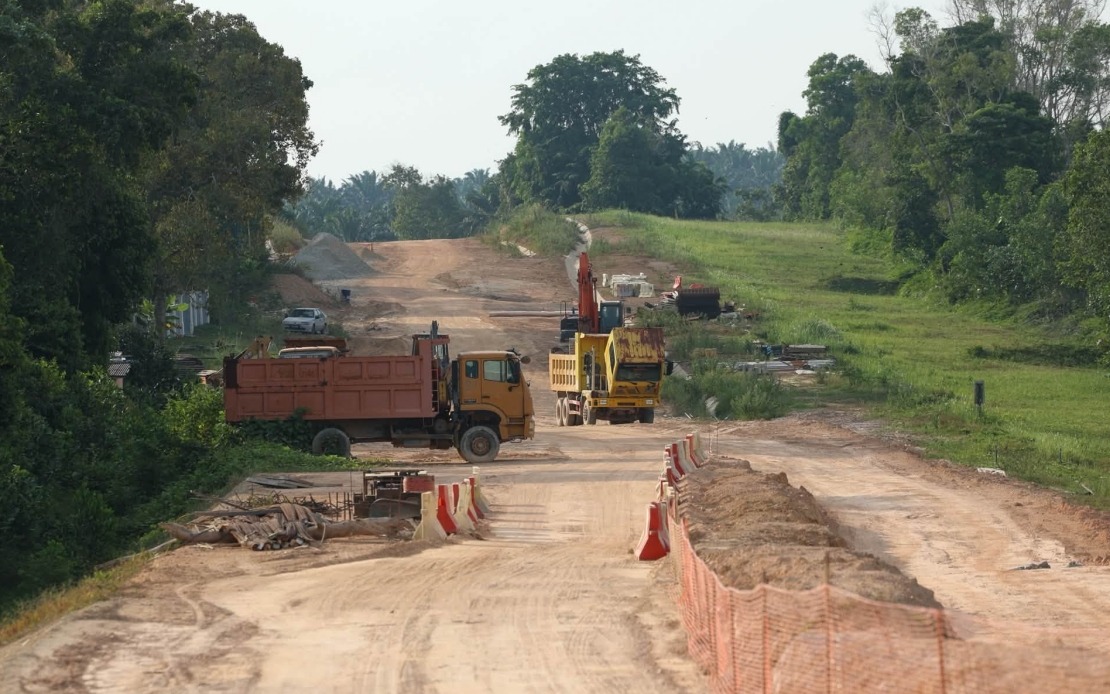
A major infrastructure undertaking to build a modern road corridor through Port Dickson's rural settlements is forging ahead of its contractual timeline, with construction crews achieving more than three-fifths of the total work within the past months. The 10-kilometre Lukut-Kampung Sirusa road project, valued at RM81.92 million, has now completed 60.57 per cent of its physical construction, representing substantial progress that has allowed the implementing authority to bank a cushion of 43 calendar days against the original delivery schedule set for August 10, 2027.
Deputy Works Minister Datuk Seri Dr Ahmad Maslan visited the Port Dickson construction site recently to assess the advancement and ensure quality standards are being maintained throughout the multi-layered infrastructure development. The inspection focused on verifying that work is proceeding in line with strict specifications, technical schedules and cost parameters while simultaneously addressing any on-site complications that might otherwise jeopardise timely completion. Such ministerial oversight reflects the federal government's commitment to accelerating delivery of infrastructure projects that remain central to regional development strategies across Peninsular Malaysia.
The road itself represents far more than a simple asphalt surface. The RM81.92 million investment encompasses a comprehensive suite of supporting infrastructure aligned with Public Works Department R2 specifications, encompassing slope stabilisation works, sophisticated drainage systems designed to manage tropical weather patterns, sewerage infrastructure to serve the communities along the corridor, embedded utilities and associated support structures. This layered approach to infrastructure development ensures the road network will function reliably for decades while supporting the service demands of growing settlements in the Port Dickson district.
The geographic span of the project—running through Kampung Paya and Kampung Bagan Pinang to connect Lukut with Kampung Sirusa—deliberately targets remote or underserved areas within Port Dickson where road access has historically constrained social and economic opportunity. For Malaysian readers familiar with rural connectivity challenges, this project exemplifies how targeted infrastructure investment can unlock potential in communities that have previously experienced geographic isolation. The improved road network will fundamentally alter travel patterns across the region, reducing journey times and making routine access to essential services far more feasible for residents in outlying settlements.
Beyond the immediate convenience gains, the project carries explicit socio-economic implications for Port Dickson. The Works Ministry has framed the undertaking as a catalyst for local economic transformation, particularly through enhanced tourism accessibility and improved market access for local traders and businesses. The port district, which has long grappled with the tension between its maritime heritage and contemporary economic diversification, stands to benefit from infrastructure that makes its attractions and economic centres more accessible to both domestic and regional visitors. Shorter travel times and smoother traffic flow create the practical conditions necessary for businesses to operate more efficiently and for investors to view the district as an attractive location for new ventures.
The project directly facilitates access to critical public facilities including schools and primary healthcare clinics scattered throughout the region, alongside tourist attractions that define Port Dickson's appeal. For dispersed rural populations, such connectivity improvements represent tangible enhancements to quality of life and educational opportunity. Students and patients no longer confined by poor road conditions can access secondary schools and specialist medical services previously requiring arduous journeys. The infrastructure investment therefore extends beyond commercial considerations into the realm of human development and equity.
Implementation responsibility resides with the State Public Works Department operating under the Ministry of Rural and Regional Development, with project funding derived from the federal government's development allocation budget. This administrative structure situates the road project within Malaysia's broader framework for accelerating rural infrastructure delivery, where federal resources and state-level implementation capacity are coordinated to address connectivity gaps identified in regional development plans. The Port Dickson assignment demonstrates how this institutional arrangement can function effectively when oversight mechanisms, like the deputy minister's site visit, ensure accountability and progress verification.
The fact that the project is running 43 days ahead of its original timeline warrants closer examination, as it suggests either conservative initial scheduling, enhanced contractor efficiency, or favourable conditions during the critical construction phase. For Malaysian infrastructure observers, early completion signals are worth monitoring, as they occasionally indicate that project management lessons learned from previous undertakings have been successfully applied. The compressed timeline also raises the possibility that final completion could occur substantially earlier than the August 2027 deadline, potentially unlocking the economic benefits for Port Dickson communities sooner than anticipated.
The project's significance extends beyond Port Dickson itself. In the context of Southeast Asian regional development, Malaysia's commitment to systematic infrastructure improvement in secondary urban areas and their hinterlands reflects a policy priority that influences broader prosperity patterns across the region. Port Dickson and similar towns throughout the country represent growth nodes where targeted investments can generate multiplier effects across local and regional economies. A functional, modern road network reduces transportation costs for businesses, expands market access for agricultural and artisanal producers, and creates the practical foundation upon which sustainable community development rests.
Looking forward, the accelerated progress on the Lukut-Kampung Sirusa road project provides Port Dickson with a tangible demonstration that long-promised infrastructure improvements are materialising on the ground. For communities that have waited years for improved connectivity, the visual evidence of advancing construction and the realistic prospect of 2027 completion represents validation that regional development policy is translating into physical reality. Should the project continue its accelerated pace, it could serve as a model for infrastructure delivery elsewhere in Malaysia, potentially influencing how public works are managed and coordinated across other underserved regions seeking to close their connectivity gaps.

