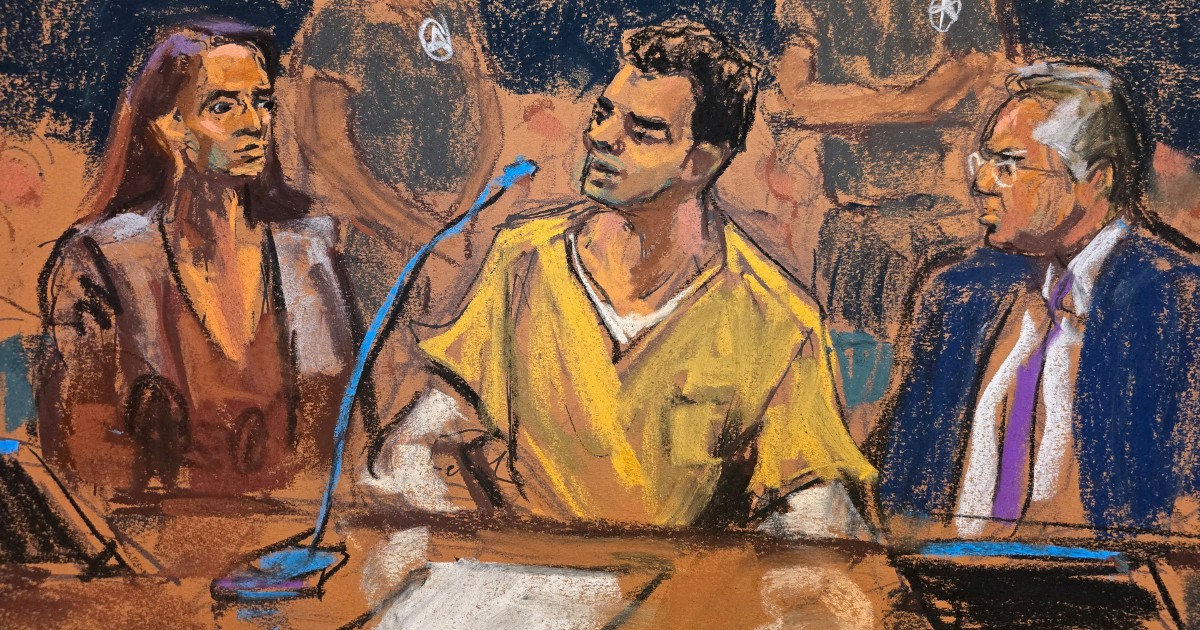
Luigi Mangione's appearance in an American courtroom revealed a troubling narrative: a man who positions himself as an avenger against a dysfunctional healthcare system, yet stands accused of calculated violence. The defendant, who has admitted to the fatal shooting of Brian Thompson, chief executive of UnitedHealthcare, used the judicial arena to articulate grievances that resonate across North America—but in a manner that courts and prosecutors contend masks premeditated murder.
The case has captivated international attention partly because it touches upon universal frustrations with insurance denial systems. Americans have long grappled with health insurance rejecting coverage for treatments, a phenomenon that extends throughout Western healthcare markets. Mangione's courtroom statements attempting to frame the killing as a form of protest against a "broken" system represent a dangerous conflation of personal suffering with justification for lethal action. His invocation of a back injury as a catalyst speaks to how chronic pain, medical rejection, and financial desperation can intersect in ways that demand serious societal examination, even when those elements cannot excuse violence.
For Malaysian observers, the Mangione case illuminates a critical distinction between grievance and accountability. While Malaysia's healthcare system, particularly its subsidised public medical structure, operates under different constraints than America's privatised insurance model, the broader tensions are recognisable. Medical disputes, access barriers, and financial hardship surrounding healthcare are not uniquely American problems. Thailand, Indonesia, and the Philippines have witnessed similar healthcare access challenges that generate public anger. The case underscores how effective policy reform and institutional accountability matter—because when legitimate grievances lack constructive outlets, they can fester dangerously.
Thompson's death in December 2024 sent shockwaves through the American insurance industry. UnitedHealthcare holds enormous sway over healthcare decisions affecting millions, determining which treatments patients receive and which they are denied. This structural power, combined with the company's high-profile denials that sometimes coincided with patient deaths, had made Thompson a symbol of insurance industry excess. Mangione's stated intention to critique the system gained traction among some online observers who viewed the killing through a lens of retributive justice, though such framing fundamentally misrepresents both the rule of law and proportionate accountability.
The defendant's narrative of personal victimisation through injury and institutional indifference reveals how individual hardship can distort moral reasoning. A back injury causing chronic pain and limiting work capacity represents genuine suffering, yet the judicial system must distinguish between suffering and the right to inflict lethal harm on others. Courts worldwide operate on the principle that grievance, however justified, does not license violence. Mangione's courtroom strategy appears designed to garner sympathy by positioning himself as harmed—which may contain truth about his medical situation—while simultaneously presenting as a crusader. This dual positioning complicates public perception but cannot alter the fundamental fact that premeditated killing cannot be erased by philosophical objections to corporate conduct.
In Southeast Asia, where private healthcare coexists alongside public systems, insurance industry reform remains contentious. Malaysia's government has invested significantly in public health infrastructure, partly to mitigate reliance on insurance-driven private care. Yet private insurers still frustrate patients through benefit limitations and claim denials. The Mangione case warns of risks inherent in allowing legitimate systemic critiques to become unmoored from democratic remedies. Reform demands—transparency in claim denial reasoning, appeals processes, regulatory oversight—represent constructive pathways. Violence does not.
The broader American healthcare affordability crisis that provides context for public anger around the Mangione case reflects systemic failures requiring policy intervention. Insulin prices, bankruptcy through medical debt, and insurance denials for necessary treatments remain real grievances affecting millions. Healthcare reform advocates, patient rights groups, and progressive politicians have legitimate platforms to address these failures. Mangione's actions, by contrast, represent a rejection of institutional reform in favour of extrajudicial violence, a line that democracies cannot permit to blur regardless of the sympathy individual circumstances may generate.
Courts facing the Mangione case must balance acknowledging the genuine dysfunctions he identifies with maintaining accountability for criminal conduct. His courtroom statements appear designed to appeal to public frustration while simultaneously advancing a legal defence. This rhetorical strategy—"I did it because the system is broken"—cannot substitute for the judicial process's requirement that individuals answer for their actions within the rule of law. Malaysian legal systems, operating under common law traditions, would similarly recognise that systemic criticism, however valid, provides no legal or moral justification for premeditated killing.
The international resonance of this case reflects how healthcare access and insurance industry power have become flashpoint issues across developed and developing economies. From Australia to Canada to Western Europe, insurers' gatekeeping role generates public anger. Yet societies have largely managed these tensions through regulation, legislative reform, and democratic accountability mechanisms rather than violence. Mangione's case tests whether American institutions can maintain this distinction while acknowledging legitimate grievance.
Ultimately, the Mangione case presents a critical juncture for how societies address the gap between justified anger at institutional failure and unjustified violence. That a man with a painful back injury and healthcare frustrations became accused of murder reflects genuine social breakdown—but the remedy cannot be acceptance of extrajudicial violence. Rather, it demands accelerated attention to healthcare reform, insurance regulation, and systems that allow legitimate grievances to find expression through democratic channels. Only through such structural reform can societies reduce the conditions that might push vulnerable, suffering individuals toward violent extremism.

