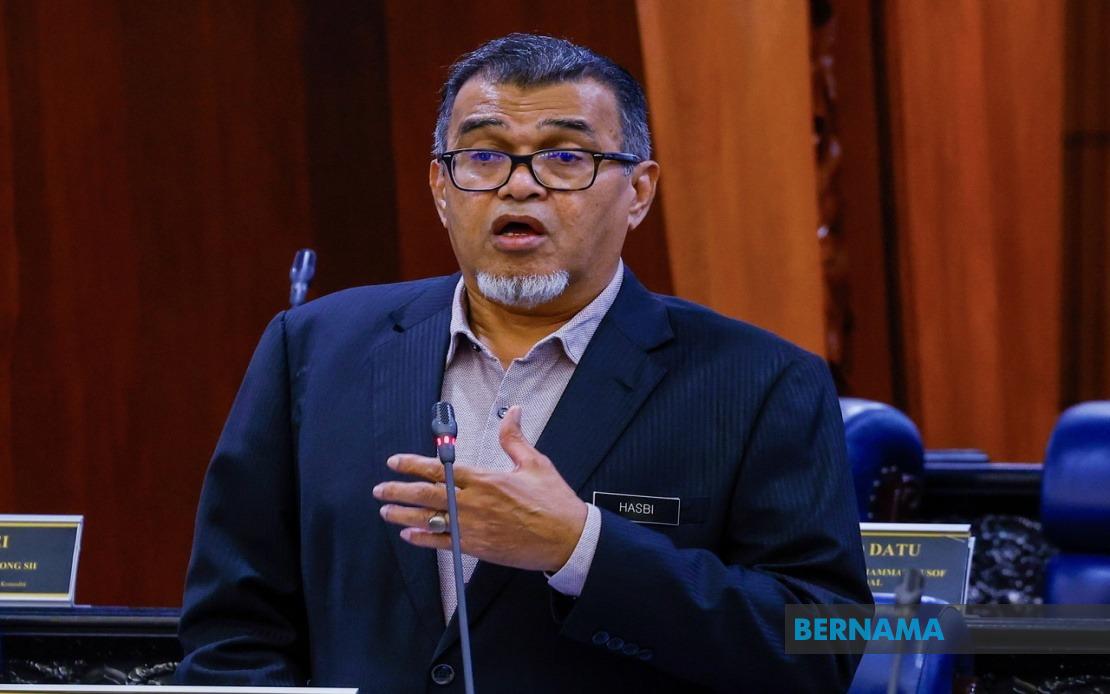
Malaysia's newest rapid transit corridor opened its doors on June 29 with a significant endorsement of its infrastructure adequacy. Deputy Transport Minister Datuk Hasbi Habibollah told Parliament that the Light Rail Transit 3 Shah Alam Line possesses sufficient capacity to serve commuters reliably through at least 2040, dispelling concerns that earlier cost-cutting measures in 2018 had compromised the project's long-term viability.
The timing of this confirmation is important for public confidence as the line begins commercial operations. The LRT3 Shah Alam Line represents a substantial investment in Selangor's transport network, and securing clarity on its operational capabilities removes uncertainty that might otherwise discourage early adoption. With 22 three-car train sets now in service, each capable of transporting 6,210 passengers hourly in a single direction, the line achieves a maximum daily throughput of 223,560 commuters. This capacity ceiling substantially exceeds initial demand expectations, providing the system with considerable headroom for growth.
First-year ridership projections stand at a modest 67,000 daily passengers, representing less than 30 percent of available capacity. This conservative forecast reflects the typical adoption curve for new transit infrastructure in developing urban networks. Commuters require time to adjust travel patterns, discover convenient access points, and build confidence in reliability. The substantial buffer between projected demand and installed capacity therefore serves as operational insurance during this critical establishment phase.
The Deputy Minister's parliamentary remarks outlined an ambitious trajectory for the line's usage over the next two decades. Projections indicate ridership will roughly double by 2030 to 126,000 daily passengers, then climb to 219,000 by 2040—approaching but still remaining beneath the system's maximum capacity of 223,560. This growth profile assumes gradually increasing population density along the corridor, improved land-use integration around stations, and accumulating awareness of transit convenience among Selangor residents. The alignment between projected 2040 demand and available capacity demonstrates that planners conducted credible modelling exercises.
The 2018 scope reduction represents a significant backdrop to understanding these assurances. When the project faced budgetary constraints and redesign pressures, concerns emerged that downsized specifications might create capacity bottlenecks sooner than originally anticipated. That the revised LRT3 still accommodates demand through the 2040 horizon suggests engineers successfully maintained essential functionality while trimming less-critical elements. This successful recalibration is particularly relevant for Malaysian readers tracking other infrastructure projects facing similar cost pressures, as it demonstrates that scope reductions need not invariably compromise fundamental performance.
Looking beyond 2040 introduces a separate planning challenge that the Deputy Minister's remarks implicitly acknowledge. Ridership is projected to reach 324,000 passengers daily by 2050, substantially exceeding the current 223,560 capacity ceiling. This projected overage by roughly 45 percent in the 2040s will require either significant operational optimization or physical augmentation—such as introducing four-car or five-car trainsets, reducing headway intervals, or constructing supplementary parallel infrastructure. While such expansion requirements extend beyond the parliamentary discussion, they underscore the importance of securing land reserves and designing stations with future modularity in mind.
The LRT3 Shah Alam Line serves the greater Klang Valley metropolitan area, particularly Selangor's densifying western and southwestern sectors. This region has experienced substantial residential and commercial growth over the past decade, with development momentum likely to accelerate as connectivity improves. The line's alignment to projected ridership patterns reflects this underlying demographic and economic trajectory. For Malaysian urban planners and Selangor state authorities, the Deputy Minister's confirmation that current infrastructure matches 20-year demand horizons provides confidence to proceed with complementary development approvals and land-use intensification around stations.
Integration with existing transport networks will ultimately determine whether the LRT3 achieves these ridership projections. Convenient interchange with other rapid transit lines, bus networks, and park-and-ride facilities significantly influence adoption rates. The Shah Alam Line's connectivity to broader metropolitan transit architecture thus assumes critical importance. Planners must ensure that first-mile and last-mile connectivity options function effectively, as inadequate feeder services can constrain ridership far below infrastructure capacity regardless of train-set availability.
The Deputy Minister's detailed specifications—articulating train capacity in passengers per hour per direction—reflect the technical precision expected in parliamentary responses on major infrastructure. This transparency allows independent verification of claims and positions Malaysia's LRT3 favorably against regional transit standards. For Southeast Asian transportation networks, where capacity planning often remains opaque or subject to revision, Malaysia's public articulation of ridership projections and system specifications contributes to professional standards across the region.
Operational efficiency will prove as important as raw capacity in determining the LRT3's ultimate success. Modern rapid transit networks achieve high utilization through demand management, optimized scheduling, and real-time passenger information systems. The existing 223,560 daily passenger capacity represents potential throughput under optimal conditions rather than guaranteed performance. Actual achieved ridership will depend on service reliability, frequency, fare structures, and competing modal alternatives. Achieving the 219,000 daily passenger mark by 2040 will therefore require sustained operational excellence from Prasarana Malaysia or its successor operators.
The LRT3 Shah Alam Line's operational launch represents a milestone in Selangor's transportation development, with parliamentary confirmation that the infrastructure supports medium-term metropolitan growth. The Deputy Minister's clear articulation of capacity metrics and demand projections through 2040 provides stakeholders with evidence-based assurance that the system was designed with realistic operational timelines in mind. Whether the line achieves projected ridership levels depends ultimately on factors beyond infrastructure provision, including land-use planning coordination, feeder service integration, and sustained operational commitment from transport authorities.

