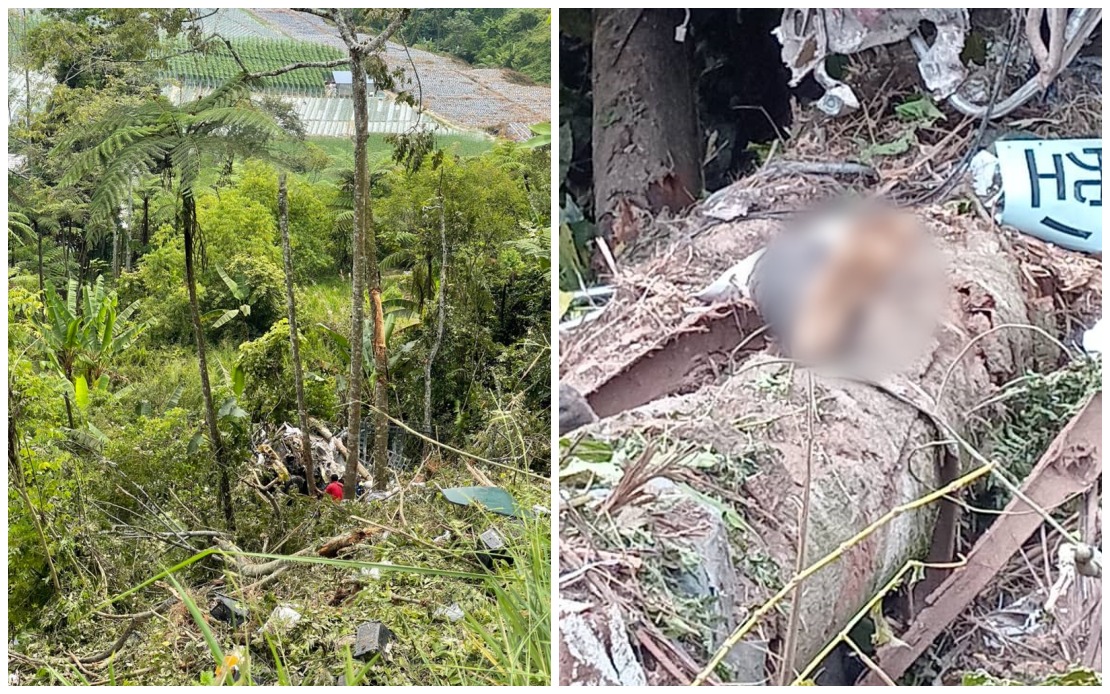
A fatal accident claimed the life of a lorry driver in Gua Musang when his 10-tonne vehicle careened off the road and plunged approximately 150 feet into a ravine adjacent to the Pos Blau-Lojing Bridge. The incident occurred in the early afternoon, marking another tragedy on the region's challenging mountain routes where heavy vehicles navigate steep terrain regularly.
The emergency response operation commenced at 11.58 am when authorities received an initial distress call reporting the crash. The Gua Musang Fire and Rescue Station mobilised personnel, though the remote location presented significant logistical challenges. The accident site, situated roughly 98 kilometres from the station, required considerable travel time through the mountainous interior of Kelantan. Firefighting crews ultimately arrived at the scene at 1.59 pm, nearly two hours after the initial emergency notification.
Upon reaching the ravine, rescue personnel discovered the 10-tonne lorry had come to rest deep within the gorge, having travelled a substantial distance down the steep slope. The vehicle came to rest near an orchard that occupied the ravine's lower reaches. Initial police assessments indicated that the driver, believed to be in his 40s, had become trapped beneath a fallen tree, a consequence of the violent descent through the densely vegetated terrain. The weight and mass of the vehicle had evidently caused considerable damage to the surrounding environment as it fell.
Rescue operations became extraordinarily complex due to the difficult terrain and the victim's entrapment. Firefighters had to undertake substantial effort to remove the tree trunk that pinned the driver beneath its weight. The depth of the ravine, combined with unstable ground conditions and dense vegetation, slowed extraction efforts considerably. Heavy equipment and specialised tools were necessary to free the casualty from the debris field created by the accident. The physical challenges of working in a 150-foot deep gorge with limited access points underscored the hazards faced by emergency personnel responding to accidents in rural mountainous regions.
Assistant Senior Fire Superintendent Muhammad Azrul Izzham Zulkifli, commanding officer of the Gua Musang Fire and Rescue Station, issued a formal statement detailing the recovery operation. He confirmed that despite the prompt response of his team and their considerable efforts to extract the trapped individual, the driver was pronounced dead at the scene. The body was subsequently transferred to police custody for formal identification procedures and further investigation protocols. The circumstances surrounding the driver's death underscored the inherent dangers of operating heavy vehicles on winding mountain roads where a single miscalculation or mechanical failure can prove catastrophic.
Gua Musang District Police Chief Superintendent Sik Choon Foo acknowledged the incident when contacted by media outlets and confirmed that a comprehensive investigation was underway. Police officials indicated that determining the precise cause of the accident remained an ongoing priority. Preliminary inquiries would need to establish whether mechanical failure, driver fatigue, adverse weather conditions, or other factors contributed to the vehicle leaving the roadway. The investigation would likely examine the condition of the vehicle, road surface, and the driver's operational history, particularly given the challenging nature of the route and the potential for various causative factors.
The Pos Blau-Lojing area has been identified as one of Kelantan's most challenging transportation corridors, with the mountain roads requiring considerable skill and attentiveness from heavy vehicle operators. The bridge itself marks a significant geographical feature along the route connecting interior settlements with more accessible lowland areas. Accidents in this region, particularly involving commercial vehicles, attract particular attention from safety authorities given the isolation of the terrain and the extended response times required for emergency services to reach affected areas.
This incident highlights the ongoing safety concerns associated with mountain transportation infrastructure in peninsular Malaysia, where remote locations frequently experience accidents involving lorries and commercial vehicles. The challenges faced by rescue services in reaching and responding to accidents in such territories often result in delays that can prove fatal. The combination of steep gradients, sharp curves, and the necessity for vehicles to traverse these routes regularly creates an environment where mechanical failure or driver error can have devastating consequences. The accessibility limitations also mean that emergency response capabilities must be carefully planned and resourced to meet the demands of rescue operations in difficult terrain.
For transport operators and drivers working in this region, the accident serves as a sobering reminder of the risks inherent in mountain driving. Vehicle maintenance becomes critically important given the mechanical stresses imposed by constant negotiation of steep gradients and challenging road conditions. Similarly, driver rest protocols and fatigue management assume paramount importance on routes where concentration lapses can prove immediately fatal. The remote nature of many sections means that a driver experiencing mechanical failure or sudden medical emergency may face extended periods without assistance, emphasising the importance of preventive measures and careful operational planning.

