The Fisheries Development Authority of Malaysia (LKIM) plans an ambitious showcase of marine innovation at next year's Malaysia Agriculture, Horticulture and Agrotourism Show, with satellite buoys, interactive boat simulators, and a recreation of the Meranti Fishermen's Village among the centrepieces designed to bridge the gap between traditional maritime heritage and contemporary ocean technologies.
LKIM chairman Muhammad Faiz Fadzil outlined the strategy during a gathering with Semerak Area fishermen at the LKIM Tok Bali Fishery Port in Pasir Puteh, emphasizing that the exhibition carries particular significance for introducing younger Malaysians to the realities of modern commercial fishing and the digital tools reshaping maritime industries across Southeast Asia. The initiative reflects broader efforts within Malaysia's fisheries sector to make careers at sea more attractive to the country's youth, who have historically gravitated toward urban employment and service industries.
Satellite buoy technology represents one of the most tangible advances in operational efficiency for coastal fisheries, enabling real-time monitoring of oceanographic conditions and species distribution patterns. Visitors at MAHA 2026 will have hands-on access to learn how these systems function, understanding the mechanics through which fishermen can dramatically reduce fuel consumption and search times by targeting species locations with precision rather than relying on traditional experience-based methods. This technological leap carries profound economic implications for small-scale operators struggling with rising operational costs and volatile catch yields.
The boat simulator component addresses a different educational objective, allowing participants to experience maritime conditions and navigation challenges in a controlled environment. For individuals with no family history in fishing, such simulations demystify the technical and physical demands of seafaring, potentially catalyzing interest in fisheries-related careers or maritime vocations more broadly. The experiential learning approach contrasts sharply with conventional educational methods and reflects how attractions at agricultural expos have evolved beyond passive observation toward active engagement.
The Meranti Fishermen's Village exhibit serves a cultural preservation function, maintaining public awareness of traditional fishing communities and their distinctive lifeways even as industrial and technological changes reshape the sector. This nostalgic element often resonates powerfully with urban visitors and diaspora populations, reinforcing connections to Malaysia's maritime heritage while the practical demonstrations illustrate how heritage and innovation coexist rather than compete within contemporary fisheries.
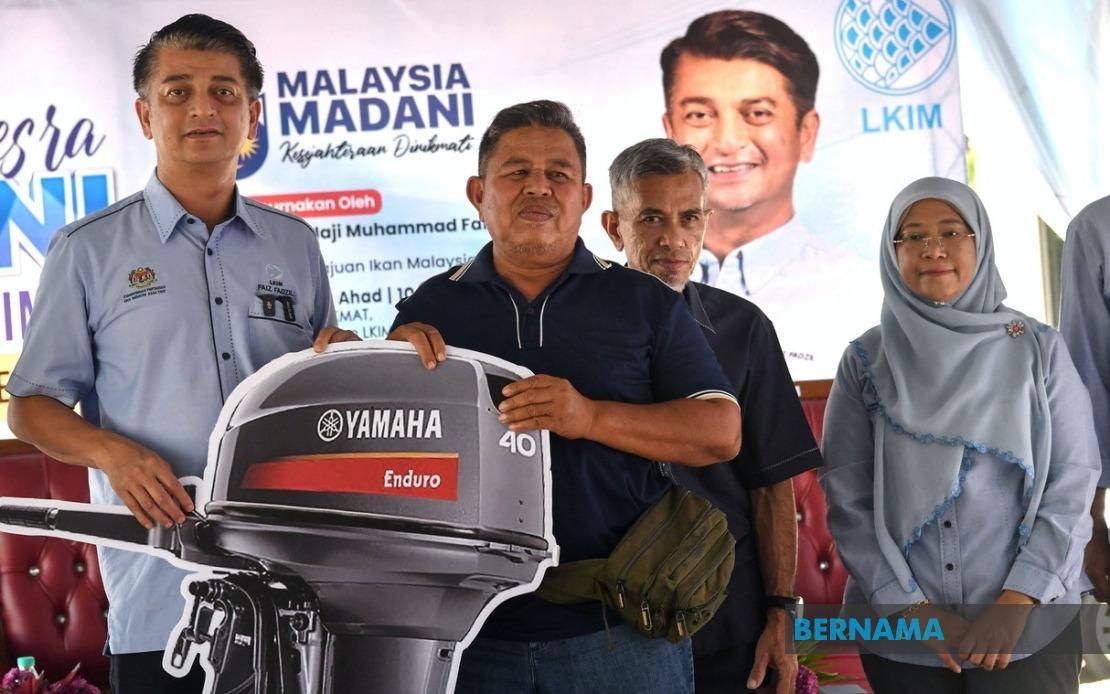
Parallel to the exhibition planning, LKIM demonstrated tangible commitment to fisheries welfare by distributing assistance to 26 economically disadvantaged fishermen from the Semerak Area Fishermen's Association. The RM50,000 equipment package—distributed as part of the Madani Rahmah Gathering initiative—included 40-horsepower boat engines, specialized fishing nets, fibre storage barrels, and two tonnes of industrial oil, addressing critical infrastructure gaps for B40 (bottom 40 percent income) households dependent on maritime livelihoods.
For communities like Semerak, where fishing represents one of the primary income sources, such targeted assistance directly impacts household resilience and operational sustainability. Modern boat engines enhance fuel efficiency and reduce mechanical downtime, while quality nets and proper storage infrastructure improve catch preservation and market presentation, collectively enabling fishermen to capture greater value from their harvests and manage operational risks more effectively.
MAHA 2026 takes place at the Malaysia Agro Exposition Park Serdang (MAEPS) from August 28 through September 6, providing LKIM with a high-traffic platform to reach diverse audiences spanning agricultural stakeholders, tourism operators, students, families, and policy observers. The venue's established reputation as Malaysia's premier agricultural showcase ensures significant media coverage and public engagement, multiplying the awareness-building potential of the fisheries-focused exhibitions.
The initiative reflects Malaysia's strategic pivot toward making primary industries more competitive and attractive within a rapidly urbanizing economy. As rural youth migration continues and fishing communities age, authorities recognize that technological sophistication, career pathway clarity, and visible sector innovation become essential retention and recruitment mechanisms. Showcasing satellite tracking and simulation technology at a major national platform signals governmental commitment to modernizing fisheries rather than treating it as a declining traditional sector.
For Southeast Asian context, Malaysia's approach mirrors initiatives across Vietnam, Thailand, and Indonesia, where governments similarly leverage technology promotion and youth engagement programming to sustain fishing industries amid globalization pressures. However, Malaysia's emphasis on combining high-tech demonstrations with welfare assistance and cultural heritage preservation reflects a more integrated approach than purely technocratic alternatives adopted elsewhere in the region.
The RM50,000 distribution to Semerak fishermen also underscores recognition that technology adoption requires complementary material support—newer equipment demands capital investment that struggling B40 households cannot independently finance. By pairing exhibition-based education with direct assistance, LKIM creates pathways whereby economically vulnerable fishers can simultaneously improve immediate operational conditions while remaining informed about emerging sector opportunities and technological capabilities.
Looking forward, the success of MAHA 2026's fisheries programming will likely influence how subsequent agricultural expos allocate resources and thematic focus, potentially expanding opportunities for other maritime sectors, aquaculture innovations, and downstream fisheries processing to gain similar public visibility and stakeholder engagement platforms. For Malaysian observers interested in fisheries policy, rural development, and youth employment strategies, the exhibition will provide valuable indicators regarding how authorities plan to position marine industries within Malaysia's long-term economic trajectory.

