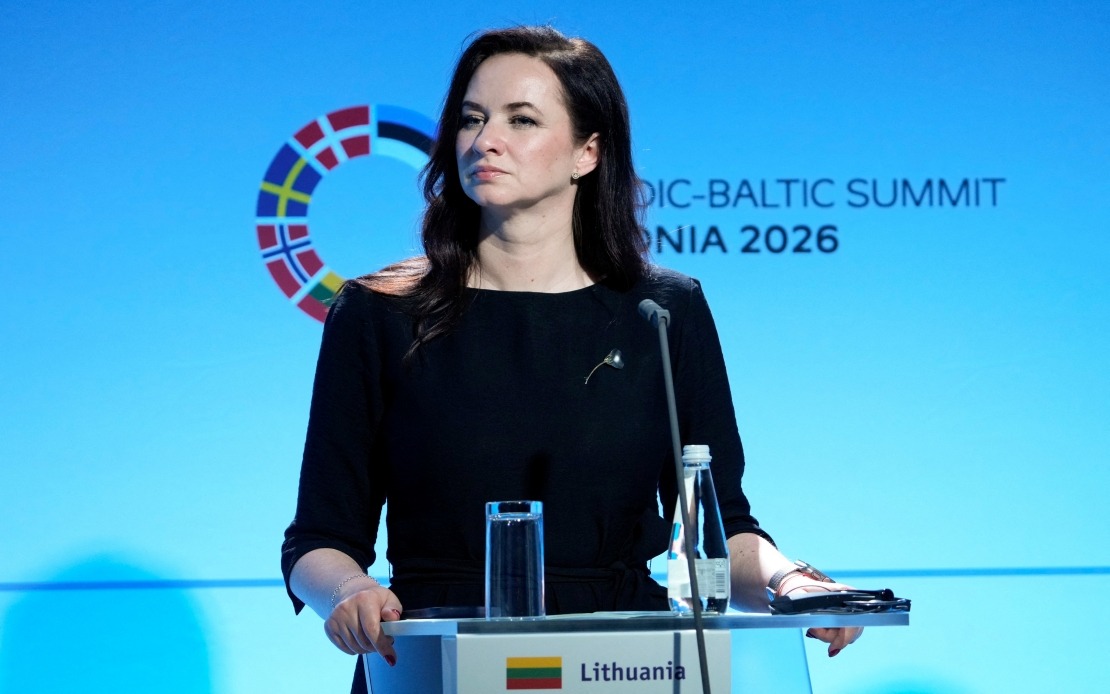
Lithuanian Prime Minister Inga Ruginiene has announced the resignation of her government, setting in motion a carefully choreographed transition of power in the Baltic nation. The move comes as the ruling coalition undergoes a restructuring, with the Social Democratic Party preparing to establish its third governing administration since voters went to the polls in late 2024. President Gitanas Nauseda has formally acknowledged the Cabinet's departure and instructed the outgoing ministers to maintain essential government functions in a caretaker role until their successors assume office.
The resignation, announced on Tuesday, follows constitutional procedures that give the Lithuanian head of state a 15-day window to nominate a candidate for the prime minister's position. The chosen nominee must then navigate the parliamentary approval process within the Seimas, Lithuania's legislative chamber, where support from a governing majority remains essential for confirmation. This procedural framework ensures continuity while allowing for necessary adjustments to the coalition's composition and policy direction.
Mindaugas Sinkevicius, who chairs the Lithuanian Social Democratic Party, stands as the frontrunner for the nomination. Political observers and parliamentary sources widely anticipate his selection by President Nauseda, reflecting his position within the dominant party and the coalition's preference for continuity in leadership. Should Sinkevicius win parliamentary backing, he would assume responsibility for constructing a new Cabinet within a prescribed 15-day period, during which he must also outline the government's legislative agenda and policy priorities to lawmakers.
The timeline for government formation extends beyond Sinkevicius's initial appointment period. After presenting his prospective Cabinet members to parliament, the nominee receives an additional 15 days to submit the complete ministerial lineup for final parliamentary approval. This staged process allows for negotiation among coalition partners regarding portfolio distribution and ensures that all Cabinet members can be thoroughly vetted by legislators before taking office. The structured approach reflects Lithuanian democratic traditions and provides transparency throughout the transition.
The reshuffle represents the third iteration of Social Democratic-led governance since the October 2024 parliamentary elections fundamentally reshaped Lithuania's political landscape. This frequency of coalition adjustments reflects ongoing tensions within the governing alliance and the delicate balance required to maintain parliamentary majorities. The initial government formation proved unstable, eventually leading to the appointment of Prime Minister Gintautas Paluckas, whose tenure ultimately ended in resignation that prompted Inga Ruginiene's appointment last August. The current resignation signals continued instability within the coalition structure.
During Tuesday's final Cabinet session, ministers unanimously endorsed the resignation resolution, signalling consensus around the decision to step aside. Ruginiene used the occasion to reflect on her government's accomplishments, acknowledging the administration's achievements despite navigating substantial domestic and international pressures. Her remarks offered a measured assessment of the outgoing Cabinet's tenure, neither claiming sweeping success nor dwelling extensively on difficulties, a diplomatic approach befitting a departing leader seeking to preserve the party's standing ahead of coalition negotiations.
Lithuania's political turbulence carries implications for regional stability and governance in Central Europe. The Baltic nation, a NATO and European Union member facing Russian security threats, requires stable governance to maintain defence capabilities and democratic resilience. Frequent government turnovers can complicate long-term strategic planning and weaken the state's capacity to respond coherently to external challenges. The international community monitors such transitions closely, particularly in nations positioned at Europe's eastern frontier.
For Malaysian observers, Lithuania's experience demonstrates how proportional electoral systems and coalition politics can create governance volatility even in established democracies. While Malaysia's parliamentary system operates under different constitutional arrangements, the challenges of maintaining stable coalitions resonate across diverse democratic contexts. The frequency of Lithuania's government changes within a single year underscores how policy disagreements and political rivalries can fracture governing alliances, a consideration relevant to multiparty democracies globally.
The caretaker government arrangement ensures that essential state functions continue uninterrupted during the transition period. This institutional safeguard prevents governance vacuums that could compromise public services, security operations, or economic management. Lithuania's structured approach to interim governance reflects democratic best practices, allowing the state to maintain administrative continuity while political parties negotiate new coalition terms behind closed doors. This separation between the technical operation of government and the political negotiation process strengthens democratic institutions.
The incoming Sinkevicius-led administration will inherit pending legislative agendas and policy commitments that require attention regardless of coalition shifts. Questions regarding pension reform, fiscal sustainability, defence spending amid regional tensions, and social policy implementation remain pressing. The new government must demonstrate competence and decisiveness to restore public confidence in political institutions after multiple leadership changes have tested public patience with coalition-based governance. Success in early policy implementation could stabilize Lithuania's political environment and provide the foundation for longer-term governmental stability.
Looking forward, the Social Democratic Party faces pressure to demonstrate that this third coalition iteration will prove more durable than its predecessors. Coalition partners will need to resolve underlying policy disputes that have prompted previous breakdowns. The next 15 days will determine whether Mindaugas Sinkevicius can forge agreements that satisfy divergent coalition interests while commanding sufficient parliamentary support. The success or failure of these negotiations will signal whether Lithuania's political system can achieve the stability necessary for effective governance in a security-challenged region.