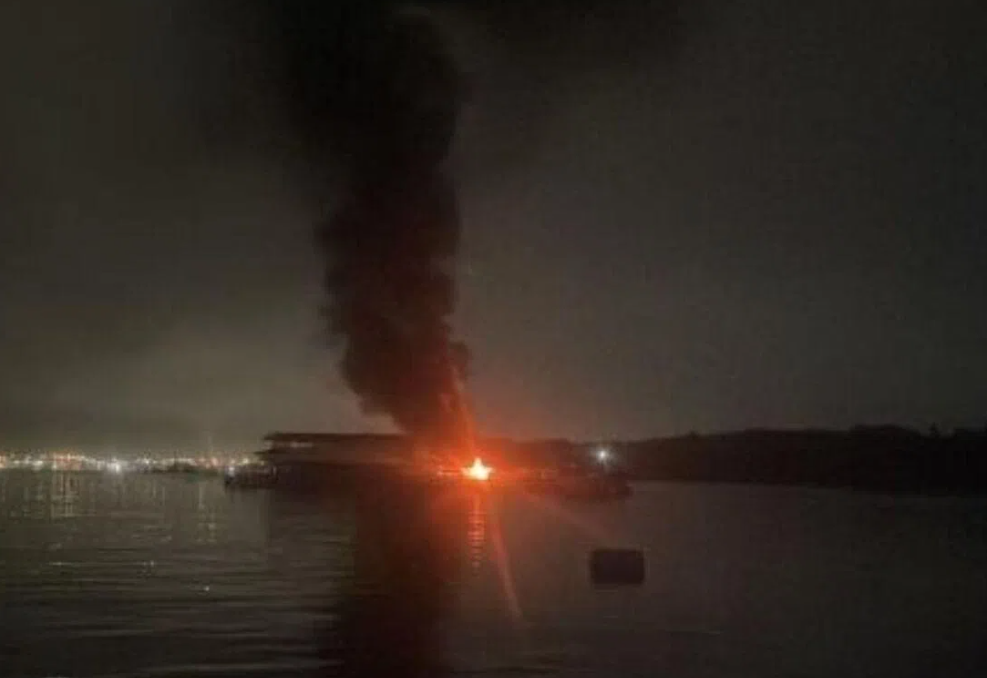
A major fire engulfed multiple floating fish farms positioned off the Lorong Halus jetty near Pasir Ris on June 24, with emergency responders spending hours bringing the blaze under control. The incident, which struck close to the islands of Pulau Ubin and Pulau Ketam, appears to have originated from a lightning strike that targeted solar panel installations on one of the farming operations before jumping to neighbouring facilities. The Singapore Civil Defence Force received emergency calls at approximately 8.10pm and coordinated a response involving marine vessels from the Maritime and Port Authority of Singapore alongside Airport Emergency Service personnel. Despite the intensity of the flames and the scale of the operation, no injuries were recorded during the firefighting effort.
The origins of the fire point to weather rather than operational negligence, according to preliminary investigations still underway. Local reports suggest that the lightning bolt struck the solar panel arrays mounted on the fish farm infrastructure, igniting materials and fuel stored on the floating platforms. What began as a single point of ignition rapidly expanded across the water-based farms, creating a challenge for firefighting crews working from boats rather than solid ground. The aquaculture sector in Singapore has increasingly adopted renewable energy solutions like solar power to reduce operating costs and environmental impact, yet this incident underscores the hazards these systems can introduce during severe weather events.
One farm owner affected by the disaster articulated the scale of material damage with striking clarity. Equipment losses totalled approximately S$120,000, encompassing critical operational assets including generators, fishing boats, multiple fish traps, and feed supplies needed for daily husbandry. Beyond machinery, the fire destroyed fishing nets and prompted a mass escape of fish stock—the owner estimated that at least half the farmed population fled through damaged containment systems. Such losses represent months of cultivation efforts and revenue streams for the operation, compounding the financial sting beyond immediate replacement costs.
The absence of insurance protection deepens the financial wound for affected operators. When queried about potential claims, the farm owner revealed he could not pursue insurance coverage for this incident, leaving the business entirely exposed to the consequences of lightning damage. This disclosure raises broader questions about risk management protocols and insurance accessibility within Singapore's aquaculture sector. Floating fish farms operate in inherently exposed environments with elevated lightning exposure compared to land-based facilities, yet apparently remain underprotected by conventional commercial insurance frameworks.
Interestingly, this was not the first instance of lightning damage to the farm's solar installations. The owner noted that previous lightning strikes had struck the panels, but immediate worker intervention had prevented those incidents from escalating into uncontrolled fires. The critical difference in this event was the absence of personnel on site when the lightning struck. Without trained staff present to detect smoke, initiate emergency protocols, or activate fire suppression systems, the fire achieved critical mass before external emergency services could be summoned and mobilised. The timing—striking after business hours—proved catastrophic for containment efforts.
The aquaculture industry scattered across Singapore's waters represents an important food production sector, providing fresh fish to local markets and employment for fishing communities. The Lorong Halus area has historically concentrated multiple fish farms in close proximity, creating efficiencies of scale but also concentrating risk. When one facility catches fire, neighbouring operations face genuine danger from spreading flames across the open water. The incident on June 24 validated these spatial risks, with fire propagating across at least two neighbouring farms despite their separation by water.
Emergency response in this incident involved unconventional coordination between government agencies and private sector participants. Maritime authorities deployed specialist vessels capable of navigating the shallow waters around the farms and delivering water at close range. Airport Emergency Service contributed their equipment and expertise, expanding the conventional firefighting capacity beyond normal fire station resources. Importantly, workers from neighbouring fish farms spontaneously joined containment efforts, representing the tight-knit nature of the aquaculture community and their mutual dependence on preventing catastrophic incidents that could ripple through adjacent operations.
The incident carries implications for aquaculture operations throughout Southeast Asia, particularly in regions where floating fish farms are proliferating as efficient food production methods. Singapore's experience demonstrates the vulnerability of these systems to extreme weather events, particularly lightning strikes concentrated in tropical regions. The combination of renewable energy infrastructure, stored fuels, and organic materials creates conditions favouring rapid fire propagation. Operators across Malaysia, Thailand, Indonesia, and Vietnam managing similar floating farm operations should evaluate their own lightning protection systems, worker availability protocols during high-risk weather windows, and insurance arrangements.
Longer-term considerations include whether Singapore's regulatory framework adequately addresses emergency preparedness on floating fish farms. The absence of workers on site during the incident raises questions about mandatory staffing requirements, particularly during seasons characterised by frequent thunderstorms. Additionally, mandatory insurance provision for aquaculture operations could ensure farms can recover from environmental disasters rather than facing complete financial ruin. These policy questions are particularly relevant for a region increasingly dependent on aquaculture for food security while facing intensifying extreme weather patterns.
Investigations remain ongoing into the precise circumstances surrounding ignition and spread, with the Singapore Civil Defence Force and relevant agencies continuing to examine the wreckage and interview operators. Preliminary evidence strongly suggests the lightning strike hypothesis, though formal confirmation awaits completion of technical assessments. The incident will likely prompt broader discussions within Singapore's farming community about operational resilience, emergency protocols, and the adequacy of current safety frameworks for water-based agricultural enterprises operating in an equatorial climate where lightning risk remains persistently elevated.

