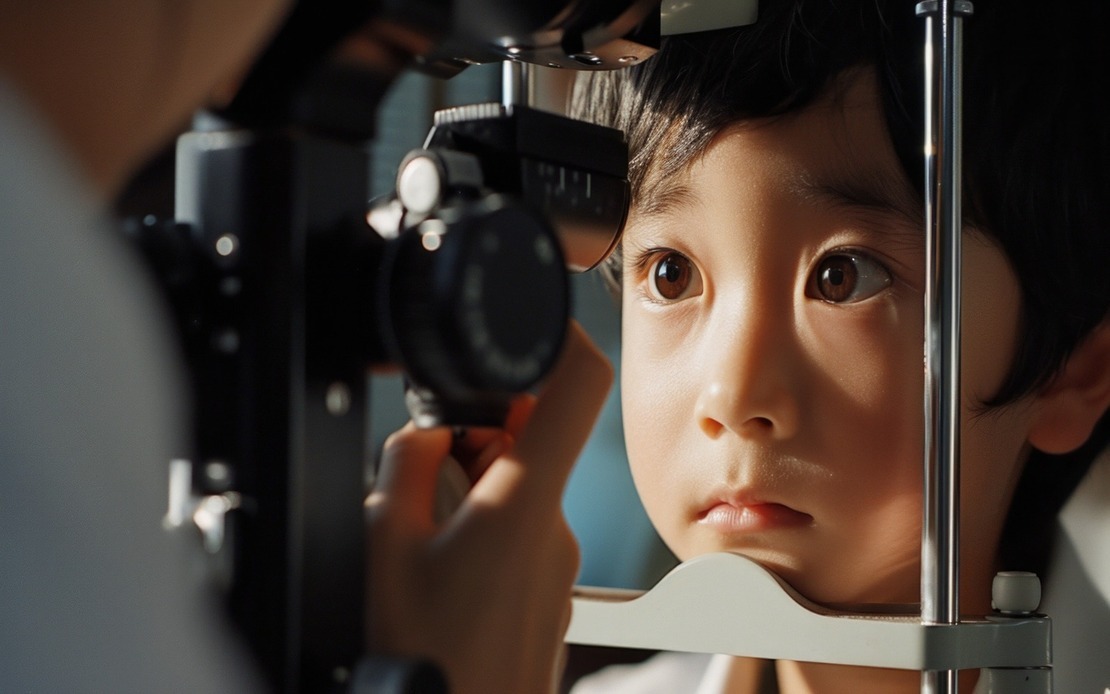
Malaysians of all ages face the risk of developing preventable eye conditions that could impair vision for life, yet many remain unaware of the warning signs or the critical window for intervention. According to Dr Fazilawati A Qamarruddin, Consultant Ophthalmologist and Paediatric Ophthalmologist at Sunway Medical Centre in Kuala Lumpur, early detection through proper screening represents the most effective defence against conditions such as squinting and cataracts that commonly affect the population but frequently escape notice until substantial damage has occurred.
Squinting, medically termed strabismus, occurs when the eyes lose their ability to point in the same direction simultaneously, causing one eye to deviate while the other focuses normally. This misalignment creates immediate consequences beyond cosmetic concerns, disrupting the child's capacity to judge distance accurately and disrupting the visual processing required for effective learning. The condition frequently arises from uncorrected refractive errors, yet Dr Fazilawati cautioned that more serious underlying causes warrant investigation, including nerve damage, neurological complications, head trauma, and potentially life-threatening growths affecting the brain or eye sockets.
The prevalence of strabismus among Malaysian children remains concerning despite being largely preventable through early intervention. International research suggests that between two and four per cent of children worldwide develop the condition, a statistic that translates to thousands of young Malaysians experiencing visual misalignment. The tragedy lies not in the condition's frequency but in the widespread failure to identify it before secondary complications emerge. Many families only discover the problem when educators report academic difficulties or when social anxiety becomes apparent, representing missed opportunities for straightforward treatment during the critical developmental years.
When squinting goes unaddressed, the brain initiates a self-protective mechanism that accelerates decline rather than preserving vision. The stronger eye continues functioning normally while the weaker eye gradually loses visual acuity as the brain consciously suppresses its signal, a phenomenon known as amblyopia or lazy eye. This neurological shift becomes progressively harder to reverse the longer it persists, potentially condemning the affected eye to permanent reduced vision despite being structurally sound. Prevention therefore requires vigilance during early childhood when intervention can be remarkably effective. Dr Fazilawati recommended comprehensive vision assessments by age three and again before school entry, allowing optometrists and ophthalmologists to identify subtle abnormalities that parents might overlook.
Parents should remain alert to several observable indicators that warrant immediate professional evaluation. Children who habitually tilt their heads to see properly, who frequently squint despite adequate lighting, who position themselves unusually close to television or screens, or who complain of headaches may be experiencing uncorrected refractive errors or other visual problems. Rather than waiting for formal school screening, which may identify issues only after they have begun affecting academic performance, prompt medical assessment offers the opportunity for simple interventions such as prescription eyeglasses before permanent neurological changes occur. The difference between early detection and delayed treatment can determine whether a child experiences straightforward correction or navigates life with substantially compromised vision.
While childhood vision problems demand immediate attention, ageing populations face their own significant challenges as cataracts become increasingly common after age 60. The condition develops when the natural lens within the eye becomes progressively opaque, scattering light rather than focusing it clearly onto the retina. Beyond normal ageing, certain risk factors accelerate cataract formation, including diabetes, smoking, and cumulative ultraviolet exposure. The visual consequences extend beyond simple blurriness, encompassing glare sensitivity that worsens at night, colour perception that becomes increasingly washed out, and practical difficulties performing tasks requiring visual precision such as driving after sunset.
Modern surgical approaches have revolutionised cataract management, transforming what was once considered inevitable visual decline into a treatable condition with predictable positive outcomes. The contemporary standard involves phacoemulsification, a technique employing ultrasound energy to carefully fragment the opaque lens into microscopic pieces that can be gently suctioned through an incision smaller than what previous generations endured. This minimally invasive approach dramatically reduces recovery time and post-operative complications compared to traditional surgery. Most patients achieve basic functional vision within days and complete visual stabilisation within two weeks, with many procedures now performed as outpatient day surgery rather than requiring hospitalisation. For seniors concerned about maintaining independence and quality of life, modern cataract surgery represents a genuinely transformative intervention rather than a last resort.
Beyond traditional age-related conditions, emerging health challenges driven by contemporary lifestyle patterns demand increasing clinical attention. The sustained expansion of screen-based activities among children and teenagers correlates with rising myopia prevalence across Malaysia and throughout Asia. Extended focus at close distances strains the ciliary muscles controlling lens shape while potentially contributing to axial elongation that increases myopia severity. Dr Fazilawati advocated adoption of the 20-20-20 technique, directing users to rest their eyes every 20 minutes by viewing an object approximately 20 feet distant for 20 seconds. This simple practice provides the accommodation system essential recovery time and may help moderate the progression of refractive errors in developing eyes.
Optimal eye health across the lifespan requires engaging with the healthcare system proactively rather than reactively. Adults without existing vision complaints should initiate comprehensive eye examinations by age 40, establishing baseline measurements that provide reference points for detecting subtle changes that might otherwise progress unnoticed. For individuals with diabetes, the urgency intensifies substantially, as diabetic retinopathy can advance with devastating speed despite feeling asymptomatic. The disease damages blood vessels supplying the retina, potentially causing sudden vision loss that could have been prevented through early detection and treatment. Annual eye screenings for diabetic patients represent cost-effective interventions that preserve vision far more effectively than attempting to manage advanced disease.
The broader implication of these screening recommendations reflects a fundamental shift in how healthcare systems should conceptualise vision care. Rather than treating eye conditions as inevitable aspects of ageing or childhood development, evidence increasingly supports viewing them as preventable sources of disability when detected sufficiently early. The economic and social burden of vision impairment throughout Southeast Asia remains substantial, affecting employment prospects, educational achievement, and quality of life across populations. For Malaysia specifically, implementing systematic screening protocols could identify thousands of cases amenable to simple treatment, preventing millions in productivity losses and improving outcomes for vulnerable populations including schoolchildren and elderly citizens.

