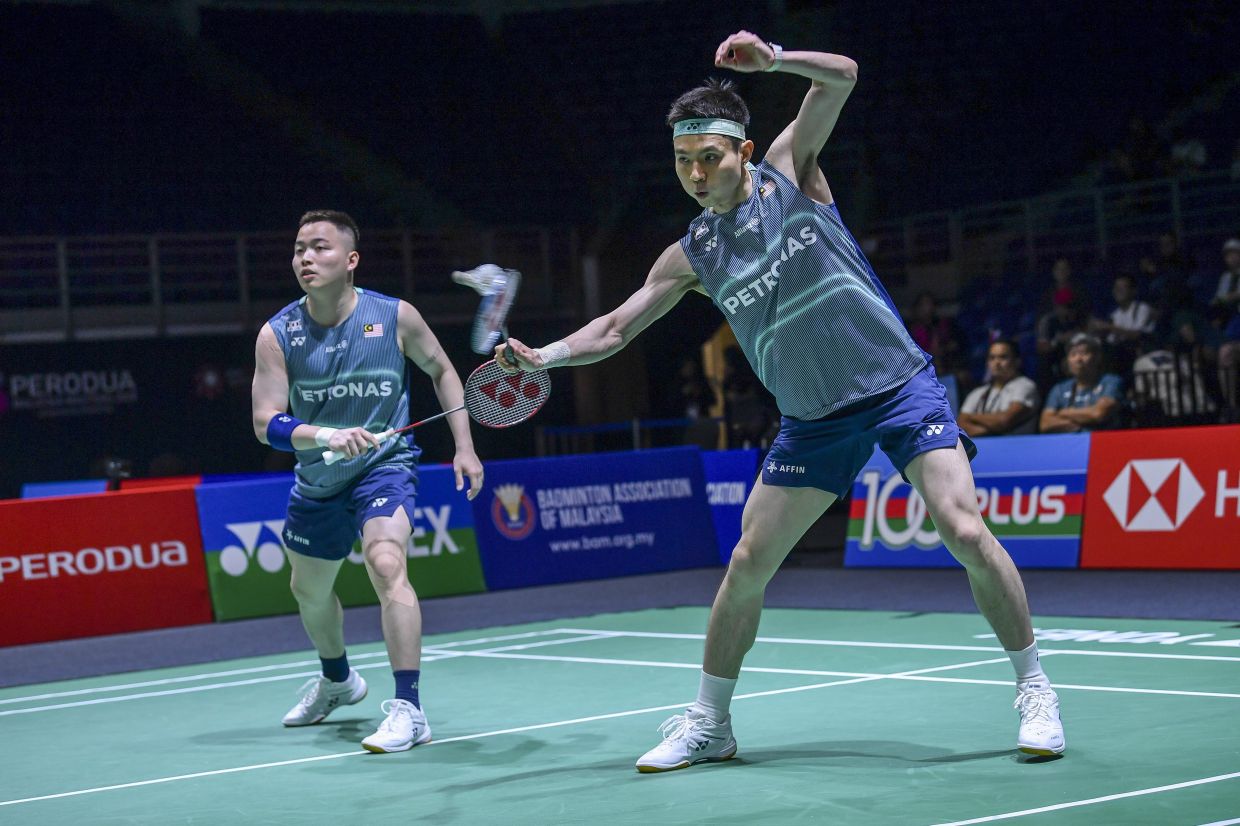
The Badminton Association of Malaysia made clear its expectation that athletes should prioritise team stability over individual leverage when Datuk Seri Lee Chong Wei, the national body's performance committee chairman, cautioned players against weaponising departure threats as a negotiating tactic. His remarks emerged after Soh Wooi Yik publicly suggested he was open to considering all possibilities with doubles partner Aaron Chia, with the pair hoping to maintain their partnership through to the 2028 Los Angeles Olympics. The declaration from one of Malaysia's most successful contemporary badminton players signals the kind of pressure that BAM now faces from its athlete roster, even as the organisation seeks to recalibrate its management approach.
Lee's intervention underscores a fundamental tension within the Malaysian badminton programme. Players, particularly those performing at elite international levels, increasingly expect input into team selection and pairing decisions. Yet the association's leadership believes such expectations, when backed by threats of departure, fundamentally undermine institutional authority and strategic planning. The performance committee chairman framed BAM's position not as inflexibility but as necessary firmness in an era when athletes might otherwise dictate terms through public pressure. His comments suggest the new management under BAM is consciously stepping away from what he characterised as historical patterns of player appeasement.
Crucially, Lee reminded the badminton community that institutional loyalty runs deeper than recent achievement. He emphasised that BAM's coaching infrastructure, talent identification systems, and developmental programmes had been instrumental in nurturing these players from their formative years. The implicit argument is that success at world championships or prestigious tournaments should not erase this foundational relationship or diminish the association's right to make strategic decisions about pairings and training arrangements. This framing attempts to rebalance what BAM views as an increasingly skewed dynamic where medal-winning athletes feel entitled to dictate their own terms.
The specific context triggering Lee's warning centres on Aaron Chia and Soh Wooi Yik, who captured silver at the World Championships in New Delhi last week, demonstrating their continued potency as Malaysia's premier men's doubles combination. However, BAM's coaching staff have been systematically experimenting with alternative pairings over the preceding two months, suggesting the federation believes the current composition may not represent the optimal long-term strategy for Olympic qualification and performance. Aaron Chia was previously paired with Aaron Tai, a combination that reached the Taiwan Open final, while Soh Wooi Yik initially struggled alongside Man Wei Chong before advancing to the Korean Masters final.
These ongoing experiments point to a calculated approach from BAM's technical leadership. Rather than rigidly maintaining successful partnerships, the coaching team appears committed to exhaustive testing of potential combinations to identify the pairing most likely to deliver medals at Los Angeles 2028. This methodology conflicts with what Aaron Chia and Soh Wooi Yik prefer, creating the impasse that prompted the latter's public suggestion about exploring independence. The upcoming China Masters, commencing September 1, will see yet another reconfiguration with Aaron Chia pairing with Wei Chong while Soh Wooi Yik partners Aaron Tai, indicating BAM's commitment to this experimental phase remains unwavering.
Lee's statement reflected the association's confidence in its legal and regulatory position. Players contracted to BAM until 2028 face substantial financial consequences should they attempt to operate independently, as they would trigger significant compensation obligations to the federation. Beyond the monetary dimension, athletes departing the national system risk international tournament eligibility complications, a reality with profound implications for Olympic qualification pathways. Securing the ranking points necessary to qualify for Los Angeles 2028 becomes substantially more difficult when barred from competing in sanctioned international events, creating a structural trap that deters unilateral player action.
For Malaysian badminton stakeholders, this dispute reflects broader structural questions about athlete autonomy, institutional governance, and the balance between individual aspiration and collective strategy. The sport has evolved substantially over recent decades, with athletes increasingly aware of their market value and increasingly reluctant to accept decisions made unilaterally by sports bodies. Yet BAM's position also carries legitimacy—the federation invests considerably in player development, provides coaching infrastructure most independent athletes could not replicate, and bears responsibility for advancing Malaysian badminton's competitive standing across multiple disciplines and competition cycles.
The episode also reveals generational differences in expectations. Contemporary elite athletes, particularly those accustomed to international circuits and exposure, often expect negotiation and consultation rather than directive management. BAM's new leadership appears determined to resist this expectation, believing that institutional authority requires firm boundaries. Lee's willingness to publicly articulate this position signals that the federation will not be embarrassed or pressured into reversing decisions simply because prominent players threaten departure. This represents a notable departure from what he characterised as previous management approaches.
The practical implications ripple across Malaysian badminton's competitive structure. If Aaron Chia and Soh Wooi Yik become entrenched in their position, or if other successful athletes adopt similar tactics, BAM faces a scenario where its strategic planning becomes compromised by athlete defiance. Conversely, if the federation holds firm, it establishes a precedent that may deter future challenges but potentially costs it the talent required for Olympic success. This tension between institutional authority and athletic talent remains unresolved, with the coming months likely to determine whether Lee's warning proves sufficient deterrent or merely the opening salvo in a more extended confrontation.
Regionally, this Malaysian situation parallels broader tensions within Southeast Asian sports governance, where rapidly professionalising athletes increasingly challenge traditional hierarchies within national federations. How BAM navigates this dispute may establish templates that other sports organisations across the region either emulate or studiously avoid. The outcome will substantially shape not only Malaysia's badminton prospects at Los Angeles 2028 but also the future relationship between elite athletes and the institutions nominally tasked with developing them. Lee's intervention represents a critical moment where institutional resolve faces its most significant test.

