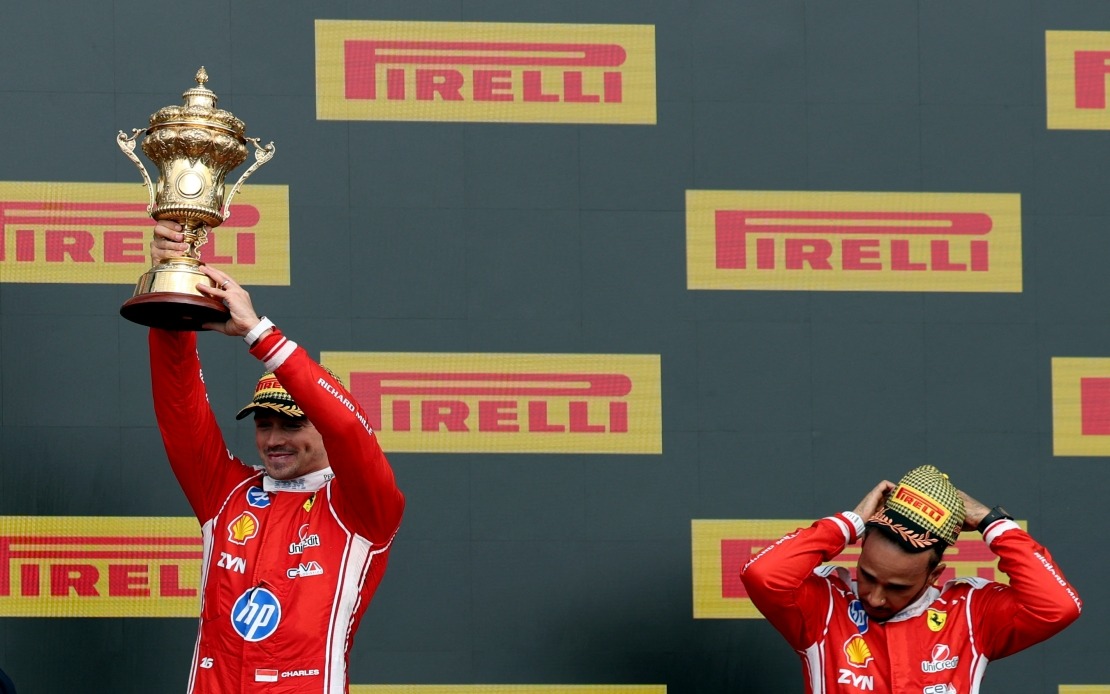
Ferrari's Charles Leclerc delivered a masterclass in racecraft at Silverstone on Sunday, capturing the British Grand Prix in a thrilling encounter that saw championship favourite Kimi Antonelli's hopes derailed by a mechanical gremlin at a critical juncture. The dramatic contest reshaped the F1 title picture after Antonelli, who held a commanding 66-point lead, had been on course to extend his dominance before a broken front-left wheel shield forced Mercedes into damage-control mode during the closing stages.
Leclerc's performance demonstrated Ferrari's resurgence following a difficult spell, building methodically through the afternoon to construct a commanding position before Antonelli's misfortune handed him a windfall victory. The Ferrari driver had stormed past pole-sitter Antonelli at the opening corner, an aggressive move that immediately signalled his intent and established the psychological advantage needed for a sustained drive. With Lewis Hamilton also slipping past the Mercedes newcomer early on, Leclerc inherited the race leadership and never relinquished it, though Antonelli's tactical resilience would push the Ferrari driver to his limits in the second half of the encounter.
The unfolding drama underscores how quickly momentum can shift in Formula 1, particularly when strategy and machinery intersect at decisive moments. Leclerc's lead had extended beyond four seconds during the first stint, suggesting a comfortable afternoon lay ahead, but Mercedes' decision to extend Antonelli's first run positioned their driver to challenge with significantly fresher rubber. The 19-year-old Antonelli, demonstrating the maturity expected of a championship contender, quickly erased a seven-second deficit and tightened the screw, cutting Leclerc's advantage to under three seconds with eleven laps remaining and the championship momentum seemingly swinging back toward the Mercedes camp.
Yet momentum proved fleeting. Antonelli's assault came to an abrupt halt when he struck the kerbing at Copse, immediately radioing his team to report something had fractured. The diagnosis revealed a broken front-left wheel shield—a component that sounds minor but proved catastrophic to his steering precision and aerodynamic balance. Mercedes' subsequent pit stop removed the damaged part, but the underlying structural compromise remained, leaving Antonelli struggling to keep his car on the racing surface as he battled against persistent understeer and drift. The mechanical failure transformed what had been a genuine victory contention into a survival mission, with the 19-year-old reduced to salvaging championship points through dogged determination.
Leclerc's composition through this period reflected the qualities that Ferrari has been nurturing during their technical resurgence. The Monegasque driver appeared set for a commanding near-30-second margin over Lewis Hamilton before Max Verstappen's mishap at Stowe corner with four laps remaining triggered a safety car intervention. The bunching of the field created an artificial restart scenario that momentarily threatened Leclerc's position, though Ferrari's strategic acumen proved decisive. While Mercedes elected to pit Hamilton for fresh soft tyres, Ferrari gambled that holding course offered superior insurance against the compressed finale.
The controversial conclusion to the race centred on the FIA's decision to finish the contest behind the safety car rather than permitting a planned restart for one final lap of racing. This decision, subsequently attributed to a software error that had issued an earlier message suggesting racing would resume, proved decisive in determining the final order. George Russell inherited second place ahead of Hamilton, though the result left a sour taste among some sections of the Silverstone crowd who had anticipated a thrilling shootout. The safety car finish prevented Hamilton, who possessed newer soft compound rubber, from launching a late assault on Russell, adding another layer of frustration to the Mercedes pit wall's evening.
For the broader Malaysian and Southeast Asian Formula 1 audience, this result carries significance beyond the immediate championship dynamics. Leclerc's resurgence reflects Ferrari's commitment to technical innovation and driver development, elements that influence the sport's competitive equilibrium and narrative momentum. The championship battle, now decisively tilted by Antonelli's misfortune, promises to reshape team strategies and resource allocation heading into the summer break. The contrast between Antonelli's earlier dominance—five consecutive victories through Monaco—and this capitulation illustrates F1's unforgiving nature, where mechanical failure and tactical miscalculation can swiftly erase accumulated advantages.
Antonelli's post-race assessment proved characteristically measured despite his obvious disappointment. The Mercedes driver acknowledged striking the kerbing with diminished force compared to earlier laps, yet the damage proved conclusive, suggesting a hairline fracture that had accumulated stress throughout the race distance. His determination to continue racing despite the compromised machinery demonstrated the psychological resilience demanded of championship contenders, though salvaging points from potential victory represents a net loss in the accumulating championship narrative. The 19-year-old's relative inexperience at managing such mechanical catastrophes, alongside Ferrari's tactical proficiency, ensured Leclerc maximized the opportunity presented by his rival's misfortune.
Leclerc's emotional response underscored the psychological weight Ferrari's recent difficulties had imposed on the team. The Italian marque had endured a particularly challenging period preceding the British Grand Prix, with Leclerc's victory representing the team's first success since the United States Grand Prix last season. Hamilton's intervening triumph in Spain, achieved while driving for Ferrari earlier in the campaign, had intensified the internal pressure to deliver results. Leclerc's reference to finding the precise car balance following Saturday's sprint qualifying suggested Ferrari's engineering team had identified and addressed fundamental setup deficiencies, validating their systematic approach to competitive recovery.
The ripple effects of Silverstone extend beyond the championship standings, influencing team confidence and resource prioritization. Mercedes faces uncomfortable questions regarding Antonelli's mechanical misfortune and whether design tolerances around the wheel shield adequately protect against racing contact. Ferrari's demonstrated mastery of conditions and strategic decision-making suggests organizational momentum heading into the summer break, when teams undertake intensive development work to address identified deficiencies. The championship landscape has shifted dramatically—Antonelli's advantages appear far less commanding than they had suggested during his five-race winning streak, opening the competition to multiple contenders and genuine uncertainty regarding the ultimate championship destination.

