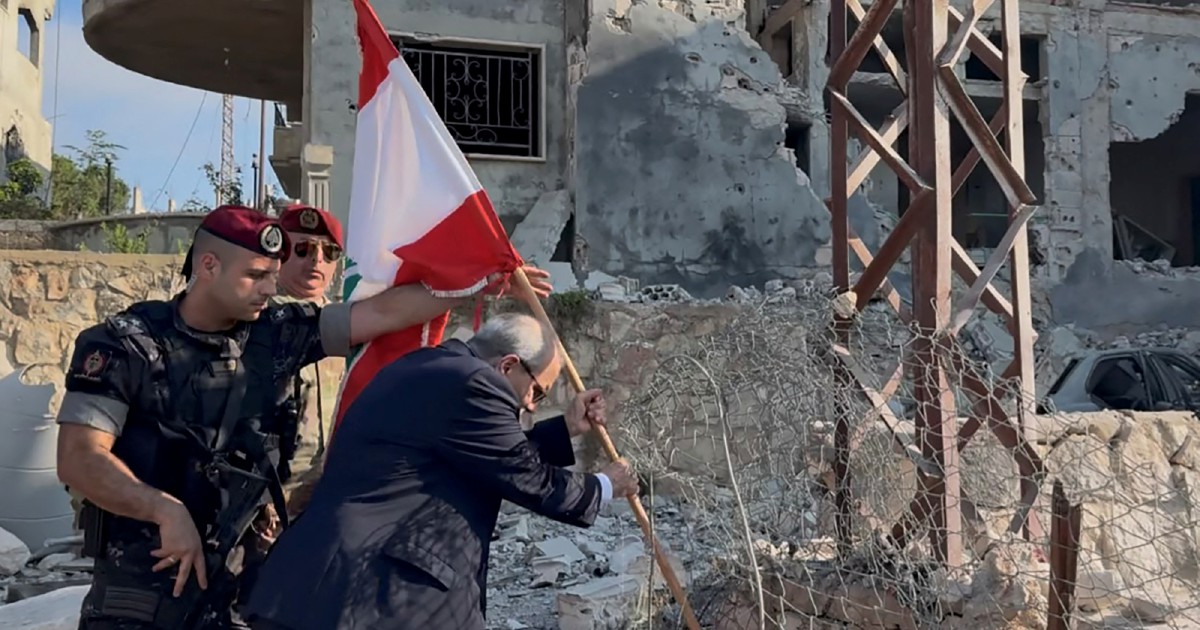
Lebanese Prime Minister Nawaf Salam has doubled down on his government's demand for a complete Israeli withdrawal from territories under occupation, signalling that military reassertion across the country remains a core diplomatic objective. Speaking during a visit to Zawtar al-Gharbiyah, a village in southern Lebanon where the national army has recently strengthened its presence, Salam underscored Beirut's commitment to restoring full state control over the country's border regions and ensuring the sovereignty of Lebanese territory.
The prime minister's remarks come at a significant juncture for Lebanon, which has endured decades of military fragmentation and contested territorial control. The deployment of the Lebanese army to areas previously outside effective government reach represents a tangible step towards recentralising state authority, a longstanding goal that successive administrations have struggled to achieve. The presence of military units in villages such as Zawtar al-Gharbiyah demonstrates that Beirut is translating its diplomatic demands into concrete administrative action, rather than merely issuing rhetoric from the capital.
Israeli military operations and presence in southern Lebanon have been a source of chronic instability and international friction. The occupation of Lebanese territory, whether formally acknowledged or de facto controlled through military incursions, has complicated efforts at regional peace and economic development. For Salam, articulating the withdrawal demand while simultaneously moving troops southward sends a dual message: Lebanon is both diplomatically insistent and practically preparing to exercise governmental functions across its full claimed territory.
The timing of Salam's statements reflects broader shifts in Lebanese politics and international attention. With the country struggling to rebuild following years of economic crisis and the devastating 2020 Beirut port explosion, reclaiming territorial integrity has become woven into narratives of national recovery and institutional renewal. A government capable of controlling its own borders and exercising authority throughout its territory would represent a significant achievement, particularly for a state historically challenged by rival armed groups and foreign military interference.
For Southeast Asian observers and Malaysia's regional partners, the Lebanese situation underscores the persistent challenges facing smaller nations wedged between larger military powers. The principle of territorial sovereignty and the right to an uncontested border remain contentious issues across Asia, from maritime disputes to land boundary disagreements. Lebanon's pursuit of complete Israeli withdrawal, however that negotiation ultimately unfolds, reflects the universal tension between stated international law and strategic military realities on the ground.
Salam's position also carries weight within Lebanese domestic politics, where different factions maintain varying relationships with regional powers and view Israeli withdrawal through different ideological lenses. By publicly reaffirming the government's commitment to complete withdrawal, the prime minister is attempting to forge consensus around a nationalist position that theoretically transcends sectarian and party divisions. This appeal to national interest can help legitimise the military's expanded role and justify the significant resources required to establish state presence throughout the country.
The deployment of Lebanese army units southward requires sustained funding and international coordination. Neighbouring countries, including those with influence in the region, will likely monitor how Beirut proceeds with this reclamation of territorial control. The extent to which external actors facilitate or obstruct Lebanon's military expansion will partly determine whether Salam's ambitions translate into lasting institutional change or remain aspirational rhetoric.
International diplomatic channels regarding Israeli withdrawal will remain complex and multifaceted. Bilateral discussions, multilateral frameworks, and third-party mediators typically become involved in such disputes, and progress is frequently incremental and contingent on broader geopolitical developments. Salam's emphasis on pursuing complete withdrawal rather than negotiating partial Israeli concessions suggests Beirut is adopting a maximalist negotiating position, at least rhetorically.
The visit to Zawtar al-Gharbiyah itself carries symbolic importance. By appearing in a village where the Lebanese army is newly established, Salam demonstrates that the government's commitment to territorial reclamation is not merely theoretical but backed by visible military presence. Such symbolic gestures, combined with sustained administrative action, help reinforce state legitimacy among populations in border regions who may have experienced extended periods of limited governmental services.
For Lebanon's development and international standing, successful territorial consolidation could unlock economic and security benefits. A state that effectively controls its entire territory may find it easier to attract foreign investment, manage refugee populations, and negotiate international agreements. The path from Salam's current statements to a reality of complete Israeli withdrawal remains uncertain and likely protracted, but the government's combined diplomatic and military approach suggests determination to shift the status quo gradually toward greater Lebanese sovereignty.

