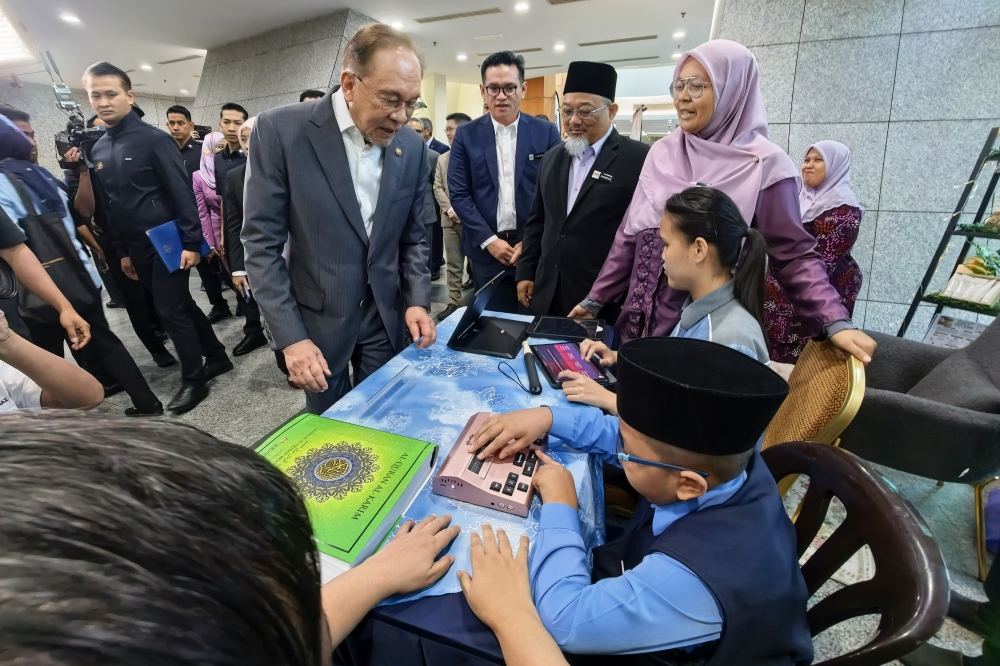
Prime Minister Datuk Seri Anwar Ibrahim has moved to address longstanding concerns about language preservation in Malaysia, asserting that the pursuit of multilingualism represents an asset rather than a threat to Bahasa Melayu's foundational role in national life. Speaking during an official engagement in Putrajaya on July 28, Anwar sought to reframe the ongoing debate about linguistic diversity, positioning language acquisition as complementary to rather than competitive with the nation's constitutional language.
The prime minister's remarks come amid periodic public discourse in Malaysia regarding the dominance of English and other foreign languages in education, commerce, and digital spaces. These conversations often carry undertones of anxiety about cultural preservation and national identity, particularly among segments of society that view language as intrinsically tied to Malay-Muslim heritage. Anwar's intervention suggests the government recognises the need to articulate a more sophisticated understanding of how multiple languages can coexist within a cohesive national framework.
Historically, Bahasa Melayu occupies a constitutionally protected position in Malaysia as the sole official language under Article 152 of the Federal Constitution. This legal safeguard reflects the language's symbolic and practical importance as a unifying medium across the nation's diverse ethnic and linguistic communities. However, the reality of a globalised economy and the practical dominance of English in international business, technology, and higher education have created genuine tensions between this constitutional status and evolving educational and economic imperatives.
Anwar's position reflects a pragmatic approach to governance, one that acknowledges Malaysia's need to maintain competitive advantage in the global marketplace while ensuring cultural continuity. The statement implicitly recognises that many Malaysian parents seek proficiency in English for their children to improve employment prospects and facilitate participation in international academic and professional networks. Simultaneously, it addresses anxieties among traditionalists who fear that diminished emphasis on Bahasa Melayu could erode cultural moorings.
The distinction Anwar draws—between learning additional languages and undermining the status of Bahasa Melayu—rests on a conceptual separation between official status and practical utility. In effect, the prime minister is arguing that a language's constitutional standing remains secure regardless of how many other languages citizens master. This framing sidesteps the more complex question of whether reduced everyday usage might gradually affect a language's vitality and evolution over generations.
Singapore's experience provides an instructive regional comparison. Despite Malay's historical presence there, English became the dominant medium of instruction and commerce following independence, yet Singapore's Malay population has maintained linguistic connection to the language through family domains and cultural institutions. The Singapore model suggests that with deliberate institutional support, minority languages can survive alongside dominant ones, though their functional scope narrows considerably.
For Malaysia's education system, Anwar's remarks likely signal government comfort with maintaining English as a key second language in schools while continuing to teach Bahasa Melayu as the primary medium. This approach, already embedded in policy, means students typically receive substantial instruction in both languages, with English's role strengthening at secondary and tertiary levels. The prime minister's public endorsement reinforces this pathway.
Regionally, Malaysia's stance on multilingualism distinguishes it from approaches in some neighbouring countries. Vietnam and Thailand have pursued more aggressive local-language-first policies in education, though both have simultaneously expanded English instruction in recognition of economic realities. Indonesia, with Bahasa Indonesia's more secure demographic base given its near-universal native speaker population, has adopted similarly pragmatic positions on English without generating the same level of public debate.
The economic argument for multilingualism carries particular weight in Malaysia's context. The nation aspires to positions as a regional hub for finance, technology, and professional services—sectors where English proficiency is practically essential for international competitiveness. Anwar's remarks acknowledge this reality while attempting to maintain public confidence that cultural identity remains uncompromised.
Implementation challenges remain substantial. Teacher training programmes must develop educators capable of delivering high-quality instruction in both Bahasa Melayu and English without permitting the former to slide into ceremonial use. Assessment systems need to ensure both languages receive genuine academic rigour. Family language practices and media consumption patterns will ultimately shape whether multilingualism develops as balanced bilingualism or as functional monolingualism in English with passive knowledge of Bahasa Melayu.
Anwar's intervention reflects recognition that categorical choices—either learning English or preserving Bahasa Melayu—mischaracterise the actual challenge facing Malaysia. The genuine task involves sustaining dual linguistic competence across a population while managing real constraints on classroom time and teacher resources. His statement seeks political permission for this messier, more pragmatic reality.
Looking forward, the prime minister's remarks may encourage more nuanced public discussion about language policy, moving beyond zero-sum framing toward consideration of how educational systems can develop genuine proficiency in multiple languages. For Malaysian students navigating a multilingual, digitally connected world, such an approach potentially offers advantages unavailable to monolingual counterparts, provided the transition does not occur at Bahasa Melayu's expense.

