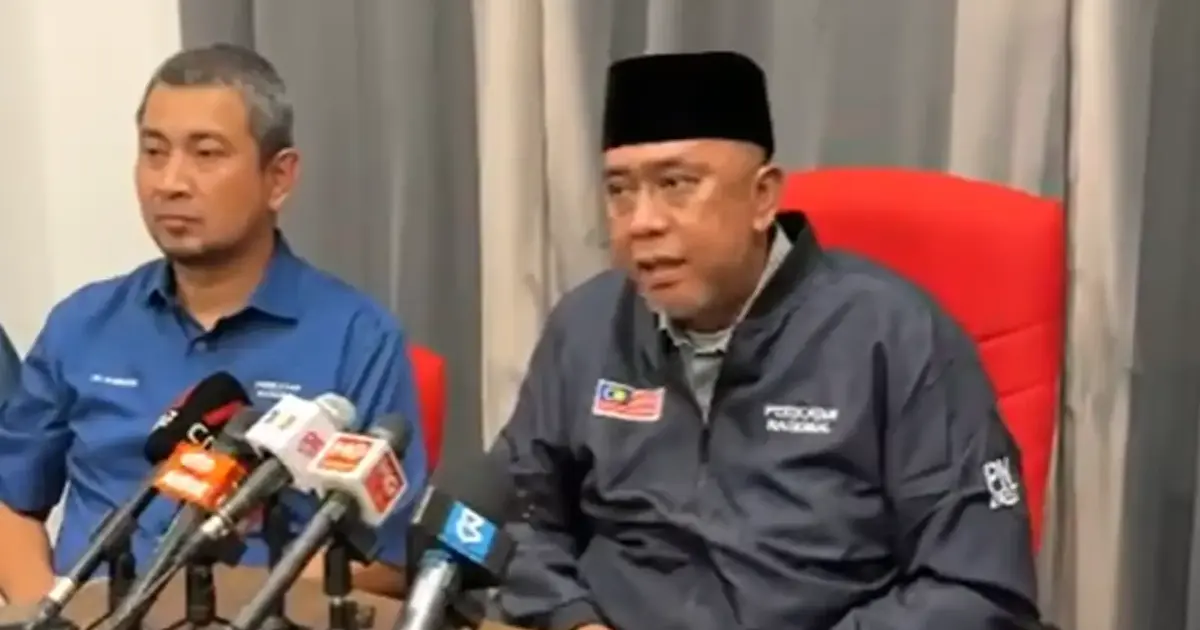
Abd Mutalip Abd Rahim, who previously represented the Layang-Layang constituency, has quit Umno and moved to Bersatu, signalling his intention to contest the seat under the Perikatan Nasional banner. The decision marks a significant shift in the political composition of a constituency that has long been contested between coalition partners, and highlights the persistent tensions within Malaysia's ruling alliance structures over seat allocations ahead of electoral cycles.
The departure of Abd Mutalip from Umno stems from the party's decision to cede the Layang-Layang seat to its coalition partner MCA in what appears to be an internal negotiation to balance seat distribution across federal constituencies. Such realignments are common within Barisan Nasional and its successor coalitions, where larger parties accommodate Chinese-majority and Indian-majority representatives to maintain multiethnic representation. However, the impact on incumbent lawmakers who lose their traditional strongholds frequently triggers party-hopping, as politicians seek alternative platforms to remain competitive in electoral contests.
Bersatu, which has become an increasingly significant player in Malaysian politics following its departure from Pakatan Harapan and subsequent alliance with Umno under the Perikatan Nasional umbrella, has been actively recruiting candidates across multiple constituencies. The party's willingness to field Abd Mutalip demonstrates its strategy to challenge Umno's dominance in certain strongholds and expand its electoral footprint. Perikatan Nasional, the coalition framework bringing together Umno, Bersatu, and smaller component parties, has been positioning itself as an alternative to the perceived instability of other political combinations.
For Malaysian political observers, Abd Mutalip's switch underscores the fluid nature of party loyalty among sitting parliamentarians when institutional arrangements threaten their electoral prospects. Unlike systems with stronger party discipline or where sitting members receive protected status, Malaysia's coalition politics frequently incentivises such movements. Politicians facing displacement from their constituencies often calculate that switching to a partner party offering a viable candidacy serves their electoral and political interests better than remaining with a party that has reassigned their seat.
The Layang-Layang constituency, like many seats across Malaysia, reflects the complex ethnic and geographic composition that shapes coalition negotiations. When Umno agrees to surrender representation to MCA, it typically signals confidence in MCA's ability to retain the seat within the broader alliance framework, or recognition that demographic shifts favour a Chinese-majority party candidate. The decision to allocate seats between coalition components is rarely made lightly, involving calculations about electoral competitiveness, party strength in specific regions, and the maintenance of inter-communal balance within government.
Abd Mutalip's entry into Bersatu introduces an additional layer of complexity to seat competition. Rather than a straight contest between Umno's preferred candidate and the opposition, voters in Layang-Layang may now face a situation where the incumbent politician stands against both MCA's nominee and potentially Umno's own candidate, fragmenting the government-aligned vote. This scenario illustrates how coalitional politics in Malaysia can produce outcomes where component parties end up competing against one another despite sharing broader political objectives.
Bersatu's recruitment of established parliamentarians like Abd Mutalip reflects the party's broader strategy to establish itself as a credible major force rather than merely a junior Perikatan Nasional participant. By fielding recognisable figures with electoral experience and existing constituency networks, Bersatu enhances its claims to legitimacy and governing capacity. This approach has enabled the party to expand its parliamentary presence in recent years beyond its core Johor stronghold.
The implications for Perikatan Nasional's electoral prospects are mixed. While Abd Mutalip's defection to Bersatu technically keeps the seat within the PN framework, it creates internal competition that could theoretically weaken the coalition's consolidated vote. However, if Bersatu calculates that its candidate—particularly an incumbent with established credibility—can outperform an MCA nominee, the overall PN result might prove stronger than anticipated. Such calculations drive coalition negotiating strategy at multiple levels.
For Umno specifically, losing sitting members to Bersatu in this manner presents a political challenge. The party must balance its commitment to coalition partnerships against the reality that reallocating seats can trigger defections that ultimately complicate electoral contests. Whether Umno views Abd Mutalip's departure as a manageable cost of maintaining MCA partnership, or as evidence of problematic coalition dynamics, remains to be assessed through subsequent seat allocation negotiations.
Regionally, Malaysia's coalition politics continue to demonstrate how electoral systems and multiethnic societies intersect to create complex power-sharing arrangements. While other Southeast Asian democracies employ coalition frameworks, Malaysia's particular history of negotiated ethnic representation means that seat allocations carry significance beyond simple electoral mathematics. Abd Mutalip's move exemplifies how individual politicians navigate these structures when institutional decisions threaten their political survival.
As Malaysia heads toward future electoral contests, the willingness of sitting parliamentarians to switch parties when faced with seat reallocation decisions may encourage larger parties to reconsider how aggressively they pursue such strategies. Each defection potentially strengthens smaller coalition partners while creating internal competition that weakens vote consolidation. Whether this dynamic leads to more stable coalition arrangements or continued fragmentation remains a central question in Malaysian political evolution.

