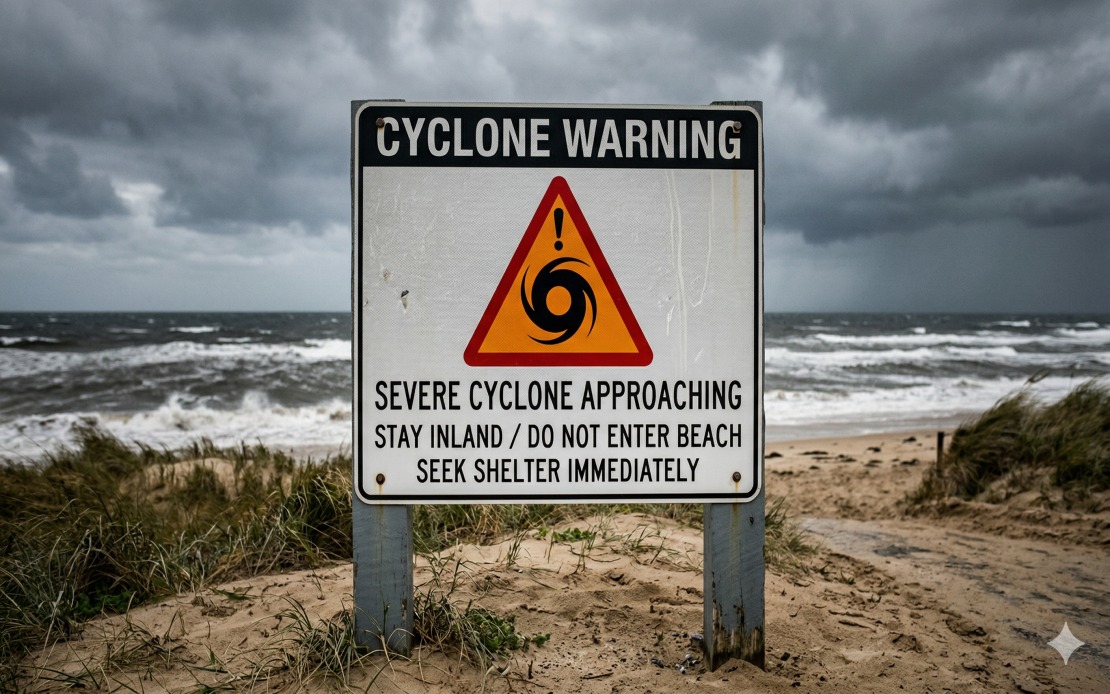
Latvia has escalated its weather response to maximum alert status as forecasters track an approaching cyclone set to unleash torrential downpours and destructive winds across the Baltic nation over the coming weekend. The Latvian Environment, Geology and Meteorology Centre declared a red-level warning—the most critical classification in the country's meteorological alert system—for heavy precipitation affecting central portions of the nation, with particular concern focused on the capital Riga and the industrial city of Jelgava. The alert period spans from 8 am on Saturday through 1 am on Sunday, though officials cautioned that the geographic scope may shift as weather models are refined and updated forecasts become available.
The anticipated deluge poses multiple simultaneous risks to the country's critical infrastructure and population. Hydrologists and emergency planners are particularly concerned about the potential for widespread inundation across residential neighbourhoods, major transportation networks, agricultural zones, and private properties throughout the warning area. Officials have explicitly noted that some roads may become completely impassable, effectively cutting off access to affected communities and hampering emergency response operations. The sheer volume and intensity of rainfall expected could overwhelm drainage systems and water management infrastructure designed for normal weather patterns, compounding flood risks across urban and rural landscapes alike.
Beyond flooding, the cyclone presents secondary hazards that could prove equally disruptive to daily life. The powerful winds accompanying the storm system threaten to topple electricity distribution poles, snap transmission lines, and bring down tree branches onto power infrastructure. Water treatment and distribution networks face vulnerability to service interruptions, potentially leaving households without reliable access to clean drinking water at precisely the moment when demand typically increases during emergency situations. Telecommunications infrastructure, increasingly critical for emergency coordination and public information dissemination, could also experience outages as weather damage affects cellular towers and broadband networks.
Latvia's State Fire and Rescue Service has issued detailed guidance to the public, urging residents to minimise outdoor movement during the peak of the storm and to take preventative measures that could mitigate personal risk. Citizens have been advised to secure any loose items in their gardens, yards, and exterior spaces that could become airborne projectiles in high winds. The service has also recommended that households charge mobile devices and backup power banks now, recognising that widespread electricity outages could render standard charging infrastructure inaccessible for extended periods. This guidance reflects lessons learned from previous severe weather events and represents standard precautionary protocols adopted across Northern European nations facing similar cyclonic threats.
The economic and social consequences of the warning have already begun materialising, as event organisers across Latvia have made the difficult decision to cancel numerous outdoor gatherings scheduled for the weekend. Festivals, markets, sporting events, and public celebrations face postponement or cancellation, representing foregone revenue for small businesses, tourism operators, and entertainment venues that had planned weekend programming. The ripple effects extend to service sector workers, vendors, and performers who rely on such weekend events for substantial portions of their income during summer months.
Latvia's experience mirrors conditions developing across the broader Baltic region. Neighbouring Estonia faces similarly grim meteorological forecasts, with the Estonian Environment Agency issuing its own warnings about approaching heavy rainfall and severe winds. The storm system's regional scope underscores the large-scale nature of this weather phenomenon, which threatens multiple nations' infrastructure simultaneously. Estonia's electricity distribution operator, Elektrilevi, has publicly cautioned that falling trees and large branches pose significant risks to the country's power distribution network, suggesting that cross-border infrastructure cooperation and mutual aid arrangements may become necessary if damage proves extensive.
For Malaysia and other Southeast Asian nations, the Latvian situation offers instructive lessons about climate resilience and disaster preparedness in the face of increasingly severe weather events. While tropical cyclones and monsoon flooding represent distinct meteorological phenomena from mid-latitude autumn storms, the fundamental challenges of protecting infrastructure, coordinating emergency responses, and communicating effectively with populations during weather crises remain universal. The Baltic region's experience highlights the importance of pre-positioned resources, clear public communication protocols, and infrastructure redundancy—all considerations increasingly relevant as climate variability affects weather patterns globally.
The timing of Latvia's alert during the late summer season, when many residents are outdoors and tourism reaches peak levels, compounds the challenge of effective emergency management. Unlike winter storms that populations instinctively prepare for through seasonal habit, late-summer cyclones can surprise residents unprepared for dramatic weather shifts. This temporal dimension adds urgency to the authorities' public messaging and underscores why advance warnings, even when imperfect, represent critical public health interventions.
Latvian authorities have positioned themselves to activate emergency response protocols should conditions deteriorate beyond current forecasts. The pre-positioning of rescue equipment, stockpiling of emergency supplies, and pre-activation of emergency operations centres represent the practical manifestations of the red alert status. Coordination between national and municipal authorities ensures that resources can be rapidly deployed to areas experiencing the most severe impacts once the storm arrives. This hierarchical approach to crisis management, common across European nations, contrasts with less formal systems in some regions and reflects institutional capacity that develops through experience with regular severe weather events.
The broader European context suggests that such cyclonic systems will become increasingly common as climate patterns shift, making this weekend's Latvian situation emblematic of emerging challenges facing temperate regions. Infrastructure designed for historical weather patterns faces growing strain from events that exceed design specifications. The cyclone approaching Latvia this weekend thus represents not merely a discrete meteorological event but a harbinger of climatic conditions that may characterise the region's future, prompting long-term reconsideration of infrastructure resilience standards and building codes.

