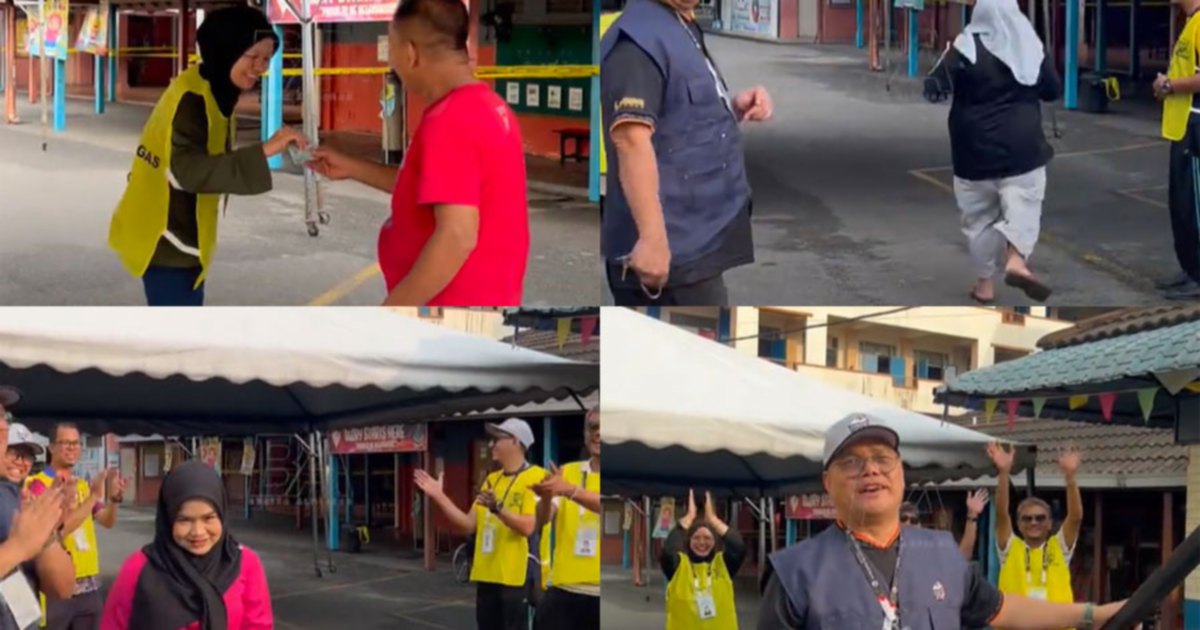
An video that has circulated widely across social media platforms has brought fresh attention to the intense drama that unfolds in the closing moments of any election. The footage, captured during Negri Sembilan's recent state election, documents the palpable urgency that grips voters as they race against the clock to exercise their franchise before the final bell rings at 6pm. The clip serves as a powerful reminder of the commitment many citizens feel toward participating in the democratic process, even when circumstances conspire against them.
The scenes recorded in the viral footage reveal a phenomenon familiar to election observers across Malaysia and beyond. As the closing hour approaches, a surge of last-minute voters typically arrives at polling stations, either having delayed their civic duty or having only just managed to finish other commitments. In this case, the Negri Sembilan footage captures individuals hurrying through the final procedural steps, queue lengths extending as election officials work to process every eligible voter before time runs out. The video underscores how election day operates on a strict temporal boundary that treats all voters equally, regardless of circumstance.
Such scenes raise important questions about accessibility and planning in electoral systems. While election officials have established the 6pm cutoff as a binding deadline to ensure smooth tallying of results and prevent administrative complications, the resulting time pressure creates situations where some voters find themselves in genuine dilemmas. In Negri Sembilan's case, the viral moment highlighted how geographical distance, work schedules, transportation delays, and unexpected obstacles can combine to place voters in genuinely stressful positions. These dynamics are particularly relevant in a state like Negri Sembilan, where dispersed settlements and transportation challenges mean travel times to polling stations can vary significantly.
The attention generated by the video also reflects Malaysia's evolving relationship with election participation and transparency. Social media has transformed how electoral moments are documented and shared, creating instantaneous records of what might once have received only local newspaper coverage. This democratization of documentation means that aspects of the voting process—both its triumphs and its challenges—now reach national audiences within hours. The viral nature of the Negri Sembilan footage demonstrates how a single compelling video can crystallize broader discussions about voting logistics and voter engagement.
Election officials and state governments have long grappled with the timing question. The 6pm closure time balances multiple competing interests: it provides sufficient daylight hours for voters throughout the day, allows adequate time for poll workers to complete their shifts, and creates a defined endpoint for tallying procedures. However, the consistency of last-minute voter rushes across election cycles suggests that some voters either deliberately leave voting until the final moment or struggle to reach polling stations earlier. Understanding the motivations behind these patterns could inform future improvements to the electoral process.
In Negri Sembilan specifically, the state's demographic and geographic characteristics shape how voters experience election day. As a state with significant commuter populations moving between Kuala Lumpur and other urban centers, many residents may find themselves caught between work obligations and voting commitments. The viral video inadvertently documents this tension, showing individuals who have apparently made voting a priority despite other demands on their time. Their determination to participate despite the compressed timeline speaks to the importance Malaysian voters attach to state elections.
The video also carries implications for how electoral administrators plan future elections. High volumes of late arrivals can strain polling station operations, increase fatigue among election workers, and potentially create bottlenecks that, while resolved before closing time, nonetheless create pressure and discomfort for voters. Some electoral commissions internationally have experimented with extended voting periods or early voting options to smooth these surges, though any such changes would need careful consideration within Malaysia's electoral framework.
Beyond the immediate operational implications, the viral moment resonates because it captures something quintessentially human: the individual's determination to participate in a collective decision-making process. Regardless of where they fall on political divides, voters making a physical effort to reach polling stations before deadline represent the lived reality of democratic participation. The video transforms an abstract concept—the right to vote—into concrete footage of real people making real efforts.
The Negri Sembilan video has also prompted reflection on younger Malaysians' engagement with electoral processes. How state elections, often overshadowed by federal political developments, capture public attention depends significantly on how they are framed and discussed. A viral video humanizing the voting experience can sometimes prove more effective in generating interest than official campaign messaging. For those concerned about youth participation rates in Malaysian elections, such moments offer both documentation of engagement and potential inspiration for others considering whether to vote.
Looking forward, the footage serves as evidence for ongoing discussions about election administration in Malaysia. Whether the current closing time remains appropriate, whether additional voting methods might reduce last-minute congestion, and how election officials might better communicate with voters about optimum voting times are questions that periodic spikes of late arrivals persistently raise. The Negri Sembilan case demonstrates that while most voters navigate the system successfully, refinements that reduce time pressure could enhance the overall voting experience.
The video's continued circulation also highlights the role that social media plays in election observation and discussion. Citizens who capture and share such moments contribute to a public record of how elections function in practice, complementing official reports and academic analysis. This crowdsourced documentation can provide valuable insights into voter behavior and electoral logistics, offering election officials another perspective on how well the system serves the voting public.

