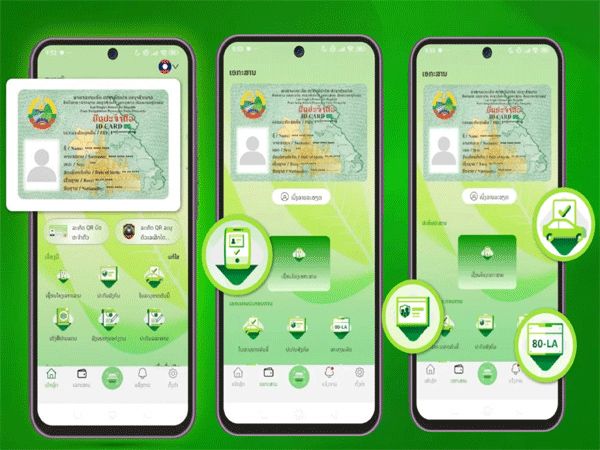
Laos has taken a significant stride toward modernising its public administration infrastructure by retiring its traditional paper-based identity documentation system in favour of a comprehensive digital platform. The Ministry of Public Security has officially launched the LAeID application, marking the end of an era in which citizens relied on white and green identity cards and physical household registration books to prove their identity and access government services. This transition represents a major watershed moment for the country's administrative infrastructure and reflects broader regional trends toward digitalisation of government processes across Southeast Asia.
The phased implementation began on July 18, when the old identity card formats ceased to hold validity for official transactions. Citizens throughout the country have been notified through formal ministerial channels and encouraged to migrate their documentation to the new digital platform. Rather than discarding existing documents immediately, the government has adopted a registration-based approach, allowing individuals to transition at their own pace while establishing a deadline beyond which the paper versions will no longer be accepted. This transition period acknowledges the practical realities of administering such a substantial change across a nation with varying levels of digital literacy and mobile phone penetration.
At its foundation, the LAeID system consolidates multiple government records into a single mobile application, eliminating the need for citizens to carry numerous paper documents or make multiple visits to different offices for administrative matters. The digital wallet functionality is designed to eventually encompass birth certificates, marriage certificates, health insurance documentation, social security information, vehicle registration details, driving licences, and passport information. Currently, the platform operates with only the digital identity card function activated, but the Ministry of Public Security has outlined plans to progressively integrate additional government databases and expand functionality over time. This incremental rollout approach allows developers to refine the system and address technical issues before broadening its scope.
The practical benefits for ordinary Laotians are substantial. Previously, conducting routine administrative transactions required carrying multiple identity documents and navigating between various government offices—a process that consumed considerable time and effort. The consolidated digital system promises to dramatically reduce this administrative burden, enabling users to verify their identity through a single smartphone application. For government agencies, the migration promises equivalent advantages: reduced paperwork handling, lower operational costs, and more efficient data management. The potential for faster service delivery and improved accuracy in government records represents a significant operational improvement for an administration traditionally constrained by limited resources.
Enrolment in the LAeID system requires citizens to register for a digital identity card through public security offices located at district and provincial levels across the nation. The registration process assigns each account a username based on the citizen's identity number or identity card number, with passwords distributed via SMS following account approval. Users may alternatively create personalised passwords during the initial registration process. The Ministry of Public Security maintains central management of the system, ensuring consistency and security across all accounts and transactions. This institutional framework provides a clear chain of responsibility and accountability for the system's operation and data protection.
The introduction of LAeID forms part of Laos' comprehensive digital transformation agenda, which prioritises modernising public administration and expanding citizens' access to government services through technological channels. This initiative aligns with similar modernisation efforts undertaken throughout Southeast Asia, where countries including Thailand, Vietnam, and Indonesia have invested substantially in digital government infrastructure. For Laos, a developing economy with limited fiscal resources, the transition to digital governance offers opportunities to achieve administrative efficiencies that might otherwise require significant capital investment in physical infrastructure and personnel expansion. The system's potential to improve data consistency and reduce duplicate record-keeping could yield substantial cost savings for the government across multiple departments.
The broader implications of this transition extend beyond mere administrative convenience. As more government databases become interconnected through the LAeID platform, Laotians will increasingly be able to conduct official business online rather than requiring in-person office visits. This capability carries particular significance for citizens living in remote regions, where travel to government offices involves considerable time and expense. Digital service delivery promises more equitable access to government processes regardless of geographical location. Additionally, the centralised digital record system creates opportunities for improved governance through better data analysis and more informed policymaking based on comprehensive, accurate demographic information.
However, the transition also raises important questions about digital inclusion and data security. The success of LAeID depends partly on widespread smartphone ownership and reliable internet connectivity—conditions that vary significantly across urban and rural areas in Laos. The government will need to develop complementary support mechanisms for citizens lacking digital infrastructure or technical competency. Equally important are robust cybersecurity measures to protect sensitive personal information stored within the system. Given that the platform will eventually contain comprehensive personal data spanning health, financial, and legal documentation, security failures could expose millions to identity theft or fraudulent transactions. The Ministry of Public Security must maintain rigorous safeguards and transparency regarding data usage and access protocols.
The phased integration approach adopted by Laotian authorities reflects lessons learned from digital identity implementations in other developing nations. Rather than attempting to consolidate all government services simultaneously—a strategy that has sometimes resulted in system failures and citizen frustration—the Laotian government is prioritising stability and gradual expansion. This measured pace allows technical teams to address vulnerabilities before expanding the system's scope to encompass more sensitive information and critical services. It also provides opportunities for citizen feedback and system refinement based on real-world usage patterns.
For Malaysia and other Southeast Asian nations observing Laos' digital identity initiative, the implementation offers valuable insights into both the potential benefits and the practical challenges of consolidating government services onto mobile platforms. The LAeID system demonstrates the feasibility of replacing traditional paper documentation with digital alternatives, even in developing economies with infrastructure constraints. The Laotian experience may inform digital transformation strategies across the region, particularly regarding how governments can prioritise security, accessibility, and gradual scaling alongside modernisation objectives.
The long-term trajectory of the LAeID system will depend significantly on public adoption rates and the government's ability to consistently deliver on integration timelines. If successfully expanded to encompass the full range of planned services, the system could position Laos as a regional leader in digital government innovation. Conversely, implementation delays or security concerns could undermine public confidence in digital public services. As the system matures, the government's responsiveness to citizen feedback and commitment to data protection will prove crucial in determining whether LAeID becomes a model for successful digital transformation in Southeast Asia or a cautionary tale about overly ambitious modernisation efforts.

