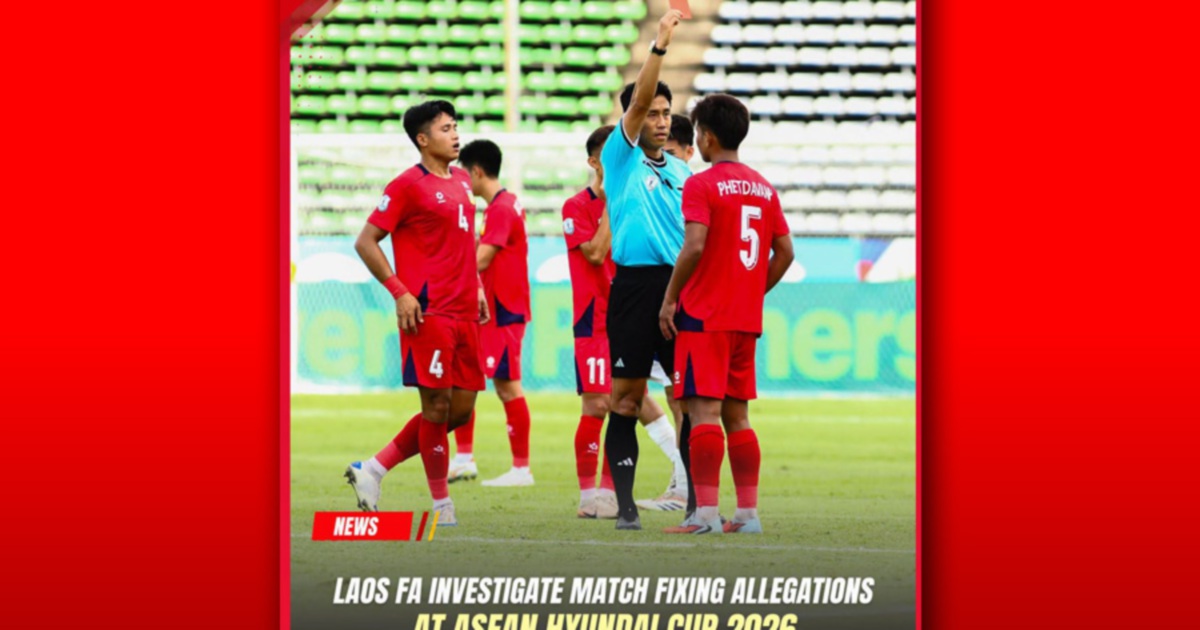
Corruption allegations have emerged as a destabilising force within Southeast Asian football, with the Lao Football Federation moving to conduct a comprehensive investigation into suspected match-fixing schemes, bribery networks, and illegal gambling activities allegedly involving players from the national squad. The development marks a significant rupture in the integrity of regional sporting competitions and has drawn attention to systemic vulnerabilities that may extend beyond Laos itself.
The decision by the LFF to pursue formal investigations underscores the scale of concerns surrounding the conduct of matches at regional tournaments. Match-fixing represents one of football's most corrosive challenges, eroding public confidence in competition outcomes and casting doubt on the legitimacy of results achieved through fair play. The emergence of bribery allegations suggests deliberate efforts to circumvent competitive standards, potentially involving inducements offered to players or officials to manipulate match performances.
Illegal gambling operations frequently operate in tandem with match-fixing schemes, creating networks in which financial gain from predetermined results generates incentives for collusion. The involvement of such activities in connection with a national team raises questions about the sophistication and reach of organised operations targeting regional football. Such networks often cross borders and involve multiple jurisdictions, complicating enforcement and investigation efforts.
The Asean Cup represents one of Southeast Asia's premier sporting showcases, attracting considerable media attention and public investment across the region. Integrity breaches affecting this tournament carry reputational consequences not only for the nations involved but for the credibility of regional sporting governance itself. Malaysian football authorities and fans have watched regional competitions with increasing scrutiny, and revelations of corruption undermine the competitive framework that spectators and broadcasters depend upon.
For Laos, the investigation signals a recognition that internal accountability mechanisms must function effectively to preserve the nation's standing within Asian football structures. The LFF's proactive stance in requesting a high-level inquiry suggests institutional awareness that superficial responses would prove inadequate given the severity of alleged misconduct. However, the effectiveness of such investigations depends heavily on access to evidence, willingness of witnesses to cooperate, and resources available to examining bodies.
Regional football federations operate within the governance framework established by the Asian Football Confederation, which maintains codes of conduct and disciplinary procedures designed to address corruption. Investigations of this magnitude typically involve coordination between national federations, tournament organisers, and potentially law enforcement authorities. The extent of coordination between Lao authorities and regional or international bodies remains unclear, though such collaboration typically becomes necessary when investigations reveal transnational dimensions.
Match-fixing scandals have surfaced periodically across Asian football in recent decades, with investigations revealing organised criminal involvement in some cases. These precedents demonstrate that once suspicious patterns emerge, thorough investigation becomes essential to prevent normalisation of corrupt practices. Players, officials, and match organisers implicated in such schemes face potential bans, legal prosecution, and career termination, consequences that reflect the gravity with which football governance bodies treat integrity violations.
The allegations invite scrutiny of whether safeguarding mechanisms currently embedded in regional tournament structures prove sufficient. Anti-corruption education, betting monitoring systems, and reporting protocols form components of comprehensive prevention frameworks, yet their effectiveness depends on consistent implementation and genuine commitment from participating federations. Malaysia and other nations within the Asean bloc maintain vested interests in ensuring that regional competitions maintain credibility and integrity.
For Southeast Asian football audiences, particularly in Malaysia where domestic football commands considerable passion and investment, external corruption affecting regional tournaments carries troubling implications. When national teams compete in compromised environments, achievements become ambiguous and confidence in competitive authenticity weakens. The psychological impact on supporters extends beyond individual matches to affect broader engagement with regional football structures.
The investigation announced by the LFF represents an important juncture in determining whether Southeast Asian football governance possesses sufficient institutional capacity to address serious misconduct. Success in comprehensively investigating allegations, implementing sanctions where warranted, and establishing enhanced preventive measures would signal that regional federations take accountability seriously. Conversely, incomplete investigations or inadequate remedial action would risk entrenching perceptions that corruption operates with relative impunity within the region's football ecosystem.
Moving forward, the outcomes of this investigation will likely influence how other regional federations approach integrity concerns within their own footballing systems. Whether enhanced coordination and information-sharing mechanisms emerge from these proceedings may determine whether similar scandals resurface or whether preventive frameworks strengthen across Southeast Asia. Malaysian football observers will monitor developments closely, recognising that regional integrity serves the interests of all participating nations.

