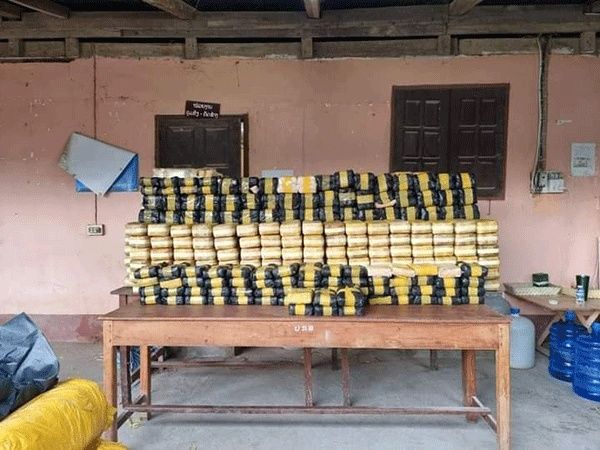
The government of Laos is intensifying its response to a worsening drug problem in Xaysomboun province, where narcotics-related offences have come to dominate the criminal landscape. During the first half of this year, drug cases accounted for 24 of the 54 total offences investigated by provincial authorities, representing nearly 44 per cent of the security force's caseload. This alarming concentration has prompted senior law enforcement officials to demand more aggressive tactics across multiple fronts, signalling that the nation's long-standing campaign against trafficking—which was elevated to national priority status five years ago—remains a critical challenge despite sustained efforts.
The scale of the drug problem extends well beyond Xaysomboun itself. According to figures presented by Prime Minister Sonexay Siphandone to the National Assembly, authorities processed 1,786 drug-related cases nationwide during the same six-month period, resulting in 4,025 arrests that included 93 foreign nationals. Large quantities of contraband and vehicles used in trafficking operations were seized in these operations. For a country situated along major trafficking routes between the Golden Triangle and regional markets, these numbers underscore how deeply entrenched narcotics distribution has become in Laos's security apparatus and resource allocation.
Of the 24 drug cases in Xaysomboun, only two have been resolved and forwarded to prosecution, while the remainder remain under investigation. This bottleneck in case resolution reflects broader institutional challenges within the provincial system. Across all crime categories in the province, the security force has managed to settle six cases, conclude four for prosecution, and achieve complete resolution in fifteen others, leaving 29 outstanding investigations. The backlog suggests that investigative capacity and coordination between police and prosecutors may be constraining the system's ability to move cases through the judicial pipeline efficiently.
Police Brigadier General Ouday Insouvanh, who heads the Xaysomboun Provincial Public Security Command, briefed visiting Police Lieutenant General Vanthong Kongmany on these figures during an inspection on August 7. The brigadier general's presentation emphasised efforts to maintain political stability and social order, while noting continued intelligence gathering and monitoring activities. However, the minister's response indicated dissatisfaction with the pace and scope of enforcement, suggesting that central authorities view the provincial response as insufficient and requiring substantial upgrades in effectiveness and coordination.
Lieutenant General Vanthong's directives extended considerably beyond drug trafficking. He instructed the provincial force to strengthen operations against smuggling, human trafficking, theft, burglary, illegal mining, and gambling—a comprehensive agenda that indicates security challenges are multifaceted and interconnected. The minister emphasised that officers must adapt to evolving criminal methodologies and prevent problems from escalating into more serious threats. This broad-based approach reflects recognition that fragmented enforcement efforts cannot address the complex security environment facing a developing nation with porous borders and limited resources.
Cybercrime and social media monitoring have now been added to the province's enforcement priorities, marking a significant shift toward digital-age crime prevention. The directive to strengthen oversight of online activities and cybercriminal conduct aligns with growing concerns across Southeast Asia about transnational criminal networks exploiting digital platforms for trafficking coordination, money laundering, and recruitment. For Laos, a nation with expanding internet penetration, this represents an emerging frontier in law enforcement that many provincial forces lack expertise to manage effectively.
Road safety emerged as another pressing concern during the meeting, with data revealing the human and economic toll of traffic incidents on provincial communities. During the first six months of the year, Xaysomboun recorded 60 traffic accidents resulting in four fatalities, 80 injuries, and damage to 109 vehicles. Financial losses exceeded 2.56 billion kip, a substantial sum that drains resources from families and local economies. These statistics illustrate how public safety challenges extend beyond criminal justice into infrastructure and driver behaviour domains that require sustained preventive intervention.
Tourism and foreign national management have become additional operational responsibilities for the provincial security command. Officers inspected 1,698 tourists during the first half of the year, including 396 foreign nationals, highlighting the cross-border dimensions of security work in central Laos. Given the province's location and accessibility, managing visitor flows and monitoring foreign presence has strategic importance for both counterterrorism and immigration control objectives. The figures suggest reasonably active tourism despite regional security concerns, though the inspection protocols and intelligence value of these operations remain unclear from available information.
Lieutenant General Vanthong's remarks to provincial leadership went beyond operational directives to address institutional culture and personnel conduct. He stressed the importance of political and ideological education among officers, compliance with party policies and state law, and adherence to disciplinary standards within the security forces. His comments about acknowledging weaknesses and accepting personal responsibility suggest concerns about accountability, initiative, and professionalism within the provincial command structure. Such emphasis on institutional reform often indicates that senior authorities perceive problems extending beyond simple resource constraints to managerial and cultural deficiencies.
The minister's specific focus on immigration management and foreign national oversight, coupled with demands for legally rigorous investigation and detention procedures, reflects international scrutiny and pressure regarding human rights practices within Laos's security apparatus. His instruction that assignments be made according to personnel expertise rather than other criteria suggests previous ad hoc staffing arrangements. These directives indicate that central authorities are attempting to modernise and professionalise provincial operations while reinforcing legal compliance—a delicate balance between maintaining security effectiveness and satisfying international humanitarian standards.
For Malaysia and broader Southeast Asia, Laos's intensifying drug enforcement efforts hold direct relevance, as the nation functions as a transit corridor for narcotics destined for regional markets including Malaysia, Singapore, and Thailand. Strengthened capacity in Xaysomboun and other provinces could disrupt trafficking networks that have historically exploited weak border controls and limited investigative resources. Conversely, institutional inefficiencies, resource constraints, and competing priorities evident in this case suggest that Laos will likely remain a challenging enforcement environment requiring enhanced bilateral cooperation and capacity-building partnerships.
The emphasis on cybercrime and digital-age criminal methodologies also carries regional implications, as transnational organised crime increasingly leverages online platforms for coordination and financing. Malaysian authorities and other regional partners may find value in sharing intelligence and technical expertise with Laotian counterparts to address this emerging threat effectively. The broader message from Lieutenant General Vanthong's visit is that central authorities recognise the multifaceted nature of contemporary security challenges and are attempting to drive systemic upgrades, though the provincial system's capacity to implement these directives remains to be tested in practice.

