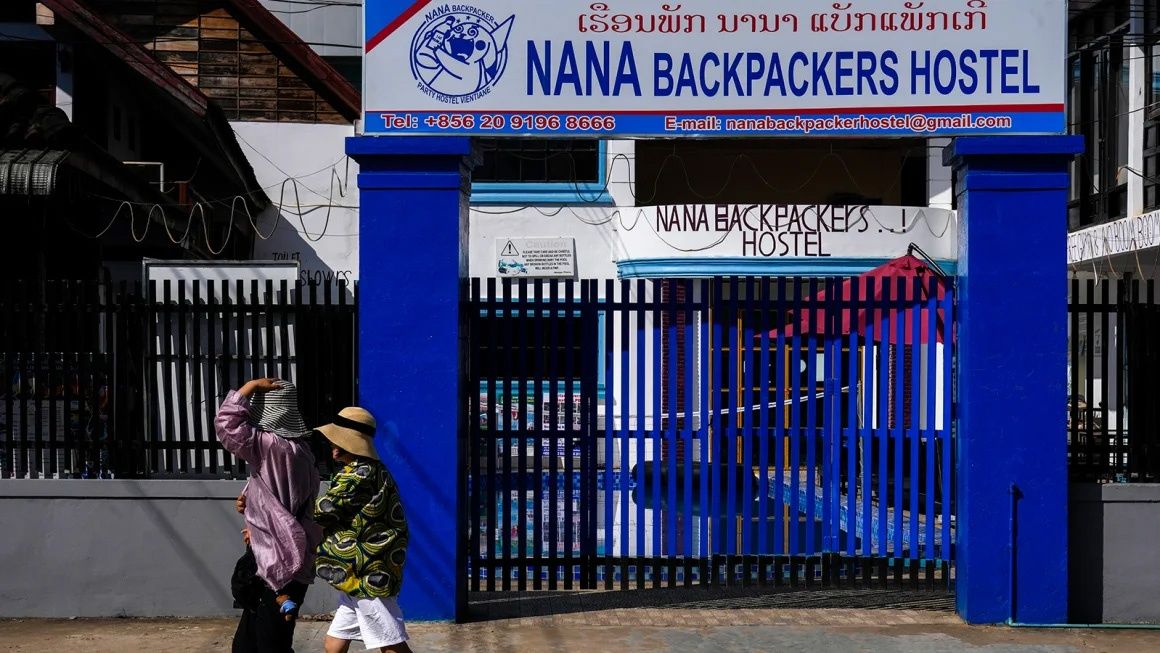
A Laos court has filed charges against a distillery owner linked to the deaths of six foreign tourists who consumed tainted alcohol at a backpacker hostel in Vang Vieng last November, according to an announcement Friday by Denmark's foreign ministry. The charges carry potential sentences of three months to four years imprisonment plus fines if the accused is convicted, though the indictment focuses on relatively minor offences of selling harmful food and operating an illegal business rather than the more serious charges that grieving families and international governments had anticipated.
Among the victims were two Danish women, Anne-Sofie Orkild Coyman and Freja Vennervald Sorensen, both in their early twenties. Australian teenagers Bianca Jones and Holly Morton-Bowles, both 19, also died from methanol poisoning, alongside British lawyer Simone White, 28, and U.S. citizen James Louis Hutson, 57. The incident occurred at the Nana Backpacker Hostel, where guests reportedly consumed complimentary shots of Laotian vodka before venturing to other entertainment venues in the popular tourist town.
Denmark's Foreign Minister Lars Løkke Rasmussen expressed deep disappointment with the charges, stating they fail to adequately reflect the gravity and extent of a tragedy that has devastated multiple families across different nations. While acknowledging the legal complexities involved in establishing proof for more serious charges such as negligent homicide, Rasmussen emphasised the difficulty in accepting such a lenient indictment. The Lao authorities indicated the case will remain formally open for 15 years, allowing for potential elevation of charges if evidence emerges to support more serious allegations.
Australia's government has emerged as the most vocal critic of the indictment's inadequacy. Australian Foreign Minister Penny Wong stated she was deeply frustrated and bitterly disappointed that authorities were not pursuing the most serious charges available. Prime Minister Anthony Albanese dispatched an envoy to Laos on the day of the announcement to communicate Australia's objections and expectations for a more rigorous investigation. Wong also confirmed that Australian officials had summoned Laos' ambassador to Canberra to convey their concerns directly.
Bianca Jones' mother, Michelle, spoke emotionally during a news conference held by the affected families, describing her daughter and her companions as young people undertaking the kind of routine holiday experiences that teenagers and young adults typically pursue. Her anguish reflected the broader sentiment among bereaved families that the charges seemed to diminish the lives lost, with one parent stating it felt as though their children's deaths did not register as significant. The families had gathered to anticipate and respond to the formal charges announcement, underscoring months of frustration with what they perceive as an inadequate legal response.
The case has highlighted troubling gaps in the investigation process from the perspective of bereaved relatives. Freja Vennervald Sorensen's parents told Danish broadcaster DR that they received minimal information throughout the ordeal. Most disturbingly, no autopsy was conducted on their daughter, and her death certificate attributed her death to natural cardiac arrest rather than acknowledging the methanol poisoning that had ultimately claimed her life. The parents expressed that they had been unaware of the dangers of methanol contamination during travel and now seek to raise public awareness of this hazard.
Methanol poisoning represents a significant global public health challenge, particularly in developing nations where illicit alcohol is prevalent. According to statistics gathered by medical assistance organisation Doctors Without Borders, Indonesia, India and Russia report the highest incidence of suspected cases. In disreputable establishments, methanol is sometimes deliberately added to mixed drinks as a cost-saving measure compared to ethanol, creating severe poisoning or fatal risks. The substance also occurs naturally as a byproduct of poorly distilled home-brew liquor and can inadvertently contaminate commercial bar beverages, raising questions about broader regulatory oversight in Laos' hospitality sector.
Vang Vieng has developed a reputation as a magnet for backpackers from across the globe, particularly Australians and other young travellers seeking both recreational activities and adventure sports. The incident threatens this reputation, with Shaun Bowles, father of Holly Morton-Bowles, suggesting that potential visitors may reconsider travelling to Laos given what he characterised as the government's apparent disregard for tourist safety and concerns about the management of the investigation itself. Bowles described the authorities' handling of the case as demonstrating how little value is placed on tourists' lives and hinted at deliberate attempts to minimise the incident's seriousness.
Laos, a landlocked Southeast Asian nation and among the region's poorest countries, operates as an authoritarian one-party communist state that maintains tight control over information flow. The Lao government's response to international pressure has been characterised by limited transparency, with authorities restricting media access to the announcement of charges. The foreign ministry indicated that information would be disclosed only through a news conference open exclusively to local media and embassies of concerned countries, preventing broader international media scrutiny of the proceedings.
The divergence between what international governments consider appropriate legal response and what Laos has delivered reflects deeper challenges in coordinating justice across borders when incidents involve multiple nationalities and potentially inadequate regulatory frameworks in the incident location. Denmark has indicated it will work with affected families and other concerned nations to explore further options in pursuit of justice, suggesting this case may not conclude with the current indictment. The disparity between public expectations and legal outcomes has intensified scrutiny of Laos' commitment to accountability for preventable deaths involving foreign visitors on its territory.

