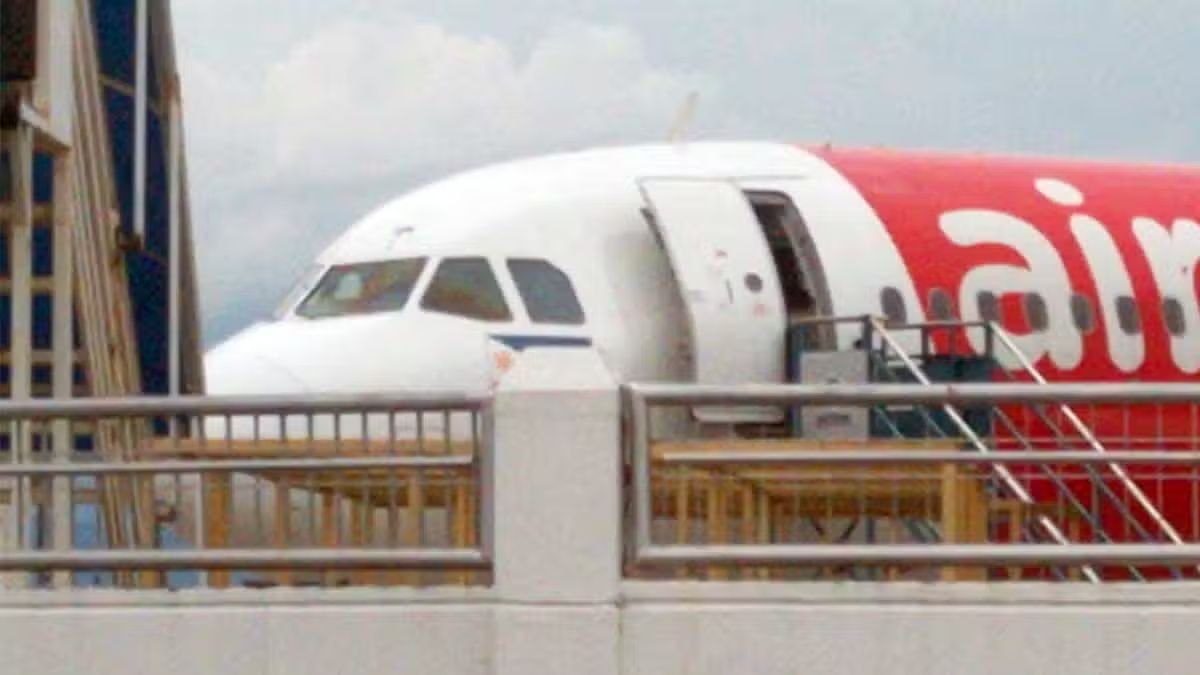
An AirAsia aircraft bound for Manila never left the tarmac at Daniel Z. Romualdez Airport in Tacloban City on Saturday, August 1, after ground staff identified a mechanical fault affecting the plane's landing gear system during pre-flight checks. The discovery forced the airline to cancel the service entirely, creating a brief period of operational strain at the Philippines' principal commercial hub serving Eastern Visayas.
The technical malfunction became apparent around 6 o'clock in the morning, well before the scheduled departure. Upon notification, the Civil Aviation Authority of the Philippines (CAAP) office at Tacloban responded by issuing a formal Notice to Airmen alerting other aircraft and relevant stakeholders to the developing situation. This administrative action simultaneously triggered temporary adjustments to the airport's traffic flow, as operations staff recalibrated their scheduling to accommodate the disabled aircraft occupying runway space.
The presence of the grounded airliner created a cascading effect across the airport's flight schedule. Several inbound services experienced holding patterns and minor delays, while outbound flights faced postponed departure windows as runway capacity became constrained. The situation remained unresolved through the early morning hours, with the aircraft remaining stationary on the runway while maintenance teams assessed the extent of the landing gear damage.
Relief came for airport operators and stranded travellers by mid-morning when the stricken AirAsia aircraft was safely repositioned away from the active runway. Ground crews carefully towed the plane toward the airport's maintenance bay area, enabling a thorough technical inspection and allowing runway operations to resume their normal cadence. By 9:45 in the morning, Daniel Z. Romualdez Airport had fully normalised its operations, though the AirAsia aircraft remained under examination by engineers.
For passengers originally booked on the cancelled Manila service, AirAsia moved swiftly to mitigate the inconvenience. The Philippine Information Agency's Eastern Visayas division confirmed that the airline had already scheduled an alternative flight and begun coordinating revised travel arrangements with all affected travellers. This proactive approach reflected the carrier's commitment to resolving the disruption, though specific details regarding rebooking options and compensation measures were not immediately publicised.
The incident underscores the critical importance of rigorous pre-flight maintenance protocols in commercial aviation. Landing gear represents one of the aircraft's most essential safety systems, and any detected abnormality must be treated with appropriate seriousness before a plane can safely operate. For Malaysian travellers and those familiar with regional air travel, such mechanical discoveries are generally viewed as evidence of functional safety systems rather than cause for alarm—the very purpose of ground checks is to identify and resolve problems before they endanger passengers.
Daniel Z. Romualdez Airport plays a vital role within the Philippines' aviation network, serving as the primary gateway for Eastern Visayas' population and economy. The facility processes multiple daily services connecting Tacloban with Manila, the nation's capital and primary business hub. Three major carriers—AirAsia, Cebu Pacific, and Philippine Airlines—maintain regular operations through the airport, making it an essential infrastructure asset for regional connectivity and commerce.
By Saturday afternoon, the situation had stabilised completely. CAAP Tacloban confirmed that airport operations had restored to their ordinary rhythm, though technical investigations into the landing gear defect continued. The absence of publicly disclosed information regarding the specific flight number, the precise nature of the landing gear problem, or exact passenger numbers reflected standard aviation industry practice, where such operational details remain internal matters managed by the airline and regulatory authorities.
The episode, while temporarily disruptive, demonstrates the layered safety systems embedded within modern aviation operations. From pre-flight inspections that catch mechanical issues to regulatory frameworks enabling swift airport response, and airline procedures ensuring passenger care during disruptions, the aviation sector maintains multiple safeguards. For Southeast Asian passengers accustomed to regional travel, such incidents—though inconvenient—generally reinforce confidence that safety takes precedence over schedules.

