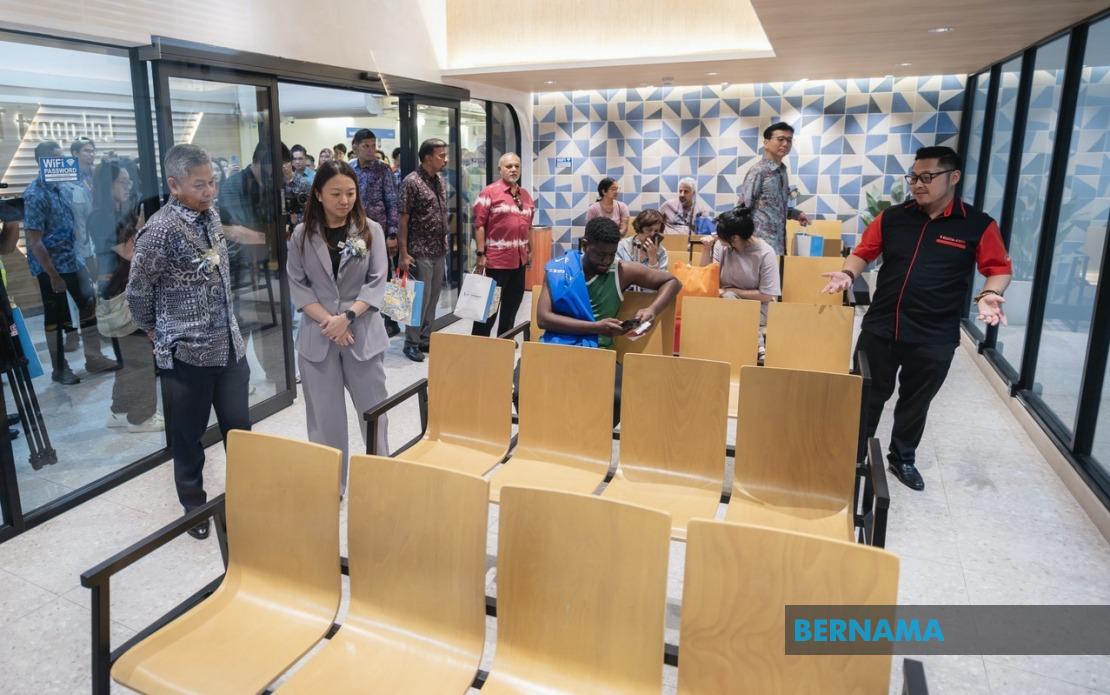
Kuala Lumpur's urban transport infrastructure has expanded with the inauguration of the LaLaport Transportation Hub, an integrated terminal facility positioned to transform how residents and travellers navigate the city centre. Located adjacent to the Hang Tuah LRT and Monorail interchange, the new hub represents a significant step forward in addressing the transport demands of Southeast Asia's bustling capital, where mobility challenges have long constrained economic productivity and quality of life.
Minister in the Prime Minister's Department (Federal Territories) Hannah Yeoh underscored the strategic importance of the project during its launch, emphasising that the facility is engineered to accommodate approximately 10,000 passengers on a daily basis. This capacity addresses a critical infrastructure need in a city where 1.2 million people cross the boundaries each day and approximately 5.5 million individual journeys occur within the metropolitan area. The sheer volume of human movement underscores why transport planners have prioritised seamless connectivity as essential to the city's continued development and competitive positioning within the region.
The hub's design philosophy centres on eliminating friction points in multimodal journeys. A sheltered pedestrian walkway enables smooth transitions between light rail transit, express buses, e-hailing platforms, conventional taxis, and shared mobility services—a comprehensive approach that reflects global best practices in integrated transport terminals. By consolidating these services under one roof within the city centre, the facility removes the logistical burden that previously forced travellers to navigate disparate pickup and drop-off locations across different parts of Kuala Lumpur.
Heyoh also highlighted the hub's particular significance as a gateway between Kuala Lumpur and Singapore, two cities connected by one of Southeast Asia's most travelled transport corridors. This cross-border function carries economic implications beyond passenger convenience, as efficient transport links strengthen regional supply chains, facilitate business travel, and support the tourism flows that underpin both economies. The 24-hour express bus service operating through the facility directly responds to demand from commuters, business professionals, and travellers who depend on reliable overnight connections between the two financial hubs.
Operational governance has undergone substantive reform to support this expansion. The Dewan Bandaraya Kuala Lumpur has transitioned from annual licencing to a three-year operating licence framework for transport terminals, a structural change that provides operators with greater operational stability and encourages long-term investment in service quality. This policy shift reflects a maturing approach to transport regulation, wherein stability and predictability become tools for driving service excellence rather than mere bureaucratic oversight.
The terminal itself occupies the LG1 level of the East Atrium and incorporates modern amenities reflecting international standards. Eleven dedicated bus parking bays accommodate the anticipated vehicle movements, while an air-conditioned waiting lounge, staffed ticketing counters, self-service kiosks, and a real-time Passenger Information Display System collectively create an environment that prioritises passenger comfort and journey transparency. These operational features matter significantly in a tropical climate where amenities directly influence user satisfaction and sustained patronage.
Asia Success Resource Sdn Bhd, the hub operator, projects that approximately 150 bus trips will transit daily through the facility, with approximately 30 bus operators anticipated to establish the hub as their primary city centre base. This concentration of services creates network effects that benefit individual passengers, as higher frequency and greater operator competition typically drive service improvements and competitive pricing. The operator has also incorporated the Boleh-Boleh Ride on-demand van shuttle service, an integration that addresses the crucial last-mile problem that often frustrates transit users in urban areas.
Airport connectivity represents another dimension of the facility's strategic value. Direct shuttle van services to Kuala Lumpur International Airport's Terminal 1 and Terminal 2 create a passenger pathway that competes with private vehicle and ride-hailing options. For the travelling public, this option reduces airport ground transportation costs and congestion. For urban planners, it demonstrates how integrated terminals can distribute airport access across multiple transport modes, thereby reducing pressure on individual road corridors and parking infrastructure.
Malaysia's transport governance has also been bolstered through expanded safety infrastructure. The Dewan Bandaraya Kuala Lumpur is deploying approximately 10,000 operational closed-circuit television cameras across the city, a security enhancement that addresses passenger safety concerns and creates accountability within the public realm. For a transport hub serving 10,000 daily passengers, such surveillance infrastructure becomes essential to maintaining the sense of security that encourages use of public transit, particularly among female travellers and during off-peak hours.
The project also carries bilateral implications in Malaysia-Japan relations. Japanese Ambassador to Malaysia Noriyuki Shikata's presence at the launch reflected deeper cooperation between the two nations in advancing sustainable urban development. Prime Minister Datuk Seri Anwar Ibrahim's recent visit to Japan had reaffirmed commitments to collaboration spanning energy security and other strategic areas, with the two countries preparing to commemorate the 75th anniversary of diplomatic relations. In this context, the LaLaport hub represents a tangible expression of Japan's support for Malaysia's infrastructure modernisation and sustainable urban planning objectives.
Land Public Transport Agency (APAD) deputy director (development) Azrin Borhan and Kuala Lumpur Mayor Datuk Seri Fadlun Mak Ujud's participation in the launch reflected multi-level government coordination essential to major transport projects. Such alignment between federal, municipal, and agency stakeholders demonstrates institutional capacity for executing complex infrastructure initiatives that require sustained commitment across administrative boundaries and electoral cycles.
The broader context reveals that Kuala Lumpur has recognised transport investment as fundamental to economic resilience and urban livability. With regional competitors enhancing their own transit networks—Bangkok's expanded BTS and MRT systems, Singapore's ongoing rail expansion, Jakarta's MRT development—Malaysian planners understand that transport infrastructure quality influences international investment decisions and talent migration flows. The LaLaport hub exemplifies this competitive awareness, positioning Kuala Lumpur as a city that supports the mobility patterns that contemporary urban workers and businesses demand.
Looking forward, the hub's performance metrics will merit monitoring. Usage patterns, operator satisfaction, and passenger feedback will inform future iterations of transport hub design and policy. Whether the facility achieves its 10,000 passenger daily projection will indicate whether Kuala Lumpur's transport planning accurately captured demand patterns and user preferences. Success would validate integrated terminal models as viable urban solutions, potentially spurring replication across Malaysian metropolitan areas and neighbouring cities grappling with similar congestion challenges.

