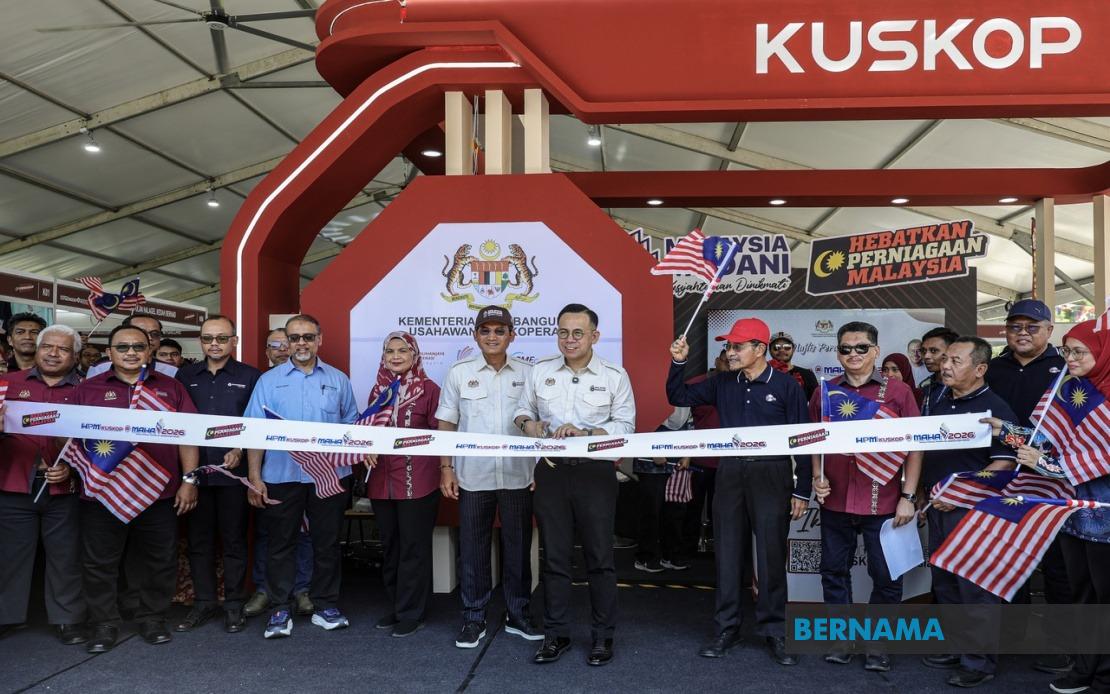
The Ministry of Entrepreneur and Cooperatives Development (KUSKOP) is pursuing an ambitious sales target of RM500,000 at its inaugural presence at MAHA 2026, Malaysia's major agricultural and agribusiness showcase held in Serdang. The ministry's participation marks a significant step in bringing the entrepreneurial and cooperative sectors into closer alignment with the country's agricultural marketplace, leveraging the biennial event's substantial visitor footfall to drive commerce and awareness among smallerscale businesses.
Minister Steven Sim revealed that the HPMKUSKOP@MAHA 2026 site had already generated RM110,000 in sales within the first few days of the exhibition, suggesting strong market reception and buyer interest. This early performance indicates that demand exists for the products and services offered by enterprises participating under the ministry's banner, and positions the RM500,000 goal as achievable within the event's full duration. The trajectory also demonstrates the appetite among attendees for goods and services linked to cooperative and MSME ecosystems, sectors that increasingly form the backbone of Malaysia's economic diversification strategy.
The ministry deployed considerable resources to establish its presence, bringing approximately 66 entities comprising registered cooperatives, micro, small and medium enterprises, and standalone companies to exhibit under one dedicated pavilion. This concentration of diverse business types within a single space creates opportunities for networking, cross-promotion, and collaborative partnerships that might not materialise if these entities were scattered across separate stalls. For cooperatives and MSMEs that typically operate with limited marketing budgets, the collective platform reduces individual exhibition costs whilst amplifying their combined visibility and purchasing power in negotiating with buyers.
Sim highlighted that visitor numbers to the MAHA 2026 site had already surpassed 100,000 in the lead-up to his statement, underscoring the exhibition's drawing power and the broader receptiveness of Malaysia's agribusiness community to entrepreneurship-focused offerings. This substantial footfall creates a concentrated marketplace where transaction volumes can compound rapidly, particularly if exhibitors are equipped with sufficient stock and responsive sales personnel. The high attendance also validates the ministry's strategic decision to participate, as the cost of venue hire and logistics can be justified by the scale of potential customers flowing through daily.
The diversity of enterprises participating—ranging from formal cooperatives to informal micro-businesses—reflects KUSKOP's mandate to support entrepreneurial activity across the entire spectrum of business scales. Cooperatives bring institutional credibility and established supply chains, whilst MSMEs contribute innovation and niche market positioning. This heterogeneous grouping allows buyers to access products at multiple tiers of sophistication and price point, broadening the appeal of the pavilion beyond any single customer demographic. For regional observers, the exercise demonstrates how Malaysia is attempting to integrate cooperative and MSME development into mainstream commercial events, rather than relegating these sectors to dedicated side exhibitions.
Sim's remarks also underscored the collaborative relationship between KUSKOP and the Ministry of Agriculture and Food Security, led by Datuk Seri Mohamad Sabu, in curating MAHA 2026. The alignment between entrepreneurship development and agricultural output reflects a broader policy recognition that farming viability depends not only on production efficiency but also on value-added processing, direct-to-consumer channels, and cooperative marketing arrangements. By integrating KUSKOP's mandate into the agricultural exhibition framework, the government signals that enterprise development and farming progress are interdependent rather than siloed concerns.
The presence of KUSKOP secretary-general Datuk Seri Khairul Dzaimee Daud at the site's official opening reinforced the ministry's institutional commitment to the exercise. Such high-level attendance typically indicates that the government views the initiative as part of broader policy priorities, potentially foreshadowing similar collaborative participation in future MAHA editions or comparable exhibitions. For cooperatives and MSMEs, ministerial engagement at events can translate into policy attention, funding considerations, and regulatory support that extend beyond the exhibition itself.
From a Southeast Asian perspective, Malaysia's effort to create dedicated spaces for cooperative and MSME promotion within major agricultural exhibitions aligns with regional trends toward inclusive economic growth. Neighbouring countries have similarly recognised that small-scale enterprises and cooperative structures can drive employment, rural retention, and income distribution more effectively than purely large-scale commercial agriculture. The MAHA platform thus serves a demonstration function for how regional governments might scaffold micro and small business participation in high-visibility commercial settings.
The RM500,000 sales target, whilst modest in absolute terms, carries symbolic weight as a benchmark for KUSKOP's marketplace effectiveness. Should the ministry achieve or exceed this figure, it validates the pavilion concept and provides justification for expanded participation in subsequent editions. Conversely, shortfalls would prompt questions about pricing alignment, product-market fit, and whether participating enterprises possess adequate sales capability. For Malaysian MSMEs and cooperatives, performance at MAHA 2026 sets a precedent for how their sector is evaluated and supported by policymakers in future resource allocation decisions.

