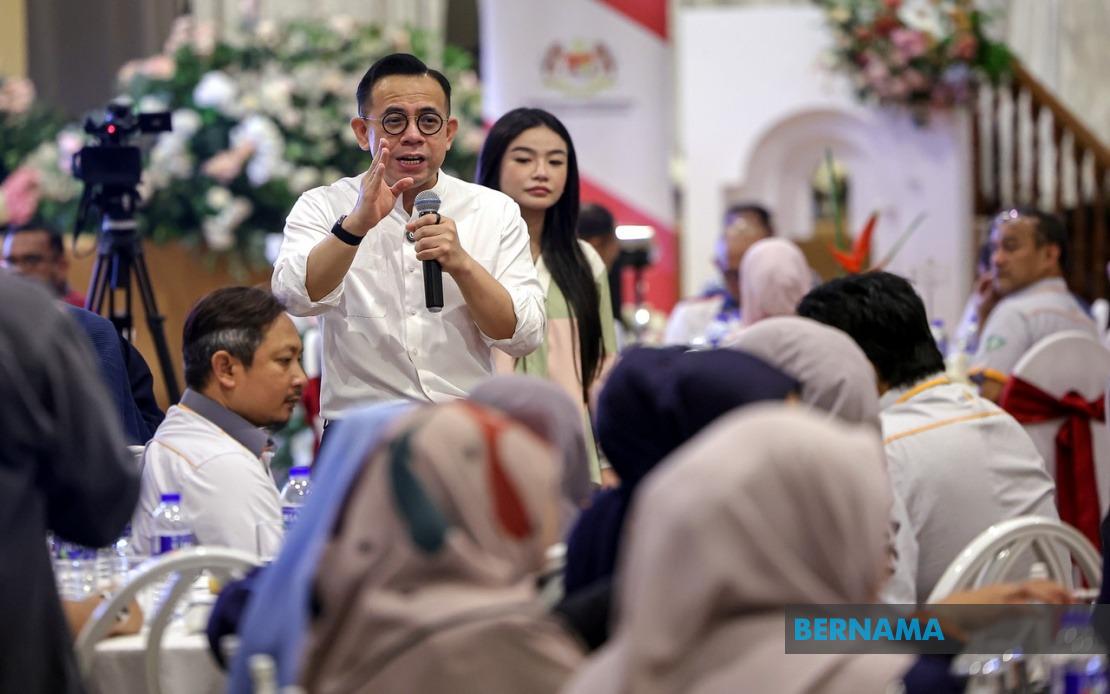
The Ministry of Entrepreneur Development and Cooperatives (KUSKOP) has made substantial progress in its flagship support programme, channelling nearly RM7 billion to over 213,000 micro, small and medium enterprises nationwide during the opening six months of 2026. Minister Steven Sim disclosed this milestone while addressing a gathering of KUSKOP personnel and partner agencies in Seremban, underlining the government's accelerated effort to fortify the entrepreneurial ecosystem across Malaysia.
The funds distributed through the Power Up 10K initiative represent aggressive implementation of government policy aimed at keeping MSMEs competitive amid volatile global economic conditions. With a year-end target of RM15 billion in total disbursements, the programme is tracking ahead of schedule and demonstrates sustained commitment from the ministry to strengthen this critical sector that employs millions of Malaysians and contributes substantially to gross domestic product.
Negeri Sembilan has emerged as a particular beneficiary of this initiative, receiving RM345 million in allocations that reached over 6,600 local entrepreneurs during the same period. This regional success illustrates that the central government's capital deployment mechanisms are functioning effectively at the state level, though the performance gap between different states suggests room for optimisation in fund distribution efficiency across Malaysia's thirteen states and three federal territories.
Simplifying the compliance landscape for business operators represents a core strategic shift in KUSKOP's operational philosophy. The ministry recognises that while external economic shocks—such as crude oil price swings affecting regional growth—lie beyond government control, the administrative burden imposed by domestic regulations and local authority requirements can be meaningfully reduced. This focus on minimising red tape reflects acknowledgment that unnecessary bureaucratic friction imposes cumulative costs that ultimately diminish entrepreneurial productivity and competitiveness.
The minister emphasised the need for a cultural transformation within government agencies tasked with MSME support. Rather than maintaining a passive posture awaiting entrepreneurs to navigate government offices and complete applications, agencies must adopt proactive engagement strategies. This includes intensifying promotional campaigns through both digital channels and ground-level activities, ensuring that business owners from rural and urban centres alike have clear visibility of available schemes and know precisely where to access assistance.
Social media and digital outreach have become increasingly vital tools for reaching younger entrepreneurs and those in underserved regions where conventional information channels may be limited. KUSKOP's emphasis on expanding these promotional efforts reflects evolving communication preferences among business operators and recognition that government agencies must adapt delivery mechanisms to match contemporary expectations regarding accessibility and responsiveness.
The Power Up 10K initiative represents more than merely distributing capital; it constitutes a comprehensive support ecosystem combining financing with business advisory services, skills development, and market access facilitation. This holistic approach acknowledges that many MSME operators, particularly first-generation entrepreneurs, require more than funding alone to achieve sustainable growth and scalability. The diversity of support mechanisms channelled through this programme addresses multiple barriers to enterprise development simultaneously.
The regional context amplifies the significance of this initiative. Southeast Asian economies face intensifying competition from larger market players and shifting global supply chains, making MSME resilience particularly crucial. Malaysia's MSME sector, which comprises over 90 percent of businesses nationwide, represents both a major employment engine and a vulnerability if not adequately supported during periods of economic uncertainty. Government backing through initiatives like Power Up 10K helps mitigate this vulnerability.
Government agencies under KUSKOP are being repositioned as frontline service providers rather than regulatory gatekeepers, a distinction that carries profound implications for how entrepreneurs interact with state institutions. This shift requires retraining of personnel, recalibration of performance metrics, and genuine empowerment of staff to make expedited decisions rather than bureaucratic delay. Success depends on sustained commitment to this cultural change across multiple levels of the administrative hierarchy.
The achievement of disbursing RM7 billion in merely six months positions the ministry to exceed its RM15 billion annual target, barring administrative constraints or policy reversals. However, critical questions remain regarding the quality and sustainability of business outcomes resulting from these funds. Follow-up monitoring of recipient enterprises will ultimately determine whether this initiative generates lasting job creation and economic dynamism or represents merely cyclical capital injection without transformative business impact.
The competitive element introduced between state-level agencies—encouraging faster fund deployment and more aggressive outreach—reflects recognition that bureaucratic inertia can undermine policy objectives even when capital and political will are present. This inter-agency competition, if calibrated appropriately, could accelerate programme effectiveness, though requires careful monitoring to ensure compliance and risk management standards are not compromised in the drive for faster disbursements.
Looking forward, KUSKOP's strategy hinges on maintaining this momentum while continuously refining targeting and support mechanisms. The ministry must balance breadth of reach with depth of impact, ensuring that funds reach genuinely viable enterprises capable of growth while avoiding concentration among already-established operators. Succeeding months will demonstrate whether this initiative establishes sustainable foundations for MSME competitiveness or functions primarily as a temporary stimulus measure.

