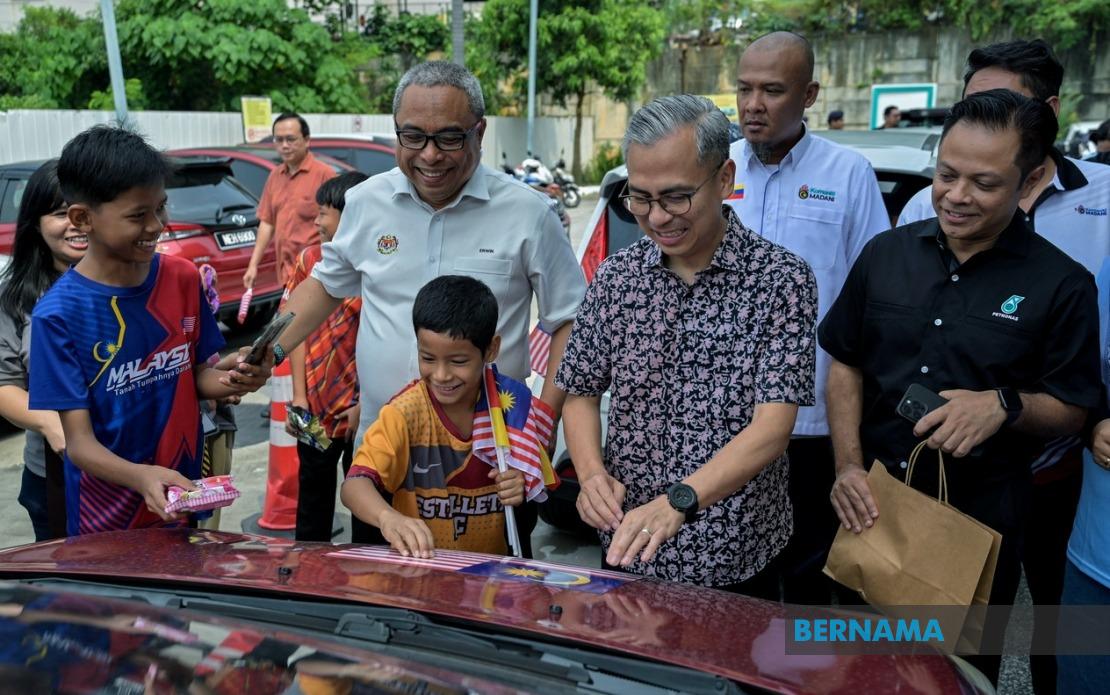
Malaysia's 2026 Malaysia Day festivities will take place at the Borneo Convention Centre Kuching (BCCK) in Sarawak, according to Communications Minister Datuk Seri Fahmi Fadzil, signalling a deliberate shift in hosting the nation's important constitutional observance to East Malaysia. The announcement came after the inaugural preparatory meeting for the event, which brought together federal officials with Sarawak Minister for Tourism, Creative Industry and Performing Arts Datuk Seri Abdul Karim Rahman Hamzah, who has been designated co-chairman of the 2026 celebrations. This partnership between the federal Communications Ministry and Sarawak's state government reflects efforts to decentralise major national commemorations and foster deeper integration between Peninsula Malaysia and the states of Sarawak and Sabah.
The decision to place the 2026 celebration in Sarawak carries particular resonance given that Malaysia Day itself commemorates the formation of the Malaysian federation on September 16, 1963, which united Malaya, Singapore, Sabah, and Sarawak. By hosting the event in one of the founding states, the government underscores the integral role of East Malaysia in the federation's history and contemporary identity. The symbolic importance of holding this milestone celebration in Kuching cannot be overstated, as it reinforces the constitutional partnership and shared nationhood that underpins the Malaysian construct.
Fahmi noted that venue assessments have confirmed the suitability of the BCCK for the anticipated scale of celebrations. Specifically, he highlighted that the facility's spatial capacity approximates that of the PICCA Convention Centre in Butterworth, Penang, which hosted last year's Malaysia Day commemorations. This technical equivalence matters because it suggests the organisers expect comparable attendance and ceremonial requirements for 2026, allowing for consistency in programming while adapting to the Kuching setting. The careful evaluation of physical infrastructure demonstrates the administrative rigour being applied to ensure the event meets national standards regardless of geographic location.
Organisational momentum appears robust, with the coordinating committees already scheduling their second substantive meeting for August 24 to progress detailed logistical arrangements. This accelerated timeline suggests confidence in the preparatory process and an intent to avoid the last-minute scrambling that sometimes characterises major national events. By establishing regular consultation cycles early, planners can identify and resolve potential complications whilst accommodating input from diverse stakeholders, including Sarawak's tourism and cultural authorities who bring essential local knowledge.
Parallel to the Malaysia Day planning, the government is making concurrent infrastructure enhancements to facilitate public participation in the National Day celebration scheduled for August 31 in Putrajaya. Prasarana Malaysia Bhd has pledged to maintain round-the-clock public transportation services during the event, representing a tangible improvement over arrangements from previous years. This commitment recognises a persistent challenge facing major national celebrations: ensuring that ordinary citizens can access festivities without enduring transportation bottlenecks or logistical hardship.
The extension of transport services throughout the night is strategically significant because it addresses a genuine pain point for attendees, particularly those travelling from considerable distances. By facilitating both arrival and timely departure, the measure encourages broader public participation and reduces the risk of congestion that typically emerges when crowds attempt to leave simultaneously after major events conclude. For families with children or elderly participants, the availability of reliable transport at off-peak hours removes a significant barrier to attendance.
Fahmi emphasised that Putrajaya's broader infrastructure ecosystem is simultaneously undergoing targeted improvements, creating a more welcoming environment for the National Day gathering. These enhancements extend beyond transport to encompass various amenity and service provisions designed to accommodate visitor flows efficiently. The cumulative effect of such improvements transforms the experience from a logistically fraught exercise into a more seamless civic engagement opportunity, potentially increasing the appeal of attending national celebrations among the Malaysian public.
The decision to position East Malaysia as the host for Malaysia Day 2026 also carries significant implications for regional identity and representation within national discourse. Sarawak, as the larger and more developed of Malaysia's two East Malaysian states, gains elevated visibility and prestige through hosting this constitutional celebration. The choice sends a message that federal decision-making recognises and values the contributions and perspectives of East Malaysia, countering any perception of marginalisation in national observances that historically have concentrated in the peninsula.
For Sarawak's tourism sector, hosting the 2026 Malaysia Day celebration presents substantial economic and promotional opportunities. The event will attract visitors from across Malaysia and potentially international observers, generating accommodation demand, transportation usage, and spending in local hospitality industries. Additionally, the international media coverage accompanying a major national celebration hosted in Kuching provides unparalleled marketing exposure for Sarawak as a destination, potentially catalysing longer-term tourism development and business investment.
The coordination between federal and state-level government entities on this project demonstrates functional federalism in operation, with each tier contributing its distinctive resources and expertise toward a shared national objective. Such collaborative frameworks prove essential for executing celebrations of constitutional significance and serve as templates for managing other cross-jurisdictional national initiatives. The involvement of Datuk Seri Abdul Karim Rahman Hamzah as co-chairman ensures that Sarawak's priorities and local sensibilities inform event design and execution rather than imposing a standardised peninsula-centric model.
Looking beyond the immediate logistical considerations, the Malaysia Day 2026 placement in Kuching invites reflection on how Malaysia commemorates its constitutional origins and celebrates the federation's diversity. Such observances offer opportunities to reinforce narratives of shared citizenship and interdependence that transcend geographic separation. By situating this celebration in Sarawak, Malaysia affirms that the federation's founding was genuinely inclusive and that East Malaysia's partnership remains constitutive rather than peripheral to national identity.
As preparations advance through subsequent planning meetings, attention will inevitably extend to programming decisions, cultural content, and symbolic elements that define the celebration's character. These choices will determine whether the 2026 event becomes a vessel for deepening Malaysian unity or merely another ceremonial routine. The stakes are consequently higher than typical logistical planning might suggest, making the current emphasis on careful groundwork and stakeholder engagement particularly prudent.

