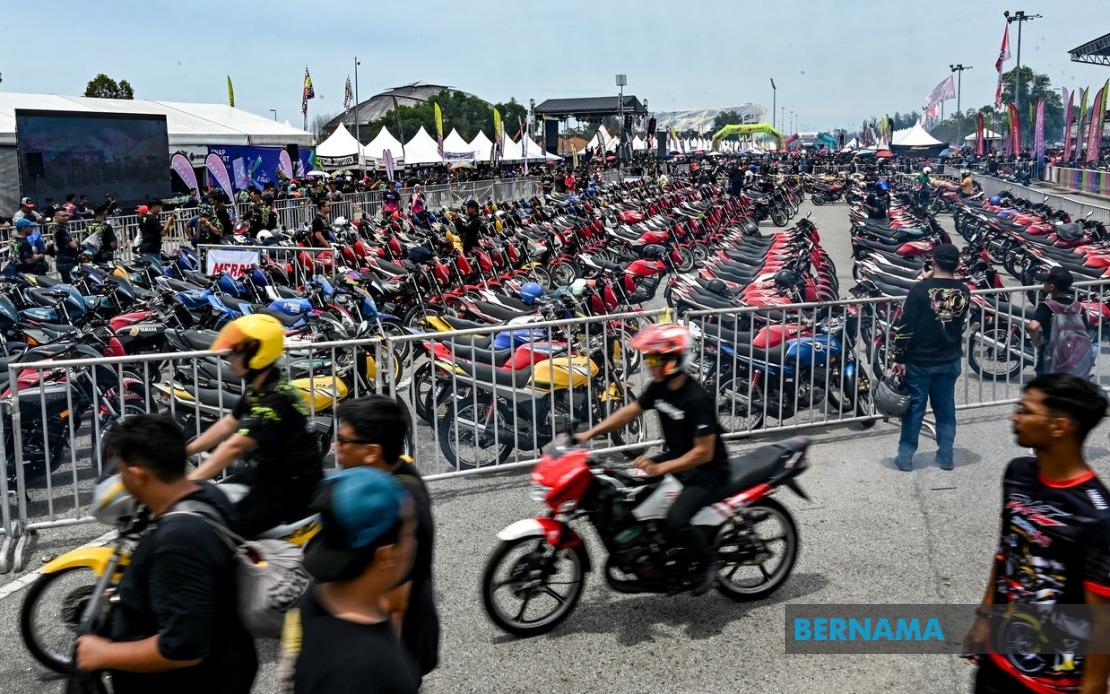
The Kuala Terengganu City Council (MBKT) has disclosed that it spent RM40,000 managing waste disposal following the RXZ Members 8.0 event held at the Gong Badak Motor Racing Circuit near Kuala Nerus over the past weekend. The substantial expense underscores growing tensions between the local authority and event organisers over environmental responsibility, revealing systemic gaps in how large-scale gatherings are managed across Malaysian venues.
MBKT mayor Lizan Che Mamat explained that the expenditure encompassed multiple operational costs, including additional remuneration for sanitation workers deployed during unsociable hours, multiple lorry dispatches to transport accumulated refuse, and prolonged operational periods at the Sungai Ikan landfill facility. The breakdown reflects the hidden infrastructure burden that host cities absorb when mass-participation events generate unanticipated volumes of debris.
Cleanup teams gathered approximately 130 tonnes of solid waste from the event site, predominantly comprising food packaging and beverage containers. This figure is particularly striking given that the event attracted more than 100,000 participants, translating to an average of approximately 1.3 kilogrammes of waste per attendee—a ratio that illustrates both consumer behaviour patterns at large gatherings and the disposal challenges facing municipal administrations throughout Southeast Asia.
Despite MBKT's provision of receptacles distributed across the venue, Lizan noted that attendees continued discarding rubbish indiscriminately rather than utilising designated collection points. This pattern points to a broader cultural disconnect regarding environmental stewardship at public events, suggesting that infrastructure alone proves insufficient without corresponding behavioural change and enforcement mechanisms.
The mayor acknowledged that the quantity of bins deployed may have been calibrated based on initial attendance projections that proved significantly lower than actual turnout. When events substantially exceed predicted participation levels, waste management systems—including bin capacity, collection schedules, and transportation logistics—become overwhelmed, creating cascading operational challenges for municipalities managing multiple competing priorities.
Looking ahead, MBKT intends to introduce mandatory solid waste management protocols for large-scale event approvals. This regulatory adjustment would require organisers to submit detailed waste handling strategies before securing municipal permits, representing a significant governance shift toward distributing environmental responsibility between event promoters and local authorities rather than concentrating costs solely on councils.
The council is simultaneously reviewing the cleaning deposit system currently imposed on event organisers. By recalibrating these financial requirements, MBKT hopes to better align deposit amounts with anticipated cleanup expenses, reducing the fiscal gap between collected fees and actual expenditures borne by ratepayers and council budgets. This mechanism, if properly structured, could incentivise organisers to implement stricter waste management practices and invest in attendee education.
Lizan emphasised that MBKT welcomes large-scale events, recognising their capacity to generate tourism revenue and stimulate local economic activity. This stance reflects the genuine dilemma facing Malaysian municipalities: balancing development aspirations with environmental stewardship and fiscal sustainability. Regional authorities increasingly compete for prestigious events, yet insufficient coordination between event organisers, venue operators, and municipal waste systems undermines benefits and inflates hidden costs.
The incident highlights a persistent gap in Malaysian event management frameworks. Unlike mature international systems where promoters maintain liability for environmental outcomes, local arrangements often default environmental compliance responsibilities to already-stretched councils. This structural asymmetry disadvantages municipalities while reducing financial consequences for organisers who might otherwise prioritise cleanliness through contractual obligations and performance bonds.
For Terengganu specifically, the RM40,000 expenditure represents an unbudgeted financial burden during a period when state authorities face competing demands for infrastructure development and public services. Scaling this figure nationally suggests that uncontrolled event proliferation imposes substantial but largely unmeasured environmental and fiscal costs across Malaysian cities.
The RXZ Members 8.0 situation also illuminates how event attendance patterns have evolved in Malaysia's post-pandemic economy. The concentration of over 100,000 participants at a single motorsport venue demonstrates robust public appetite for experiential entertainment, yet corresponding municipal capacity has not similarly expanded. This mismatch creates recurring crises where success—measured by attendance—simultaneously generates operational failures in waste management and environmental control.
Moving forward, MBKT's proposed framework requiring waste management plans represents best practice adoption aligned with international standards. However, genuine effectiveness requires complementary initiatives: attendee education campaigns explaining waste segregation expectations, stepped financial incentives encouraging responsible behaviour, real-time monitoring systems detecting littering hotspots, and post-event feedback loops enabling continuous improvement. Half-measures risk creating bureaucratic requirements without measurable environmental outcomes.
The episode ultimately reflects broader questions about how Malaysian cities can accommodate growth in mass-participation events while maintaining environmental quality and fiscal responsibility. Solutions transcend municipal authority alone, demanding collaborative engagement from event organisers, venue operators, community stakeholders, and attendees themselves in recognising environmental care as genuinely shared accountability rather than merely rhetorical aspiration.

