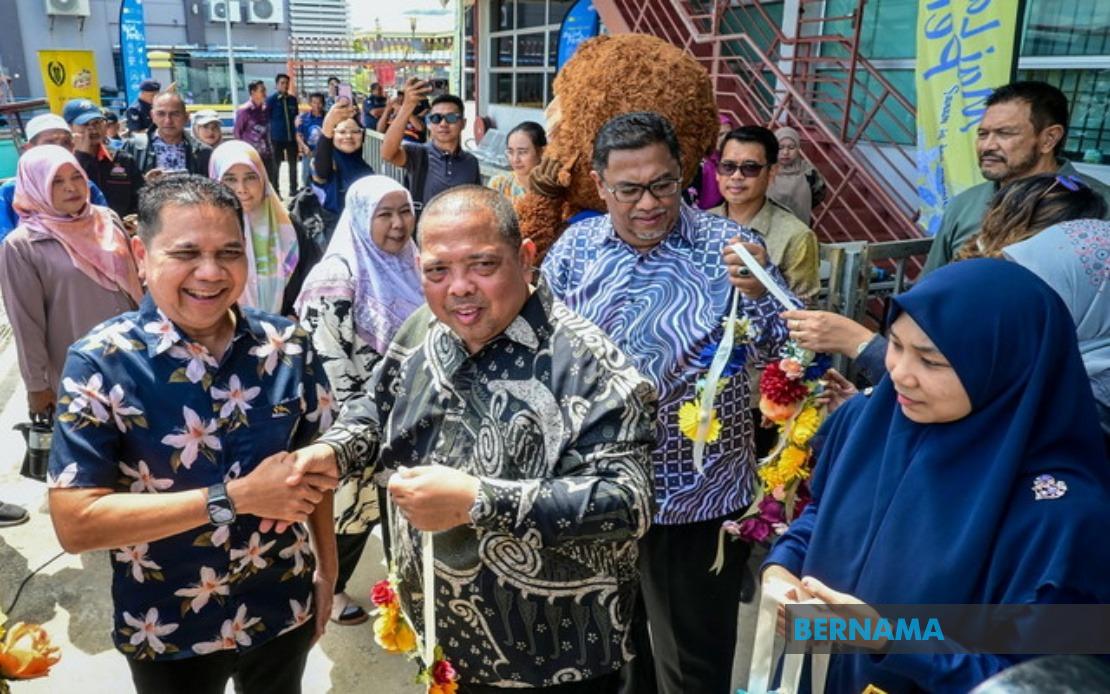
The cross-border ferry link between Kuala Perlis and Satun has resumed operations after a prolonged shutdown, marking a significant development for the northern state's tourism ambitions and regional connectivity. Menteri Besar Abu Bakar Hamzah unveiled the service on July 9 at the Kuala Perlis Ferry Terminal, welcoming a delegation from Thailand's Satun province and signalling confidence that the restoration will catalyse visitor growth to Perlis this year, with projections ranging from 5.5 million to 6 million tourists.
The reopening carries broader implications for cross-border movement in Southeast Asia's most tightly integrated sub-region. By reinstating direct maritime passage, the ferry eliminates the need for travellers to navigate overland border checkpoints during congested periods, particularly during school holidays and festive seasons when the Padang Besar crossing experiences severe delays. This alternative reduces friction in bilateral people-to-people movement and demonstrates how regional infrastructure can complement rather than compete with existing land routes.
Abu Bakar articulated a vision in which the ferry becomes a focal point for intra-regional commerce and leisure. The 40-minute journey across the Strait offers not merely convenience but also an experiential draw—coastal vistas and seaborne transit differentiate this crossing from the standardised checkpoint experience. For Thai nationals in Satun province, particularly those seeking shopping and dining experiences, the ferry provides straightforward access to Kuala Perlis without circuitous routing through interior highways. This accessibility is expected to generate retail and hospitality revenue for local businesses competing in Perlis's tourism market.
The ferry's resumption also strengthens institutional ties between Perlis and Satun at the provincial level. Such people-to-people exchanges and joint economic ventures contribute to the foundation of bilateral relations that formal government channels support. By facilitating authentic cross-border engagement, the service reinforces the notion that cooperative regional development benefits both jurisdictions—a principle increasingly central to ASEAN's integration narrative.
However, the service's success depends on addressing persistent infrastructural challenges that plagued its operations historically. Abu Bakar acknowledged that fluctuating water levels and shallow channels at the terminal have created berthing complications, prompting the state government to explore installing a floating pontoon system. This adaptive infrastructure would accommodate seasonal variations in tidal conditions and prevent service interruptions during dry seasons—a critical consideration in tropical maritime environments where monsoon patterns significantly affect navigability.
More ambitiously, Perlis is pursuing capital-intensive projects to permanently resolve navigation constraints. The proposed Roll-on/Roll-off service reactivation would enable vehicle transfers, substantially expanding the ferry's commercial and tourism utility. Discussions with investors regarding a RM500 million bridge extending approximately two kilometres into the sea represent a longer-term vision that transcends ferry operations entirely. Such a facility would provide year-round, weather-resistant crossing capacity and unlock significant hinterland development potential on both the Malaysian and Thai sides.
The timing of this initiative aligns with post-pandemic recovery patterns across Southeast Asia's tourism sector. International visitor numbers to the region remain below pre-2020 peaks, and countries are investing in accessibility improvements to recapture market share. For Perlis, a state historically overshadowed by larger tourism destinations like Penang and Kelantan, the ferry represents a differentiation strategy. By offering distinctive cross-border experiences and easier Thai tourist access, Perlis can position itself as a gateway destination rather than a transit corridor.
From a Malaysian perspective, the ferry also serves macroeconomic objectives. Border crossing efficiency directly influences bilateral trade and tourism receipts. Congestion at land crossings imposes economic costs through delayed goods movement and reduced visitor satisfaction. The maritime alternative distributes demand across transport modes, potentially reducing infrastructure strain and enabling more efficient resource allocation. Furthermore, successful people-to-people movement strengthens market integration and consumer confidence in cross-border commerce.
The ferry's infrastructure challenges, while being addressed, underscore the reality of developing tourism infrastructure in challenging maritime environments. Tidal and bathymetric constraints are not unique to Kuala Perlis; similar issues affect ferry operations throughout Southeast Asia. The floating pontoon solution represents pragmatic adaptation, though it requires ongoing maintenance and operational flexibility. The proposed bridge, by contrast, represents a transformative investment that would establish permanent, reliable connectivity—addressing root causes rather than managing symptoms.
Looking forward, Perlis's tourism projections depend not only on ferry infrastructure but on broader destination marketing and service quality. The state must ensure that Thai visitors encounter seamless immigration processing, attractive retail and dining options, and hospitality standards meeting international expectations. The ferry itself is a conduit; the destination experience determines whether casual passengers convert to repeat visitors and spend substantially.
The service resumption also occurs within Malaysia's broader effort to deepen ASEAN integration and strengthen bilateral relations with Thailand. Regional connectivity initiatives, whether maritime or terrestrial, support both economic cooperation and social cohesion. By demonstrating willingness to invest in cross-border infrastructure, Perlis signals commitment to genuine integration rather than mere rhetoric. This positioning may unlock opportunities for joint development projects and regional funding mechanisms supporting tourism and infrastructure advancement.

