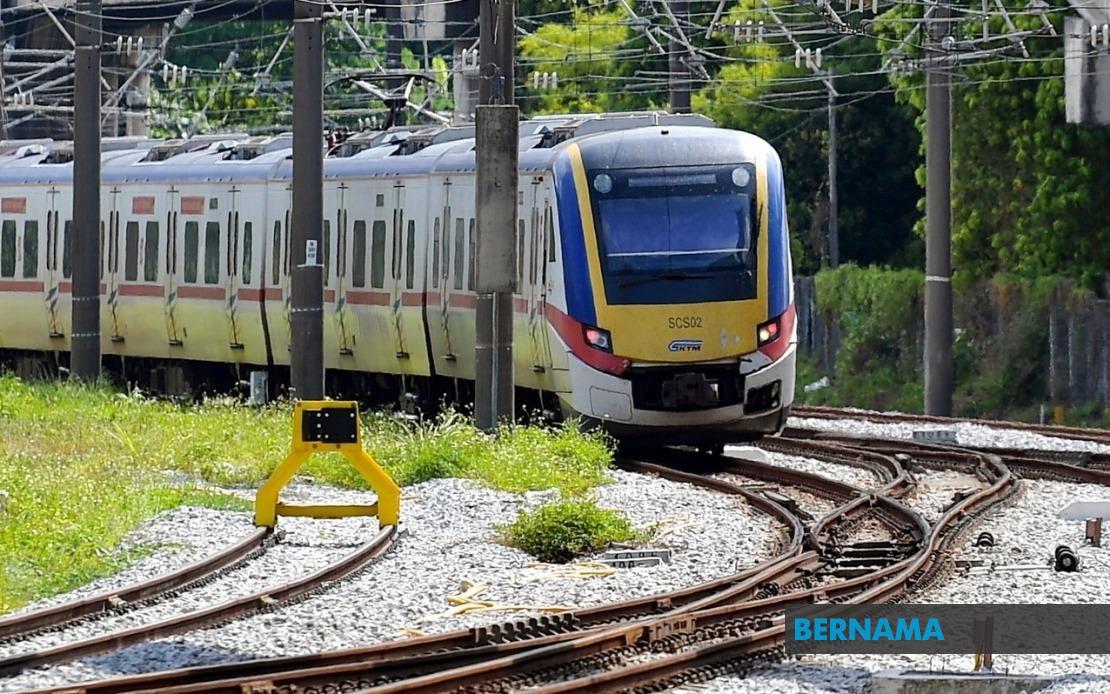
Keretapi Tanah Melayu Berhad (KTMB) is significantly expanding its rail capacity ahead of the National Day celebrations and school holidays, deploying 124 supplementary services across its Electric Train Service (ETS) and Electric Multiple Unit (EMU) Plus networks to accommodate an anticipated surge in holiday travellers. The expansion will introduce 38,944 additional seats to the system during peak travel windows, representing a substantial commitment to managing congestion on key routes throughout the country during one of Malaysia's busiest travel seasons.
The bulk of the additional capacity comes from 100 extra ETS services, which will collectively offer 31,600 seats. These trains will operate across three distinct holiday periods: August 21 to 23, August 28 to 31, and September 4 to 6. The staggered deployment reflects KTMB's strategy to address demand spikes around the immediate National Day window and the subsequent school holiday period, ensuring that commuters and leisure travellers have access to modern, high-speed rail alternatives during these congested travel windows.
Complementing the ETS expansion, KTMB will introduce 24 additional EMU Plus services offering 7,344 seats across selected dates between August 21 and September 6. Notably, this expansion includes an extension of EMU Plus services to Bandar Tasik Selatan, a move that enhances connectivity for residents in the southern Klang Valley region and demonstrates KTMB's recognition of growing demand in rapidly urbanising areas beyond Kuala Lumpur's core. This routing extension opens new possibilities for leisure and commuter travellers seeking alternatives to congested highway corridors during holiday periods.
The northern rail network receives dedicated attention as well, with the KTM Komuter service adding eight extra daily services on the strategic Padang Besar-Butterworth-Padang Besar route from August 27 to 31. This increase brings total daily capacity on that critical northern corridor to 46 services, reflecting the high demand from travellers in Penang, Kedah, and Perlis heading south for National Day festivities and family gatherings. The northern expansion underscores the geographic breadth of KTMB's capacity management strategy.
Tickets for all supplementary services entered the booking system immediately after the announcement, with KTMB utilising its established sales channels to distribute availability. This rapid activation demonstrates the operator's intention to maximise take-up and reduce pressure on alternative transport modes during the holiday surge. The advanced notice allows travellers sufficient time to plan itineraries and secure preferred departure slots, potentially reducing last-minute congestion and associated service disruptions.
Beyond the immediate capacity expansion, KTMB has simultaneously launched customer appreciation initiatives throughout August 10 to 14 to commemorate the ETS's 16th anniversary. The promotional activities, including voucher distributions, meal partnerships with KFC, complimentary travel tickets, and RM16 discounts, serve a dual purpose: they reward loyal passengers while generating goodwill during a period when the network's limitations might otherwise frustrate travellers. This marketing approach acknowledges that customer retention and satisfaction remain critical metrics beyond raw passenger numbers.
Datek Azlan Shah Al Bakri, KTMB's group chief executive officer, positioned the capacity expansion within a broader narrative of network maturation and reliability. He highlighted that the ETS, which commenced operations on August 12, 2010, with an initial Ipoh-bound route, has evolved into a comprehensive inter-city rail network following its 2015 expansion to Butterworth and Padang Besar, with further southbound expansion anticipated by year's end. This chronological framing emphasises the operator's systematic approach to infrastructure development across more than a decade.
The passenger statistics underpin management's confidence in the expansion strategy. The ETS network has cumulatively transported 44.3 million passengers since its inception, while year-to-date figures for 2024 reveal remarkable momentum: January through July registered 3.67 million passengers, representing a 56 per cent surge compared with 2.36 million passengers during the identical seven-month window in 2023. This substantial year-on-year growth trajectory validates investment in capacity expansion and suggests that demand pressures are genuine and measurable rather than speculative.
For Malaysian travellers and policymakers, the expansion carries implications extending beyond operational logistics. The ETS's demonstrated growth trajectory positions rail as an increasingly attractive option within Malaysia's broader transport ecosystem, potentially reducing highway congestion and associated environmental externalities. The system's ability to absorb holiday demand through capacity addition rather than service degradation reinforces public confidence in rail infrastructure reliability—a psychological factor that determines long-term modal shift away from private vehicles.
The timing of the expansion also reflects KTMB's engagement with seasonal demand patterns, a pragmatic recognition that maintaining excess capacity year-round would be economically inefficient. By deploying temporary services during predictable peak periods, the operator balances financial sustainability with customer service expectations. This operational flexibility suggests a maturing approach to transport management that prioritises efficiency without sacrificing accessibility during critical travel windows.
For the broader Southeast Asian context, KTMB's scaling strategy offers instructive parallels to transportation challenges facing other regional economies managing rapid urbanisation and rising travel demand. Malaysia's willingness to invest in rail alternatives and coordinate multi-modal capacity during peak periods contrasts with some neighbouring jurisdictions where transportation bottlenecks persist unaddressed. The ETS expansion thus positions Malaysia's transport sector as relatively responsive to contemporary mobility challenges, though sustained investment and continuous innovation will remain essential as passenger volumes continue climbing.

