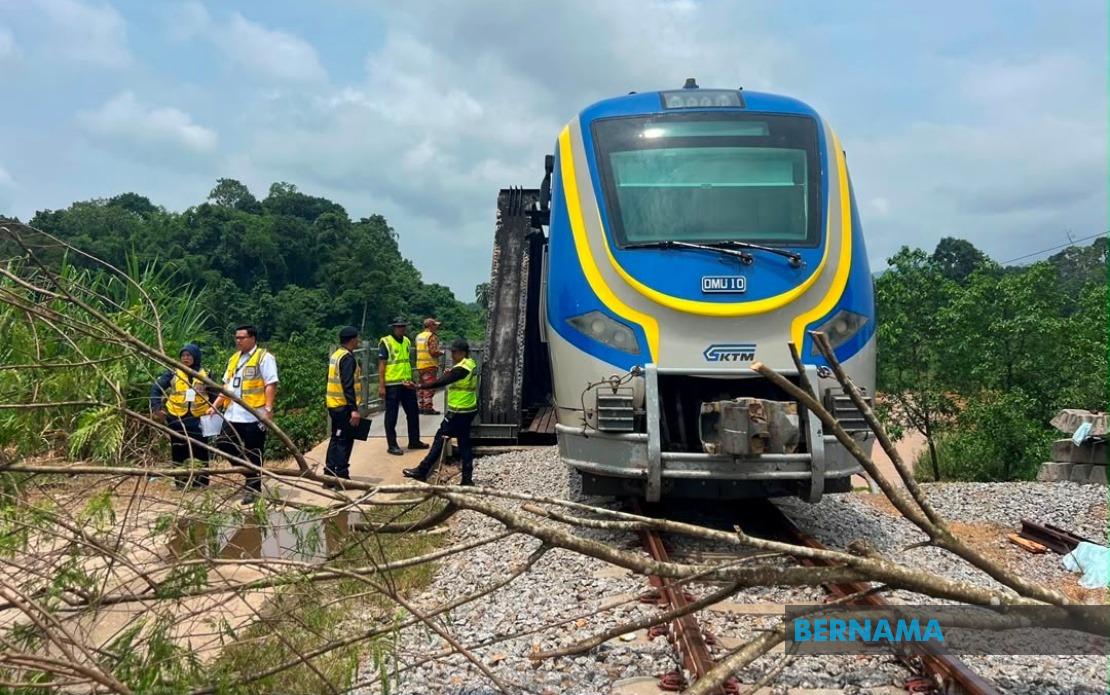
Keretapi Tanah Melayu Berhad (KTMB) has staged a comprehensive emergency response exercise on the EX-Kemubu railway route in Kuala Krai, designed to test the railway operator's ability to coordinate with multiple government agencies during critical incidents in geographically challenging terrain. The training initiative, which drew approximately 350 personnel representing eleven different organisations, underscores the transport operator's commitment to ensuring passenger and staff safety along routes that traverse remote and difficult-to-access regions of peninsular Malaysia.
The drill placed particular emphasis on three interconnected operational challenges that KTMB and emergency responders face when incidents occur in rural railway corridors: establishing rapid access to affected areas, minimising response time from initial alert to deployment of rescue personnel, and ensuring that critical information flows seamlessly between the railway operator and responding agencies. According to Khairul Naim Johdi, KTMB's Occupational Safety, Health and Environment general manager, these three dimensions are essential to effective emergency management in railway operations, especially where geographical remoteness can significantly delay conventional emergency protocols.
The selection of EX-Kemubu as the training venue reflects a deliberate strategy to conduct drills in environments that replicate real operational hazards. The route features characteristics that compound emergency response difficulties, including sections running adjacent to rivers and positioning that places affected areas far from primary road networks. This geographical reality means that rescue teams cannot rely on the speed of deployment they would enjoy in urban or suburban railway operations, necessitating rehearsal of procedures that account for extended access times and the logistical complications of reaching casualties or affected passengers in isolated locations.
Khairul Naim explained that the persistent challenge of rural access represents a primary focus area for improvement in KTMB's emergency management framework. In contrast to metropolitan railway networks where rescue infrastructure and road connectivity facilitate rapid response, remote operations demand alternative approaches to coordination and resource deployment. The training exercise systematically evaluated how quickly external agencies could mobilise and reach incident scenes after receiving notification from KTMB's operational control centre, highlighting the importance of early and accurate information transmission as a compensatory mechanism when physical access is constrained.
The participating agencies included the Royal Malaysia Police, the Malaysian Fire and Rescue Department, the Ministry of Health, the Malaysian Civil Defense Force, and the Department of Social Welfare. This multi-agency involvement reflects the complexity of modern railway emergency response, where different organisations bring distinct expertise and capabilities to bear on incidents. The presence of health sector representatives acknowledges that railway emergencies inherently involve mass casualty management, whilst police involvement addresses the security and investigative dimensions that accompany serious transport incidents.
KTMB employs a systematic approach to emergency preparedness that extends beyond single annual exercises. The railway operator conducts large-scale drills on a rotating basis across its four operational regions, ensuring that all personnel in all geographical zones receive regular exposure to emergency scenarios relevant to their local environment. Complementing these major training events, smaller-scale exercises are conducted throughout the year to maintain operational proficiency and ensure that individual staff members and departmental teams remain conversant with emergency procedures and protocols.
The post-exercise evaluation methodology adopted by KTMB demonstrates a commitment to continuous improvement grounded in systematic reflection and feedback analysis. Following the EX-Kemubu training, participating agencies contributed assessments of their own performance and coordination, with particular attention to identifying response delays, evaluating the effectiveness of initial responder actions, documenting access challenges and entry procedures, and assessing the timeliness and accuracy of information dissemination. This structured feedback mechanism ensures that lessons learned translate into refinements to procedures and training emphases in subsequent exercises.
Internal coordination and notification procedures emerged from the EX-Kemubu exercise as critical areas warranting enhancement. Khairul Naim acknowledged that information transmission between KTMB's control infrastructure and external agencies must be streamlined to ensure that responding organisations receive alerts as rapidly as possible, giving them maximum time to mobilise personnel and resources. The railway operator has prioritised procedural improvements designed to accelerate the flow of incident information from front-line staff through the operation controller and on to relevant external agencies, recognising that in transport emergencies, minutes often determine whether outcomes qualify as effective response or tragedy.
Emergency preparedness within KTMB extends to ensuring that the railway operator's own personnel possess the competencies required to execute critical functions during crises. Staff training encompasses passenger evacuation procedures, appropriate interaction with emergency responders, and the proper escalation of incident information through the operational hierarchy. The training regimen reflects recognition that KTMB employees frequently represent the first human interface between passengers and formal emergency services, making their knowledge and composure during incidents crucial to overall safety outcomes.
The Dabong and Kemubu route, for which this training specifically prepares, carries particular significance within KTMB's operational network due to its remote character and the specialised challenges it presents. By conducting focused emergency training that acknowledges the unique features of this corridor—its geographical isolation, river proximity, and distance from urban infrastructure—KTMB demonstrates a commitment to tailoring safety preparations to specific operational realities rather than applying generic emergency protocols. This location-specific approach acknowledges that transport safety is not uniformly challenging across all railway operations but rather varies substantially based on route characteristics, population density in surrounding regions, and proximity to emergency services infrastructure.
The coordination of emergency response across a railway system depends fundamentally on clear understanding among all participating organisations regarding their respective roles, responsibilities, and decision-making authority during incidents. KTMB's annual rotation of large-scale drills across its four operational regions ensures that personnel in different areas become familiar with the specific agencies and resources available to them, building working relationships and institutional knowledge that cannot be replicated through tabletop exercises alone. As transport operations across Southeast Asia increasingly recognise the necessity of comprehensive emergency preparedness, KTMB's systematic approach to training and evaluation offers a model for how railway operators can integrate safety considerations into all aspects of their operational philosophy and daily practice.

