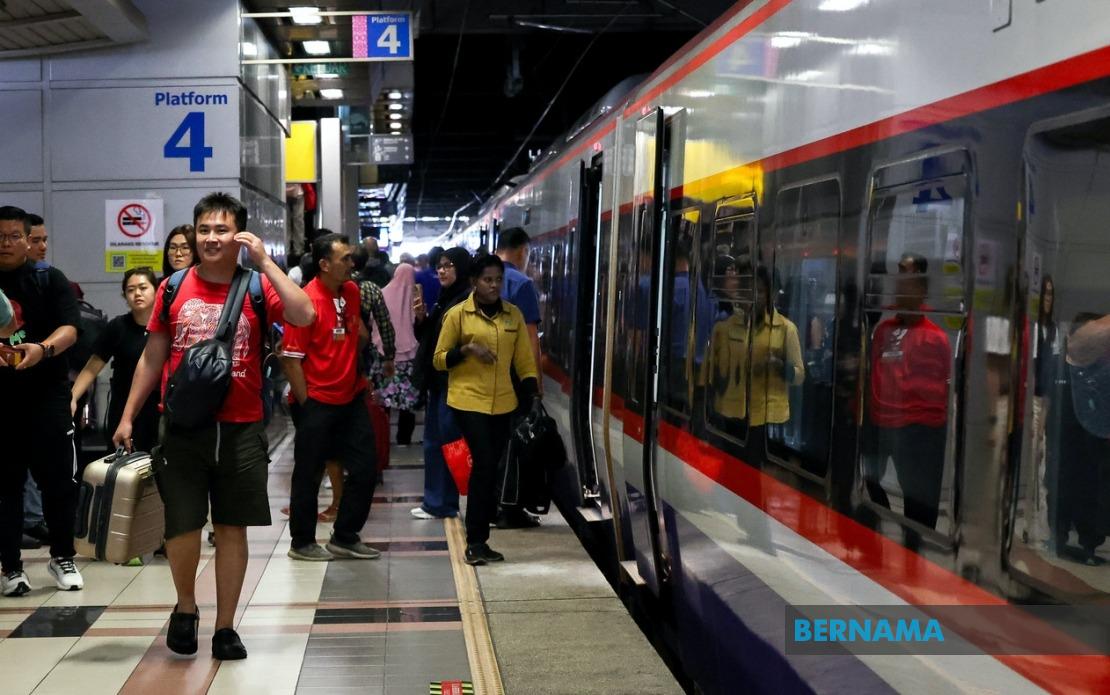
Keretapi Tanah Melayu Berhad has moved to significantly expand rail capacity along key southern corridors ahead of the Johor state election scheduled for this weekend, recognising the anticipated surge in passenger demand as voters return to their home constituencies. The national operator announced the provision of 7,464 supplementary seats across Electric Train Service networks, a measure designed to facilitate smooth travel and alleviate congestion during the critical polling period.
The additional capacity deployment targets the two busiest routes connecting Malaysia's heartland with Johor. Services between JB Sentral and Gemas will be augmented alongside the main KL Sentral to JB Sentral corridor that typically handles the heaviest commuter traffic. Both routes will operate four additional train services each over the election period, collectively delivering 2,488 daily seats across the three-day window from July 10 to 12. This represents a deliberate administrative response to sustained public demand, following the complete sell-out of earlier promotional offerings announced on June 19.
The timing of these announcements underscores a strategic consideration within Malaysia's transport planning. Electoral campaigns inherently generate population movements as citizens migrate temporarily between urban employment centres and provincial hometowns where they maintain voter registration. Railway operators across Southeast Asia face analogous challenges during national voting periods, yet Malaysia's experience demonstrates how advance capacity planning can mitigate infrastructure strain. By frontloading seat availability and implementing early sales windows, KTMB minimises last-minute crowding while providing voters with genuine travel options beyond congested road networks.
Ticket availability follows a staggered rollout designed to manage demand predictably. Sales for the JB Sentral-Gemas route commenced on the announcement day at 3 pm, permitting southern-based travellers immediate booking access. The KL Sentral route, anticipated to draw heavier demand from the capital and surrounding regions, opened reservations the following morning at 9 am. This sequential approach reflects operational experience with passenger flow patterns and represents considered logistics management rather than arbitrary scheduling.
Central to the initiative is a twenty percent fare reduction across all supplementary services, a meaningful incentive in a price-sensitive market where transport costs factor significantly into electoral participation calculations. For voters positioned at marginal income levels, reduced railway fares may determine whether they undertake journeys to vote or abstain due to transportation expenses. This promotional dimension therefore intersects with broader democratic accessibility concerns, extending beyond mere convenience into participation equity considerations. The discount applies uniformly across the three-day operational window, eliminating temporal arbitrage and ensuring consistent pricing transparency.
Operational logistics demand passenger awareness and cooperation. The railway operator has issued explicit advisories requesting travellers to arrive thirty minutes before scheduled departures, with platform access terminating precisely five minutes prior to train movement. These requirements reflect safety protocols standard across railway systems globally and underscore that expanded capacity alone cannot compensate for congestion at access points. Advance planning thus benefits both institutional operations and individual travellers, reducing bottlenecks at ticket counters, security checkpoints, and platform entrances.
Modern booking infrastructure substantially supports this capacity expansion. KTMB has mandated and encouraged cashless ticketing through the KITS Style mobile application, complemented by web-based reservations and physical kiosk machines positioned throughout major stations. This multi-channel distribution reduces operational friction and permits real-time capacity monitoring across booking platforms. Singaporean and Thai rail operators employ comparable digital-first strategies during high-demand periods, reflecting regional convergence around technological solutions to infrastructure constraints.
The customer service framework remains actively engaged for enquiries and problem resolution. The KTMB Call Centre, accessible through the published contact number, provides dedicated support during peak demand periods. Social media platforms, increasingly important for time-sensitive communications, offer supplementary information channels. These institutional touchpoints demonstrate recognition that expanded capacity requires proportional information infrastructure, ensuring passengers receive timely updates about delays, modifications, or service interruptions.
From a Southeast Asian transportation perspective, Malaysia's coordinated rail response to electoral cycles merits comparative attention. Thailand and Indonesia face analogous pressures during national elections when tens of millions undertake simultaneous travel. Indonesia's state railway company PT Kereta Api Indonesia similarly deploys additional services during electoral periods, though with varying degrees of advance planning and coordination. Malaysia's experience suggests that transparent, early announcements combined with promotional incentives generate more orderly demand distribution than crisis-response capacity additions. This institutional maturity reflects decades of managing recurring electoral transport surges.
The broader implications extend beyond immediate election logistics into longer-term transport planning conversations. Each major electoral cycle generates empirical data regarding actual demand, route preference, and capacity utilisation. Malaysian transport authorities accumulate institutional knowledge from successive election cycles regarding passenger behaviour patterns, peak congestion windows, and infrastructure bottleneck locations. This evidence base should inform permanent capacity investments and service planning, gradually shifting from temporary election-specific measures toward structural improvements in southern corridor infrastructure.
For Malaysian travellers and electoral participants, this initiative removes a tangible barrier to democratic participation. Transport accessibility fundamentally shapes voting patterns, particularly among non-urban populations who must incur travel costs and time to reach polling stations. By subsidising rail fares and expanding available seats, KTMB contributes to more inclusive democratic processes while simultaneously benefiting from elevated ridership and network utilisation during crucial demand periods. The business logic aligns with public interest imperatives, creating operational efficiency gains that justify the discount pricing.
Looking forward, the Johor election exercise provides operational testing for railway capacity expansion methodologies. Observed passenger patterns, booking trends, and on-the-day operational challenges will inform future electoral planning. As Malaysia anticipates federal elections within the medium term, transport operators and election authorities should consolidate institutional learning from this weekend's experience. Regional coordination among transport providers across Peninsular Malaysia could further optimise capacity distribution, potentially routing overflow demand through alternative providers or scheduling to spread peak congestion windows.

