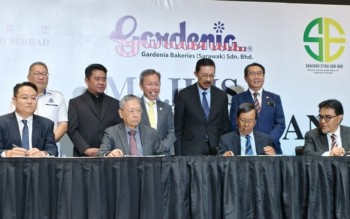
Kim Teck Cheong Consolidated Bhd (KTC) is mounting a significant manufacturing expansion in East Malaysia, committing RM30 million to establish a Gardenia bread production facility in Kota Samarahan that is expected to create half a thousand jobs for the local Sarawak workforce. The bakery group signed a memorandum of understanding with Sanjung Etika Sdn Bhd, the commercial arm of Yayasan Sarawak, alongside the state government itself, formalising a partnership that combines industrial baking expertise with grassroots community development capabilities.
The structure reflects contemporary thinking around inclusive economic growth. Rather than operating as a wholly foreign entity, KTC will establish Gardenia Bakeries (Sarawak) Sdn Bhd as a joint venture vehicle, blending the baked goods manufacturer's technical knowledge and operational systems with Yayasan Sarawak's established networks in human capital development and social programmes. This model distributes benefits beyond the corporate level, tying commercial success to community outcomes and skills acquisition among ordinary Sarawakians.
The three parties have committed to finalising comprehensive joint venture and shareholders' agreements within the coming quarter, a timeline suggesting serious intent and advanced preliminary work behind the signed memorandum. Once those legal frameworks are completed, the company intends to begin actual manufacturing operations, though specific production capacity or timeline for commencement remains undisclosed in the announcement. KTC has already lodged a formal application with the Sarawak State Government requesting a 7.56-acre parcel of land in Kota Samarahan where the plant will be constructed and operated.
The employment creation targets local talent specifically. Rather than importing management or technical expertise, the initiative aims to recruit 500 workers from among Sarawak's graduate population and existing skilled labour force. This approach addresses a persistent economic development challenge across Malaysian states—matching available human resources to industrial opportunities and demonstrating to young professionals that career advancement is possible without migrating to Klang Valley or Singapore.
KTC's track record in the state provides context for evaluating the credibility of these expansion plans. The company opened operations in Sarawak a decade ago with zero employees, yet has grown to employ 400 Sarawakians who now represent 32.5 percent of its total workforce across all operations. Cumulatively, KTC claims to have invested RM300 million throughout Sarawak, with current annual revenue generation reaching RM400 million and tangible assets under management valued at RM140 million. These figures, if accurate, demonstrate that the company has moved beyond initial establishment phase into sustainable, deepening presence.
Executive director Datuk Dexter Lau framed the investment as validation of Sarawak's governance approach and educational output. His statement credited the state administration's policies and the effectiveness of local schooling systems in producing workers capable of competing in the private sector. Such rhetoric carries implicit political messaging—affirming that devolved governance and state-level autonomy in matters like education and labour regulation produce tangible commercial benefits and foreign investor confidence. For the Sarawak government, the project provides employment statistics and economic activity figures to cite in development narratives.
The Gardenia brand itself carries regional recognition. As a bakery operation, the facility will anchor into existing consumer demand for packaged bread products across Sarawak and potentially broader East Malaysian markets. The company intends to introduce a special "Sarawak Edition" product line with distinctive packaging, positioning the state's cultural identity as a commercial asset. This branding strategy transforms local heritage into consumer value proposition, potentially creating additional downstream employment in design, marketing, and distribution while reinforcing regional distinctiveness in a national marketplace.
For Malaysian policymakers monitoring state-level economic development, this investment signals confidence in Sarawak's business environment and human resources despite geographic distance from the Peninsular economic core. Manufacturing investments in East Malaysia remain relatively modest compared to Klang Valley or Penang concentrations, so individual projects carry disproportionate significance as proof points that decentralised industrial activity remains viable. The partnership structure also reflects broader trends toward corporate social responsibility integration, where major investments increasingly bundle employment creation with community development mechanisms rather than treating those as separate concerns.
The timeline for agreements and commencement suggests operational reality could materialise within 12 to 18 months. If the stated employment targets and investment figures materialise, the facility would represent material economic activity in Kota Samarahan specifically and contribute meaningfully to Sarawak's manufacturing base diversification. The bread production sector, while not high-technology, provides stable employment in non-volatile consumer goods markets where demand remains relatively predictable and local sourcing of ingredients is feasible.
Beyond the immediate employment and investment figures, the initiative carries implications for competing claims about which Malaysian states offer optimal business conditions. Sarawak's political leadership has increasingly articulated distinctive governance priorities, and securing anchor manufacturing investments in partnership with state-linked entities demonstrates alignment between political autonomy and commercial benefits. For KTC specifically, the expansion deepens commitment to Sarawak markets and workforce, reducing future exit risks and positioning the company as a genuinely embedded regional operator rather than a temporary presence seeking cost arbitrage.

