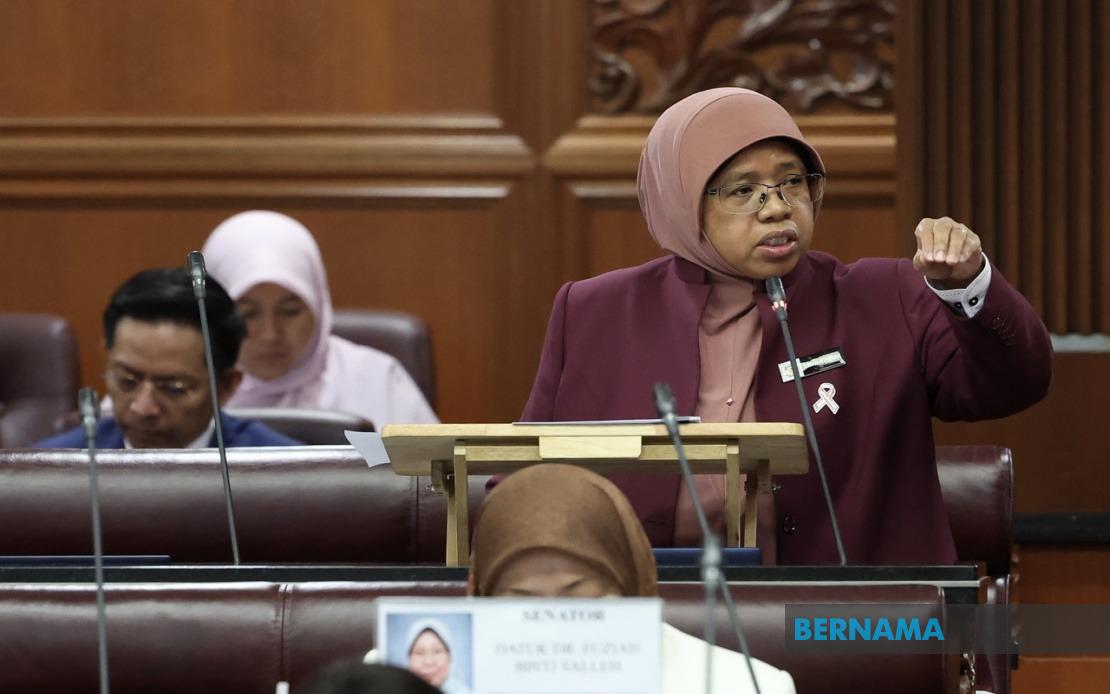
The Ministry of Housing and Local Government (KPKT) has adopted a strategic approach to managing the deteriorating condition of Malaysia's aging public housing stock by concentrating efforts on People's Housing Programme (PPR) projects that have stood for more than ten years. Deputy Minister Datuk Aiman Athirah Sabu outlined this prioritisation framework during parliamentary proceedings, revealing that with constrained financial resources, the ministry must deploy a more surgical targeting method that addresses defects with the most significant bearing on resident safety and wellbeing.
The decision to focus on older PPR developments reflects the accumulating maintenance burden facing the government as thousands of residential units reach the critical threshold where structural and mechanical systems require substantial intervention. These housing schemes, originally constructed to provide affordable accommodation for lower-income Malaysians, now face the inevitable consequences of ageing infrastructure. The ministry's strategy acknowledges that not all maintenance issues carry equal urgency, necessitating a framework that distinguishes between routine upkeep and interventions essential to preventing deterioration that would render units uninhabitable or dangerous.
Among the categories receiving priority attention are lift systems, roof integrity, water storage and distribution infrastructure, sanitary plumbing networks, and electrical installations serving common areas. This selection reflects a careful assessment of which systems, when failing, pose the greatest threat to residents and create cascading damage to the broader structure. Lift failures, for instance, render high-rise units inaccessible to elderly residents and those with mobility challenges, while compromised water systems can lead to contamination affecting entire blocks. By concentrating resources on these critical pathways, KPKT aims to maximise the protective value of each ringgit spent on maintenance.
The financial reality constraining these ambitions became apparent in the 2026 funding cycle, where local authorities and management bodies submitted 226 maintenance applications spanning ten priority categories with a combined value of RM79.9 million. However, the ministry received approval for only RM44.6 million—representing just 56 per cent of requested funding. This significant shortfall underscores a persistent challenge in Malaysia's public housing maintenance: the gap between identified needs and available budget allocations continues to widen as the housing stock ages and deterioration accelerates.
Under the framework of the 12th Malaysia Plan, KPKT has deployed RM159.1 million across five rolling maintenance plans specifically targeting high-rise strata PPR projects nationwide. While this demonstrates a substantial commitment, the figures reveal that annual spending remains insufficient to address the backlog of accumulated maintenance demands. The mathematical reality suggests that at current funding levels, many PPR blocks will experience further deterioration while awaiting their turn in the maintenance queue, potentially creating safety risks and diminishing the living conditions for residents who depend on these affordable housing options.
The application and approval process for maintenance funding operates on a formal annual cycle that extends across multiple months, creating delays between identification of defects and actual commencement of repair work. Proposals must originate from Joint Management Bodies or Management Corporations representing the residents, who first submit applications to the Commissioner of Buildings or relevant local authorities for technical assessment. Only after this initial vetting do applications proceed to the ministry for consideration, introducing bureaucratic layering that can extend timelines considerably.
The established timeline reveals the procedural complexity involved. Applications are accepted during a three-month window from August through October, with subsequent evaluation occurring across December and January before local authorities receive notification. Letters of Acceptance, which formally authorise works to commence, typically arrive in April at the earliest. This compressed but extended schedule means that maintenance needs identified in one calendar year may not see physical work commence until six months later, during which time defects can worsen, especially in Malaysia's tropical climate where monsoon rains and high humidity accelerate material degradation.
For Malaysian residents living in aging PPR housing, the implications of this maintenance strategy carry significant weight. Households dependent on these units often lack the financial resources to undertake private repairs or relocate to alternative accommodation if conditions deteriorate markedly. The safety of elderly residents in high-rise blocks becomes particularly concerning when lift systems fail, potentially trapping individuals in upper-floor units and limiting access to medical facilities or essential services. Similarly, compromised water and sanitary systems disproportionately affect vulnerable populations, including young families and those with chronic health conditions sensitive to water quality.
The regional context adds another dimension to Malaysia's PPR maintenance challenge. Across Southeast Asia, rapid urbanisation has created similar affordable housing stocks in countries including Indonesia, the Philippines, and Thailand. Each nation grapples with comparable issues of aging infrastructure, limited public budgets, and the tension between maintaining existing units and developing new housing supply. Malaysia's approach of targeted maintenance prioritisation may offer insights for regional counterparts facing analogous pressures, though implementation success depends heavily on adequate funding and efficient execution.
Looking ahead, the sustainability of PPR housing as a policy tool hinges partly on solving the maintenance equation. If defects accumulate faster than repairs progress, residents face declining quality of life, and units may eventually become unmortgageable or unrentable even at low rates. This threatens both the social purpose of PPR schemes and the long-term viability of the portfolio. Policymakers face an urgent question: whether current allocation levels can stabilise the condition of aging PPR blocks or whether substantially increased investment is necessary to prevent further deterioration across the nationwide network.
The ministry's emphasis on critical defects reflects pragmatic acknowledgment of budget reality, but it simultaneously signals that comprehensive maintenance of all PPR housing will remain impossible under present financial constraints. This reality demands either enhanced budget allocation, alternative funding mechanisms such as resident contribution schemes, or acceptance that some PPR housing will continue aging without complete maintenance. Each option carries distinct implications for affordability, equity, and the long-term viability of public housing as a cornerstone of Malaysian social policy.

