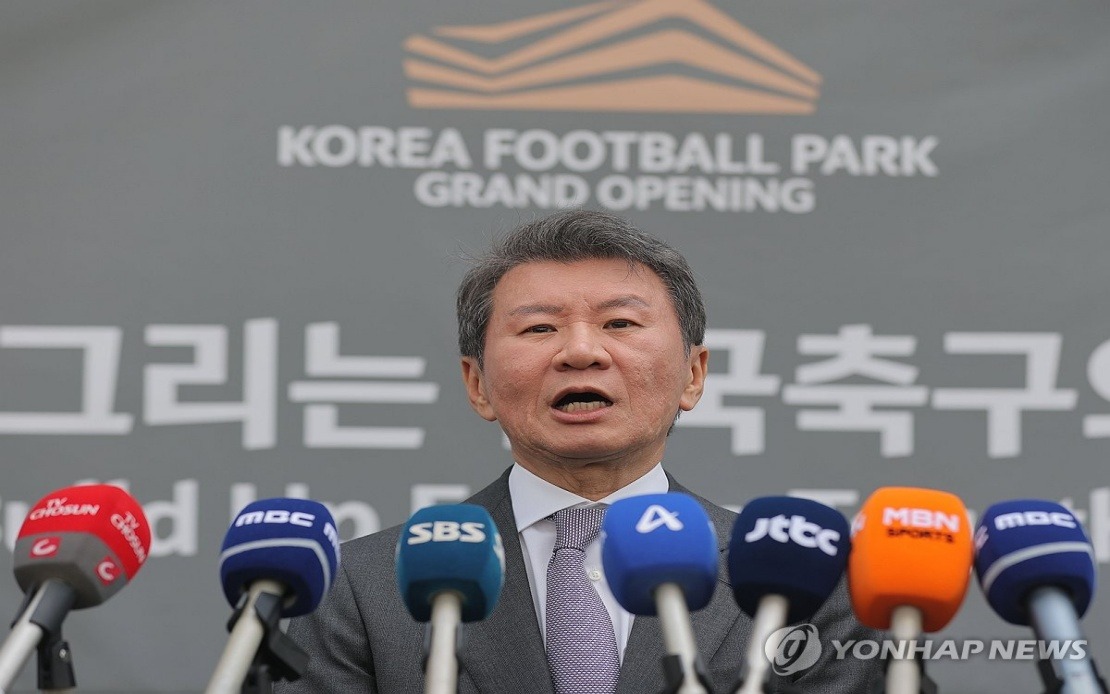
Chung Mong-gyu has stepped down as president of the Korea Football Association, submitting his formal resignation on Monday after chairing what proved to be his final executive meeting at the KFA's headquarters in Cheonan, a city situated approximately 90 kilometres south of Seoul. The departure marks the culmination of months of mounting pressure on the football administrator, whose tenure has been shadowed by both competitive disappointment and allegations of administrative irregularities within the national sporting body.
Although Chung had previously announced his intention to resign only after the FIFA World Cup concluded on July 20, he accelerated his departure by two weeks in the wake of South Korea's premature elimination from the tournament. The national squad, managed by Hong Myung-bo, finished third in Group A with a solitary victory and two defeats, accumulating three points that proved insufficient to secure qualification among the eight best-placed third-place finishers. This early exit represents a significant setback for Korean football's international standing, and Hong tendered his own resignation immediately following the confirmation of the team's elimination.
The timing and circumstances surrounding Chung's appointment of Hong last July have become central to the controversy enveloping his leadership. Critics have consistently questioned the transparency of the recruitment process, with numerous detractors asserting that the selection lacked proper oversight and adherence to established procedural standards. The South Korean Ministry of Culture, Sports and Tourism responded to these concerns by conducting a comprehensive investigation into the KFA's administrative practices throughout the calendar year, ultimately concluding that disciplinary measures were warranted against Chung alongside other senior officials for what the ministry identified as systematic irregularities within the organisation.
The deteriorating relationship between the KFA and the ministry has escalated into active legal proceedings, with the government body signalling its determination to conduct yet another audit into the football association's operations. This fresh examination appears directly linked to the World Cup outcome, suggesting that South Korea's tournament performance has now become entangled with broader questions about institutional governance and accountability. The convergence of athletic underperformance and administrative scrutiny has created a perfect storm for the departing football chief.
Under established KFA procedures, one of the federation's four vice presidents will assume the role of interim leader pending a formal election process. The regulatory framework stipulates that when an incumbent president retires with more than one year remaining in his mandate, a successor must be elected within 60 days. In Chung's case, approximately three years of his fourth term remained unserved at the time of his resignation, triggering the full election protocol rather than any abbreviated process.
The electoral mechanism for selecting KFA leadership draws from a broad collegiate assembly comprising regional football association executives, K League club chiefs, active players, coaches, and match officials. The previous year's presidential election demonstrated substantial participation rates, with 183 of 192 eligible members casting ballots. However, this democratic structure now faces potential reform. Culture, Sports and Tourism Minister Chae Hwi-young has publicly expressed reservations about the current election methodology, suggesting that the procedure itself may require restructuring to reflect public sentiment following the World Cup disappointment.
The reformation of electoral procedures involves coordination between the KFA and the Korean Sport and Olympic Committee, which serves as the governing authority for all sports federations within the nation. The KSOC has scheduled a general meeting for July 16 specifically to deliberate on modifications to its election regulations governing member associations. Among the proposed amendments under consideration are an extension to the 60-day election window and potentially the introduction of a direct election system that would bypass the collegiate voting arrangement currently in place. These structural changes would represent a significant departure from established governance practices.
In his departure statement, Chung acknowledged both the achievements and shortcomings of his administration while accepting personal responsibility for institutional failures. He expressed gratitude to supporters who have backed Korean football through various campaigns and extended his apologies for instances when his leadership disappointed the nation's sporting public. The resigning administrator framed his tenure within the broader narrative of Korean football's historical resilience, suggesting that temporary setbacks should not diminish confidence in the sport's capacity for future revival.
Chung's resignation carries implications extending beyond the Korean peninsula. For Malaysian football administrators and Southeast Asian sports bodies generally, the episode illustrates the mounting pressure facing national federation leaders when elite sporting outcomes disappoint public expectations. The convergence of athletic failure with governance scrutiny reflects a global trend whereby sports organisations face heightened accountability not merely for competitive results but also for institutional transparency and procedural propriety. The KFA situation demonstrates that even well-established federations with substantial financial resources and professional infrastructure can find themselves embroiled in governance controversies when performance metrics decline and administrative processes come under public examination.

