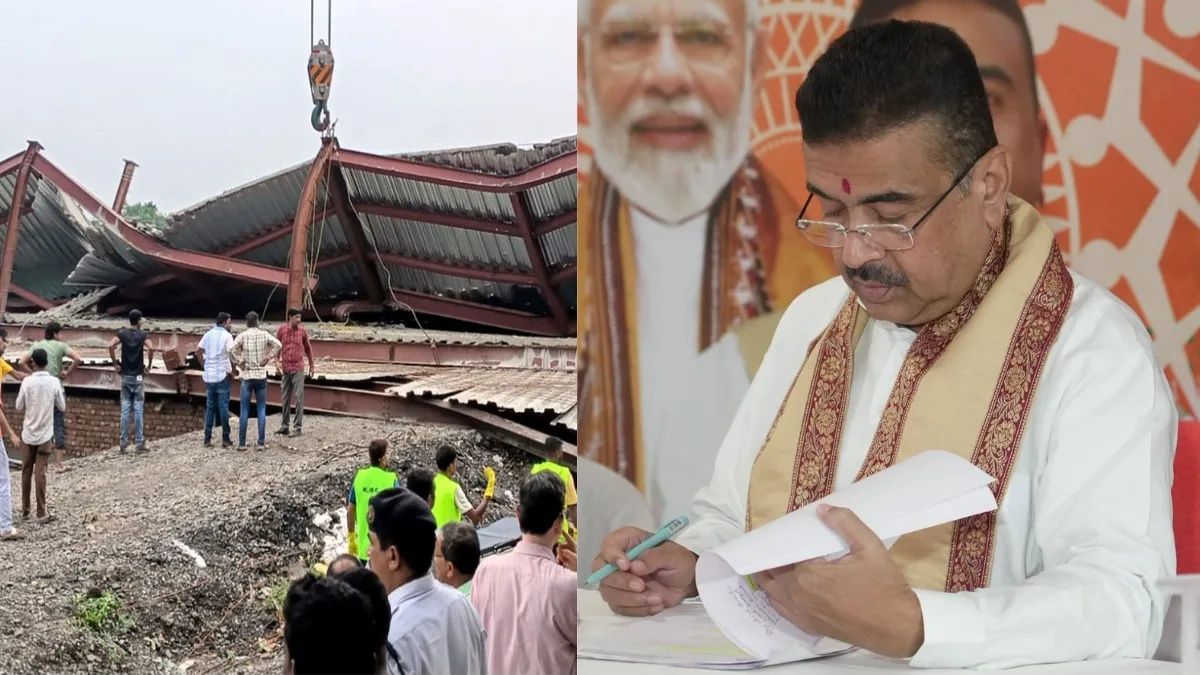
The Taratala warehouse collapse in Kolkata has claimed at least 11 lives as recovery operations stretched into a second day, with authorities warning that additional workers may remain trapped beneath the rubble. A fresh fatality was reported late Thursday afternoon when another victim's body arrived at SSKM Hospital's Trauma Care Centre, though identification of the deceased remained pending at time of reporting. The incident has triggered a significant political response, with West Bengal Chief Minister Suvendu Adhikari using the tragedy to launch a forceful critique of his predecessors and to initiate sweeping structural reforms across the state's building regulatory systems.
The rescue and recovery effort itself has demonstrated a coordinated response involving military personnel, the National Disaster Response Force, and various emergency agencies working in tandem to navigate the collapsed structure. However, the exact circumstances surrounding the building's failure and the identity of those still potentially beneath the debris remain matters of active investigation. The scale of the operation underscores the severity of the structural failure and the challenges faced by rescue teams in accessing trapped individuals within the compromised warehouse.
Addressing the West Bengal Legislative Assembly, Chief Minister Adhikari levelled serious allegations that the warehouse construction plan had been sanctioned despite fundamental design deficiencies. He presented documentary evidence, including papers bearing the signature of former Kolkata Municipal Corporation Mayor Firhad Hakim, to substantiate his claim that approvals had been granted for a building containing documented structural weaknesses. These allegations point to a breakdown in the approval process under the previous administration, which Adhikari's government attributes to systemic corruption within the municipal corporation.
Adhikari's statements extended beyond the immediate incident, framing the collapse within a broader narrative of administrative negligence under the previous Trinamool Congress-led municipal administration. He accused the erstwhile regime of permitting widespread corruption, including what he described as systematic collection of "cut money"—illicit payments made to secure approvals—which he characterised as having transformed Kolkata into a "city of death." These allegations reflect deeper governance concerns about building standards and regulatory oversight that extend well beyond this single catastrophic failure.
The law enforcement response has been swift, with five individuals already arrested in connection with the incident. Those taken into custody include the construction company's site supervisor, the contractor responsible for the iron structural work, the land lessee, the labour supply contractor, and a broker implicated in facilitating the building plan's approval by the municipal corporation. The chief minister revealed that the primary accused, identified as Azgar, remains at large, with authorities launching what is presumably an active manhunt. The range of individuals arrested suggests potential culpability stretching across multiple layers of the construction and approval ecosystem.
In response to the disaster, Chief Minister Adhikari announced a comprehensive four-week moratorium on all non-essential construction activity across Kolkata and eight surrounding municipalities and towns, including Rajarhat-New Town, Maheshtala, Budge Budge, Pujali, Bishnupur, Sonarpur, and Baruipur. This dramatic intervention effectively halts ongoing development work across a substantial urban region, reflecting the seriousness with which the government is treating building safety concerns. The suspension will apply to all municipalities and development authorities within the affected zone, creating significant disruption to the construction sector but signalling government commitment to addressing systemic regulatory failures.
Central to the government's response is an unprecedented audit of all approved building plans across the suspended regions, to be conducted during the construction moratorium. A high-level committee, chaired by Additional Chief Secretary Rajesh Pandey, has been constituted to oversee this mammoth undertaking. The committee's composition reveals the government's intent to bring independent expertise to bear on the review process, incorporating representatives from premier institutions including IIT Kharagpur alongside technical agencies such as Rail India Technical and Economic Service, Indian Railway Construction Limited, and the Fire Services Department, alongside traditional government bodies including the Public Works Department and the Kolkata Municipal Corporation.
This multi-institutional approach reflects an acknowledgment that municipal building approval systems alone may lack the technical rigour necessary to prevent future structural failures. The inclusion of leading engineering institutes and specialised technical agencies suggests the government recognises deficiencies in existing inspection and approval protocols. By bringing external expertise into dialogue with municipal authorities, the committee has the potential to establish more robust standards, though implementation challenges will likely emerge given the scale of the audit and the resources required.
Adhikari has signalled that accountability measures will extend beyond criminal prosecution, pledging that those found culpable will face not only imprisonment but potential confiscation of property to compensate disaster victims. This approach signals an intention to pursue both punitive and restorative justice, ensuring that compensation flows to families affected by the collapse. The emphasis on property confiscation as a compensation mechanism is noteworthy and potentially controversial, suggesting the government's determination to prioritise victim redress even through extraordinary measures.
For Malaysia and the broader Southeast Asian region, the Kolkata incident underscores persistent vulnerabilities in building approval systems across South Asia. Many countries in the region, including Malaysia, maintain municipal and regulatory frameworks that can be susceptible to corrupt practices influencing construction safety decisions. The collapse serves as a cautionary case study of how inadequate oversight and potential bribery within approval mechanisms can directly translate into loss of life. Malaysian authorities and those across Southeast Asia may view this incident as a reminder of the importance of robust, transparent, and technically rigorous building approval processes insulated from political and financial interference.
The disaster also highlights the critical importance of inter-agency coordination in disaster response, an area where Malaysia's emergency management framework has demonstrated considerable sophistication in recent years. The coordinated response involving the Indian Army, NDRF, and multiple state agencies offers lessons in institutional cooperation during crises. As Southeast Asian nations continue to grapple with rapid urbanisation and construction booms, the Kolkata collapse serves as both a cautionary tale about regulatory breakdown and an illustration of how effective multi-agency mobilisation can mitigate disaster impacts when catastrophes do occur.

