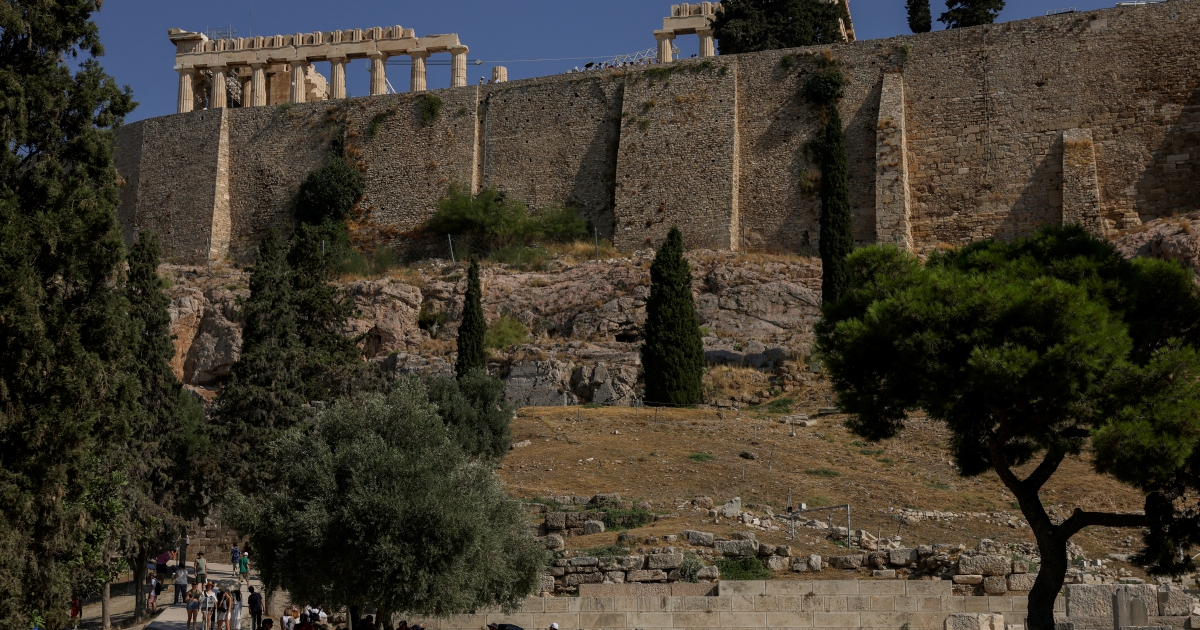
A violent incident unfolded on Tuesday in central Athens when a 60-year-old assailant attacked two Greek-American tourists with a knife near the historic Acropolis, one of Greece's most significant archaeological sites. The attack occurred in broad daylight in an area that draws tens of thousands of visitors annually, prompting an immediate police response that led to the suspect's arrest.
The Acropolis and its surrounding precinct represent the cultural and historical heart of Athens, housing several of Greece's most important ancient monuments including the Parthenon. The area attracts millions of international visitors each year who come to explore temples and ruins spanning more than two millennia of Mediterranean civilisation. This incident raises concerns about security in spaces that serve as both working archaeological sites and major tourist attractions.
Details surrounding the attack remain limited, though authorities moved swiftly to apprehend the assailant. The rapid intervention by police prevented the situation from potentially escalating further. Greek law enforcement has intensified its presence around major tourist sites in recent years, particularly following other security incidents that have affected visitor confidence in popular destinations.
Victims of violent crime in tourist areas can experience long-lasting trauma, affecting not only their immediate wellbeing but also their willingness to travel internationally in future. The two tourists in this case required medical attention, though the severity of their injuries has not been fully disclosed. Such incidents ripple beyond the immediate victims, influencing broader travel decisions among international visitors.
For Southeast Asian travellers, Greece remains an aspirational destination, with many Malaysians, Singaporeans, and other regional tourists planning trips to Athens to visit the Acropolis and explore Greek islands. Safety concerns, however minor or isolated, can influence travel planning and insurance considerations for visitors from this region. Tour operators and travel agencies across Southeast Asia monitor such incidents closely to provide accurate risk assessments to their clients.
Greece's tourism sector, a critical component of the nation's economy, generates billions of euros annually and employs hundreds of thousands of workers. Any security concerns, even isolated incidents, can create headwinds for the tourism recovery that has been ongoing since the COVID-19 pandemic disrupted global travel patterns. The country competes with other Mediterranean destinations for tourist spending, making visitor safety a matter of economic significance.
The circumstances surrounding why the 60-year-old man attacked the tourists remain under investigation. Such random or seemingly motiveless assaults in public spaces often trigger broader discussions about mental health services, substance abuse, and urban safety infrastructure. Athens and other major tourist cities worldwide continue grappling with how to balance public accessibility to landmark sites with adequate security measures.
The arrest of the suspect underscores Greece's commitment to responding rapidly to criminal incidents, though the investigation into his motivations and any potential factors—whether psychological, criminal history, or other underlying causes—will likely take time to unfold through the legal system. The case may also prompt authorities to review security protocols around the Acropolis and other high-traffic archaeological sites.
For international visitors, including those from Malaysia and across Southeast Asia, security is one of several factors influencing destination choices. While Greece maintains a generally positive safety profile compared to some global destinations, incidents like this receive heightened attention because they occur in areas where tourists concentrate. The Greek tourism board and local authorities will likely emphasise the isolated nature of this attack while reaffirming commitment to visitor safety.
The Acropolis itself, a UNESCO World Heritage Site, requires substantial ongoing police and security presence not only for visitor protection but also for heritage site protection. The delicate balance between preserving public access to these irreplaceable monuments and ensuring visitor safety remains an ongoing challenge for Greek cultural and security authorities.
This incident serves as a reminder that while travel remains one of the world's most popular activities with millions moving safely across borders daily, isolated security concerns can emerge in even well-established destinations. Both Greek authorities and the tourism industry will likely use this incident to review and potentially enhance safety measures in and around the Acropolis precinct.
As investigations continue and more details emerge, the focus will turn to understanding the motivations behind the attack and whether systematic changes are needed to prevent similar incidents. For now, the swift police response and arrest of the suspect provide reassurance that Greek law enforcement takes tourist safety seriously, even as the underlying questions about the attack's causes remain under examination.

