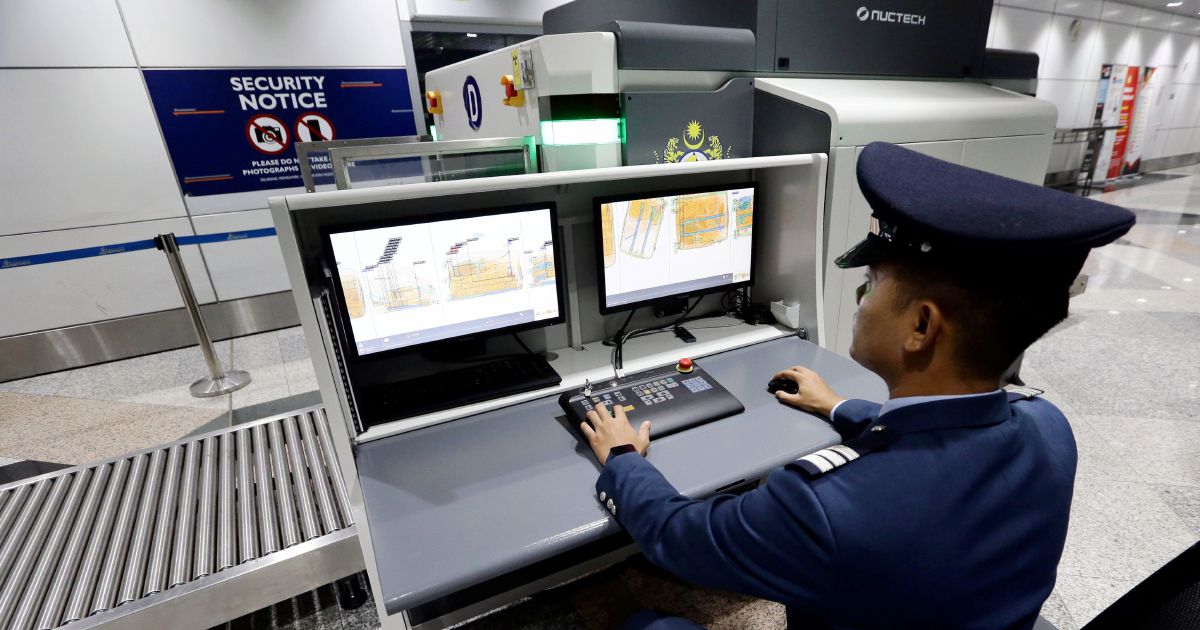
Malaysia's Home Minister has shifted focus away from equipment deficiencies at Kuala Lumpur International Airport, asserting instead that procedural gaps are responsible for inconsistent contraband detection. Datuk Seri Saifuddin Nasution Ismail stated from Putrajaya that the scanning infrastructure currently deployed at KLIA operates at full capacity for identifying prohibited drugs and related materials, refuting suggestions that hardware upgrades are necessary to address security concerns.
The minister's statement addresses mounting public anxiety regarding airport security effectiveness following several high-profile contraband seizures and related incidents. Rather than pointing to technological limitations, Saifuddin identified standard operating procedures as the critical vulnerability. This distinction carries significant implications for how Malaysia's primary international gateway addresses emerging security challenges, as procedural reforms typically require less financial investment than equipment replacement whilst offering more immediate implementation possibilities.
The emphasis on weapons detection within current screening protocols reveals a prioritisation framework that may inadvertently create blind spots for pharmaceutical contraband and narcotics. This hierarchical approach reflects historical security paradigms developed during earlier decades when aviation threats predominantly centred on hijackings and explosive devices. However, contemporary smuggling operations have evolved considerably, with organised criminal networks routinely adapting tactics to exploit known procedural weaknesses rather than outright technological gaps.
For Malaysian travellers and regional visitors transiting through KLIA, Saifuddin's clarification essentially confirms that detection failures stem from human decision-making and procedural sequencing rather than fundamental capability shortfalls. This nuance matters considerably because it suggests that corrective measures lie within administrative rather than budgetary realms. The airport authority and Ministry of Home Affairs can adjust screening priorities, personnel training protocols, and inspection sequences without requiring extended procurement cycles or international tender processes typically associated with major equipment acquisitions.
The revelation also situates KLIA's challenges within a broader Southeast Asian context. Regional airports including Singapore's Changi, Bangkok's Suvarnabhumi, and Jakarta's Soekarno-Hatta face comparable pressures to balance passenger throughput against rigorous security screening. The explicit acknowledgment that procedural frameworks rather than scanning technology represent the primary constraint offers useful perspective for other aviation authorities contemplating similar reviews. Malaysia's willingness to publicly identify and address systemic weaknesses rather than blame hardware may position the country as a transparent regional leader in aviation security assessment.
Saifuddin's statement implicitly raises questions about resource allocation and staffing at KLIA's screening checkpoints. If scanners genuinely possess adequate capability, then the human element assumes paramount importance—screeners' training levels, decision-making fatigue during peak traffic periods, and quality assurance mechanisms all become focal points for investigation. The airport processes millions of passengers annually, and systematic reviews of screening personnel competency and checkpoint management could reveal capacity constraints unrelated to equipment specification.
The minister's comments suggest that KLIA management may undertake a comprehensive audit of current screening procedures against international best practice standards. Such reviews typically examine checkpoint layout, passenger flow management, secondary screening protocols, and the sequence in which different scanner technologies are deployed. Many airports employ redundant screening layers whereby passengers pass through multiple detection systems, with different equipment optimised for specific contraband categories. Reorganising these sequences or adding intelligence-driven secondary screening points could substantially improve detection rates without any equipment expenditure.
For Malaysia's border security apparatus more broadly, this situation underscores the perpetual tension between facilitation and security. KLIA functions as a vital economic asset generating substantial aeronautical revenue and positioning Malaysia as a regional aviation hub. Overly stringent screening regimes risk compromising the operational efficiency and passenger experience that underpin this competitive advantage. Conversely, relaxed procedures invite reputational damage and potential sanctions from international aviation security bodies. Saifuddin's procedural focus represents an attempt to navigate this equilibrium by addressing genuine vulnerabilities without necessarily accepting more draconian screening measures.
The statement also carries diplomatic undertones regarding Malaysia's law enforcement credibility internationally. Countries with serious drug trafficking problems face potential travel warnings and increased scrutiny from international aviation authorities. By explicitly identifying screening gaps and committing implicitly to procedural corrections, Malaysia demonstrates proactive governance and transparency that can mitigate international concerns about lax border controls. This positioning becomes increasingly important as regional counternarcotics cooperation intensifies and Malaysia seeks to maintain its standing within international security frameworks.
Moving forward, Malaysian aviation authorities should consider whether current staffing levels enable comprehensive utilisation of scanner capabilities during peak travel periods. Some international airports employ surge staffing protocols whereby additional screeners are deployed during high-passenger-volume windows, ensuring that equipment utilisation rates remain consistently elevated. Others have implemented intelligence-driven screening that prioritises certain passenger categories based on risk assessment algorithms, allowing more thorough examination of flagged individuals whilst maintaining overall throughput.
The broader implications extend beyond KLIA to Malaysia's other international gateways. Kuching International Airport, Penang International Airport, and regional facilities all require comparable procedural audits to ensure consistent security standards throughout Malaysia's aviation network. A standardised framework based on best practices identified through the KLIA review could enhance overall domestic aviation security whilst providing opportunities for knowledge-sharing within ASEAN aviation circles.
Saifuddin's clarification ultimately positions procedural reform as the immediate priority whilst preserving options for future equipment upgrades should audits identify genuine technological limitations. This measured approach acknowledges that security enhancement frequently depends more on how existing resources are deployed than on absolute resource quantity. The coming weeks will reveal whether KLIA management translates this ministerial acknowledgment into concrete operational changes that restore public confidence in Malaysia's premier aviation security infrastructure.

