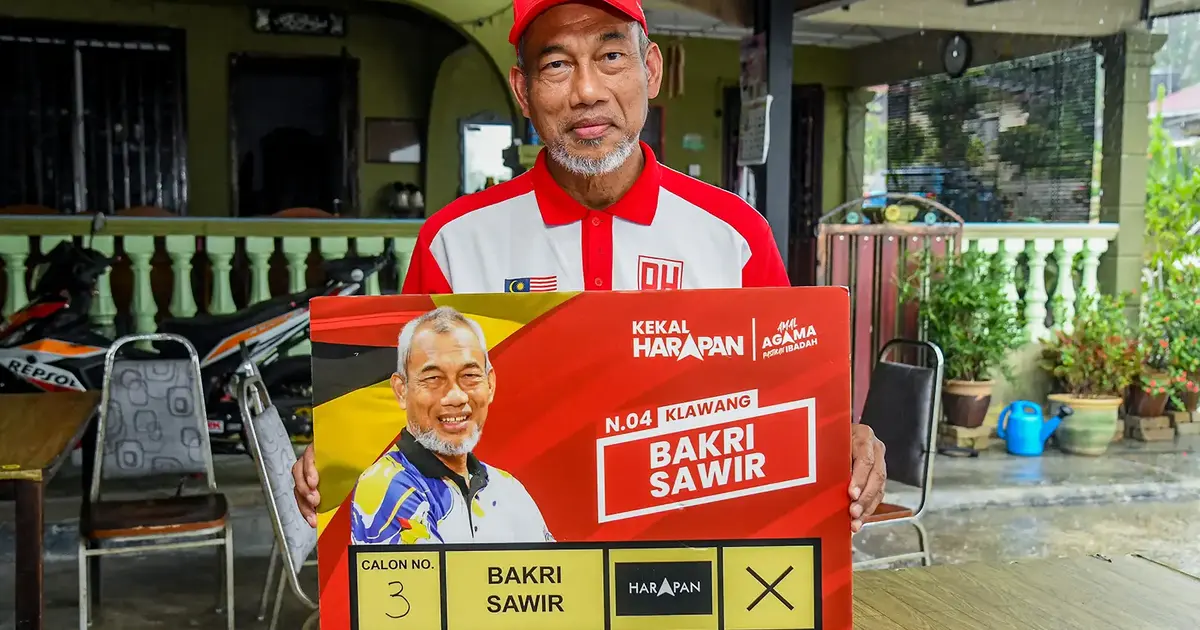
Two-term Klawang assemblyman Bakri Sawir has dismissed concerns about the strengthened opposition alliance formed between Barisan Nasional and Perikatan Nasional, expressing conviction that his Pakatan Harapan ticket can prevail once again in the Selangor state constituency. His confidence rests on demonstrated electoral performance: in 2023, Sawir captured the seat despite what he characterises as abandonment by Umno during that state election campaign, a setback he transformed into a victory for his coalition.
The messaging from Sawir reflects a broader pattern within Pakatan Harapan's Selangor operations, where the coalition continues to frame internal opposition within traditional structures as working to its advantage. His ability to hold Klawang against headwinds two years ago provides a template, though electoral mathematics and coalition dynamics have evolved significantly since then. The landscape has shifted with the formalisation of BN-PN cooperation, a development that consolidates previously fragmented opposition forces into a more coordinated challenge.
Selangor remains the nation's most politically significant state, controlling substantial economic and administrative resources while serving as a testing ground for electoral strategies nationwide. Klawang, situated within the Selangor heartland, represents the type of constituency where state-level politics directly intersects with federal ambitions and determines broader power distributions. The seat's trajectory tells much about Pakatan Harapan's staying power in Malaysia's most urbanised, economically dynamic region.
Sawir's invocation of the 2023 result as validation warrants closer examination. That election occurred in a specific context: nationwide sentiment had shifted following the 2022 general election, Pakatan Harapan retained significant momentum despite federal setbacks, and the opposition remained somewhat fractionalised. The intervening period has witnessed coalition consolidation. BN and PN have moved from tactical cooperation toward deeper structural alignment, signalling to voters a more unified challenge than existed previously.
The relationship between Umno and Pakatan Harapan carries historical weight in Selangor politics. While the 2023 state election saw friction between these traditional rivals, the suggestion of Umno's lack of support for Sawir requires contextualisation. Umno's Selangor machinery functions within broader party calculations that sometimes prioritise federal over state considerations, and interpersonal dynamics between local leaders frequently complicate national-level alliances. Sawir's reframing of potential disadvantage as liberation from a problematic partner demonstrates the political acuity necessary to sustain constituencies through shifting alignments.
For Malaysian voters, particularly those in Selangor observing these dynamics, the Klawang contest exemplifies larger questions about coalition stability and electoral predictability. Voters in this region have demonstrated sophistication in distinguishing state from federal politics, sometimes delivering contrasting verdicts to the same coalitions. This tendency challenges confident predictions from any camp, yet also suggests that localised campaigns and incumbent performance maintain relevance even amid broader coalition movements.
Pakatan Harapan's position in Selangor depends substantially on retaining seats it currently holds, as the coalition cannot easily expand its footprint against a unified opposition. Sawir's retention of Klawang would therefore carry symbolic importance beyond the constituency itself, signalling resistance to BN-PN consolidation. Conversely, loss of such seats would indicate erosion of the coalition's traditional support base and validate opposition claims that their alliance presents a genuine electoral threat.
The formal BN-PN pact carries implications for resource deployment and candidate selection across multiple constituencies. In constituencies like Klawang where Pakatan Harapan holds the seat, the opposition must calculate whether unified candidacy or tactical voting arrangements offer optimal pathways to victory. These calculations influence campaign intensity, financial resource allocation, and ground organisation intensity. Sawir's confidence may be warranted if his personal popularity and constituency service outweigh broader coalition dynamics, yet such localised factors operate within structural environments that have demonstrably shifted.
Malaysian political competition has increasingly emphasised coalition viability and governance competence rather than ideological differentiation. In this context, BN-PN's partnership presents itself as a pro-stability alternative, while Pakatan Harapan must defend incumbent state administration performance. Selangor's economic performance and administrative record thus become concrete factors in electoral calculations rather than abstract policy debates. Sawir's track record in this framework matters substantially for his electoral prospects.
The coming electoral contest will test whether 2023 patterns repeat or whether the intervening period has fundamentally altered Selangor's political trajectory. Sawir's public confidence may reflect genuine assessment of his position or strategic messaging designed to energise his support base and discourage opposition mobilisation. Understanding the distinction between these possibilities requires sustained observation of campaign developments, ground sentiment tracking, and resource deployment patterns across multiple actors.
Beyond Klawang's individual race, this contest symbolises broader questions facing Malaysian politics regarding coalition formation, electoral competition quality, and voter agency within structured party systems. Whether Sawir succeeds or falters, the outcome will provide data points for political analysts assessing coalition stability and the durability of electoral coalitions in the Malaysian context.

